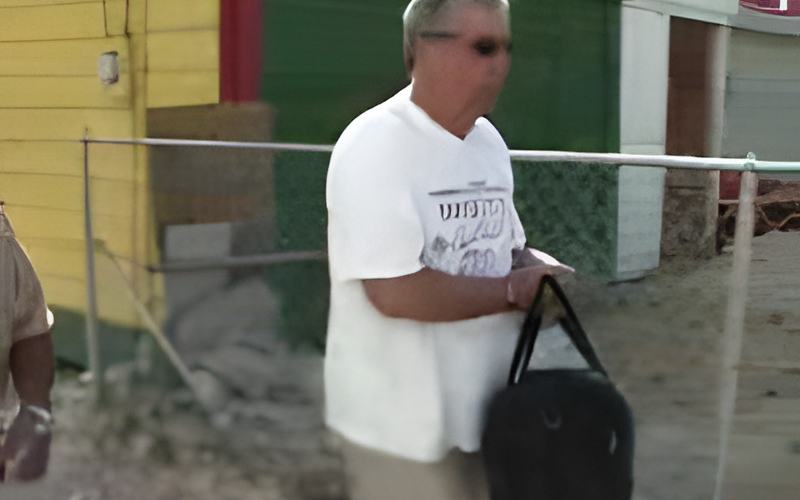

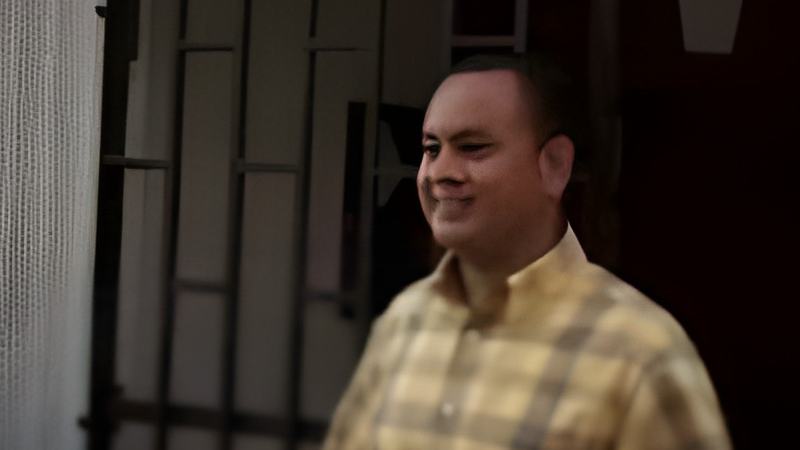
Eighteen years. That’s the age when a child becomes an adult. But that’s also how long Belize City businessman Rhett Fuller has been waiting to disconnect himself from a murder which occurred in the United States in 1990. Fuller has spent some of that time behind bars but for the last seven years, he’s been out on bail as his case has meandered through the judicial process. The matter is now before the Court of Appeal, a case which had started in the October 2008 session. But since Monday morning, Fuller’s attorney, Senior Counsel Eamon Courtenay has been on his feet before President Elliot Mottley and Justices Boyd Carey and Dennis Morrison, trying to convince them that the extradition request made by the US Government in August 1998 should be rejected and his client should be released.
Courtenay has used seven grounds to support his appeal, chief among them that the request is an abuse of process given the lapse in time between when the crime was allegedly committed in 1990 and the present day, almost two decades later. He’s also arguing that the request for extradition itself is both unlawful and unconstitutional. After Courtenay wrapped up late this evening, he outlined the grounds that he hopes will sway the Justices.
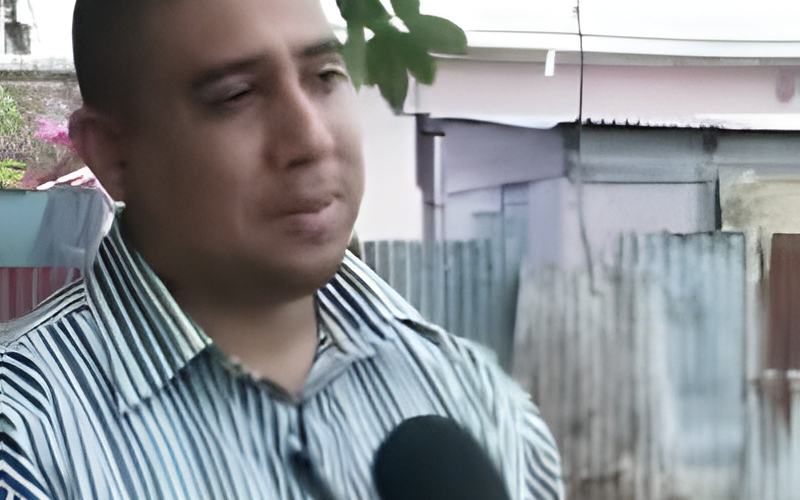
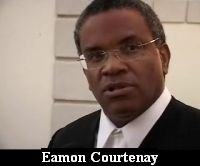
Eamon Courtenay, Attorney for Rhett Fuller
“Certainly the ground, you know the separation of powers and the independence of the Minister to make these decisions is an important ground. But also I think our argument that the old cases from the 60s and so on need to be reviewed in the context of the Belize Constitution which was ground one I think will have some merit and hopefully the judges will find in our favour on that ground as well. But we put forward all the grounds that we could. As you can see just now we had quite a debate about the power of the Minister to issue the order which ground seven. The case of Noel Heath which I had referred to in October, again I came back to that and they said maybe that is the solution. I tried to persuade them that they should not follow that case so we will see.”
Janelle Chanona,
"In your opening statement you put a lot of blame, if not all of the blame on the United Sates Government as far as the time delay. Are you convinced and that of course you said working in collusion with the government of Belize,
are you convinced that if your client was ordered to go to the US to stand trial that he would not get a fair trial?"
Eamon Courtenay,
“There is no doubt in mind that he would not get a fair trial. We are talking about something that happened 19 years, nearly 20 years ago. I think anybody, you ask them where were there or what were they doing ten years and much less 20 years, they would have difficulty to speak with any type of specificity. Would you like to go to a lawyer and say I want to instruct you to represent me about something that happened 20 years ago? How could you remember exactly what happened, all the nuances that would be relevant in order for a lawyer to represent you properly? To me it is a gross violation of the extradition procedures, it is an abomination indeed for somebody to be called upon by the United States at this stage to go the United States to stand trial and they knew where he was all the while and didn’t do anything about it. In fact they attempted to get him involved in other activities which he refused to do.”
Janelle Chanona,
"Mr. Courtenay you’ve used words like unjust and unconstitutional to describe this case. What has it been like for your client to have this over his head for this long a time?"
Eamon Courtenay,
“Well I think this is where we refer to the case of Holmes. It is oppressive for the US to believe after all this time, after all the contact they’ve had with this man, after giving this man to believe that they really didn’t want him to now come and still insist they want him – it really is oppressive. The man has a life, he has a family, he has businesses, his life continues to be in some sort of jeopardy.”
Janelle Chanona,
"But there is no statute of limitation on murder, is there?"
Eamon Courtenay,
“There is no statute of limitation but the cases I were referring to, what I was saying was after a sufficient period of time, if the witnesses have all disappeared, if you can’t instruct counsel, if you can’t remember exactly, then it becomes unfair for you to be forced to go to a trial and where the time has so long elapsed that you have started to live a totally different life as a result of them suggesting to you that they don’t want you, then it becomes oppressive and that is the case of Holmes, those are decided cases, and this is not something we’re making up.”
The United States is being represented in the case by the Attorney General’s Ministry. The case had initially been set for two days but due to Courtenay’s extended presentation, Crown Counsels Priscilla Banner and Magali Perdomo are now scheduled to take the floor on Wednesday morning.