
16 days ago, we told you how Belizean Hillaire Sears went to the Caribbean Court of Justice to continue his complaint against the Parole Board of the Belize Central Prison. He claimed that the Board unfairly revoked his parole and refused to allow him to defend himself properly. Well, the CCJ, the highest court in the land where final appeals are brought, has made a major ruling in Sears' favor.
As we reported, Sears was first sentenced to prison back in 2002 after being convicted of the murder of Rodwell Neal. On appeal, a conviction for manslaughter was substituted and he was sentenced to twenty-five years in prison. Some 10 years later, he was granted parole and released on December 21, 2012.
Sears began working at the prison after his release, and on April 3, 2014, he was suspected of violating one of the conditions of his parole. He was detained and subjected to a urine test. His detention lasted for 55 days before the Parole Board issued a decision, which informed him that he tested positive for cannabis use and that his parole had been revoked.
He and his attorneys complained to the supreme court while seeking declaratory relief that his rights to personal liberty, due process, and equal protection of the law - among other things - had been breached.
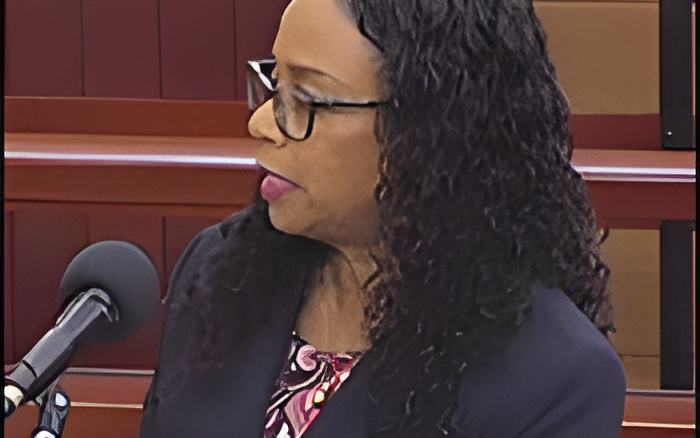
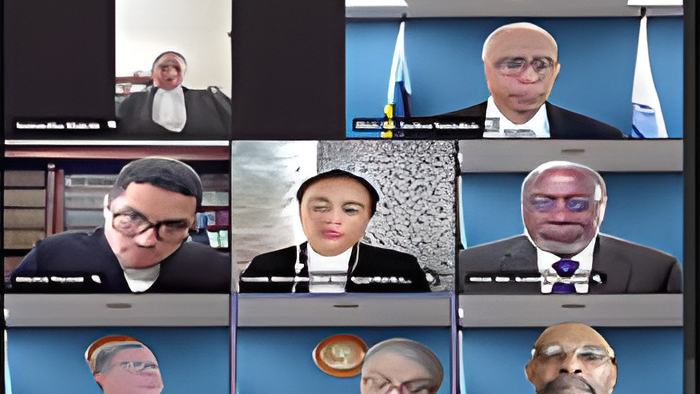
Sears' lawsuit met setbacks in both the Supreme Court and the Court of Appeal, which ruled against him and dismissed his case. Today, however, he received major vindication when a panel of judges from CCJ ruled in his favor and ordered that he be released from prison forthwith. Here's an excerpt of that oral judgment, which was delivered by Justice Jacob Wit this morning:
Justice Jacob Wit - CCJ Judge
"The Supreme Court dismissed his claim, holding that a constitutional claim was not the correct procedure to approach the court since his substantive case called for judicial review and a quashing of that decision. Further, the court found that Parole Board had clear proof of his parole violation and was legally empowered under the Prison Rules to revoke his parole. The Court also dismissed the notion that an oral hearing must be granted to parolees before their parole could be revoked. The Court of Appeal agreed with the Supreme Court that since the substantive relief sought by Mr. Sears amounted to a quashing of the Parole Board's decision, his action was brought via the wrong procedure. This court, having considered the facts of this case and the submissions of the parties, orders and declare that Mr. Sears' appeal is allowed, and we set aside the decision of the Court of Appeal. The Court declares that the re-incarceration of Mr. Sears from the 3rd of April, 2014, breached his constitutional right to personal liberty, as guaranteed under Section 5 of the Constitution, and that the manner of the parole board's revocation of his parole breached his constitutional right to personal liberty and equal protection of the law, as guaranteed by sections 5 and 6 of the Constitution. The Court, therefore, quashes the Parole Board's order, which revoked Mr. Sears' parole. Consequently, the Court orders that Mr. Sears be released from prison forthwith. All other reliefs sought by him are refused. Costs are awarded to Mr. Sears for the proceedings before this court, as agreed by the parties, in the amount of $17,500 US. His costs in the courts below shall also be paid by the respondents, to be agreed by the parties, or in default, to be decided in accordance with the Supreme Court Civil Procedure Rules 2005. Last, the Court directs the respondents to conduct an assessment of the date by which Mr. Sears would have served his sentence, bearing in mind a, his incarceration from the 21st of March, 2001, and b, any eligibility for remission that he may have earned over the course of his sentence."