
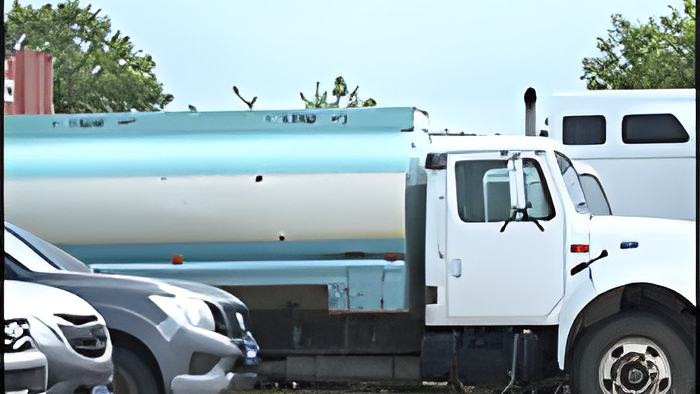
In May of 2021, it made headline news when a Customs enforcement operation resulted in the seizure of a pair of fuel tankers trucking across a smugglers' crossing in the Cayo District with a combined 6 thousand gallons of fuel. It was big news at the time - especially since it pointed to what appeared to be a live source of cross border contraband fuel ready to supply local gas stations.
But, after more than a year of impoundment, no one even noticed when the tankers were quietly returned to the owner a few weeks ago, in early July. 7News captured the footage on July fourth when the trucks - still full of gas - were being oiled up to be released after 13 and a half months in the customs yard.
This came after a trial in the Magistrate's Court where attorney Dickie Bradley convinced Magistrate Baja Shoman that there was not enough evidence to support the charge of "transporting goods liable to duties which have not been paid." Bradley argued that Customs may have caught the trucks with fuel coming out of Calla Creek - but they could not conclusively prove that those trucks didn't go over to Guatemala with that same fuel. The magistrate ruled that there was no case to answer.
It's a disappointing end for Customs - whose enforcement team staked out the tankers in outlaw territory for 12 hours as the trucks went from Belize over to Guatemala, and then came back many hours later. Customs believed they had exposed a major link in the supply chain for a steady source of illegal fuel coming into Belize - which is estimated to be in the thousands of gallons daily. In May of 2021, the Assistant Comptroller of Customs conceded to the challenges with proving criminal culpability in court:

Gilbert Gordon, Asst. Comptroller of Customs
"It is estimated that the contraband fuel that comes into the country, about $60,000 of fuel comes into the country weekly which translate to 3.1 million dollars of fuel comes into the country yearly and so it's a major impact on the revenue that the government should be collecting."
And while it's a disappointing outcome for Customs, for the truck owners, the value of the fuel that has remained in their tankers for over a year has only increased since then - putting them in position for a possible windfall when they sell the fuel.