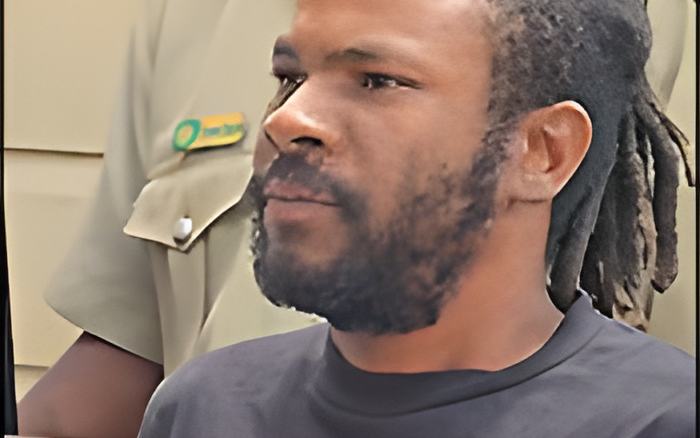


A ruling from the Caribbean Court of Justice has sent the long-running extradition case involving Andrew Bennett back to the High Court of Belize.
Bennett's Attorney Hector Guerra explained that the case raises major legal questions for Belize, particularly how authorities balance international law enforcement cooperation with the constitutional rights of Belizean citizens:
Hector Guerra, Attorney At Law
"This case is forcing our courts to look at balancing the rights of our citizens, our Belizean citizens, the constitutionally guaranteed rights of privacy and the right to be protected against arbitrary search and seizure. And it's forcing courts to grapple with how we will balance that against legitimate law enforcement and with how we tackle crime. I want to say that, generally speaking, these two things are not mutually exclusive. That they can coincide and must coincide in a constitutional democracy. So, let me start with that. Now, this case has to do with extradition proceedings against Mr. Bennett. It has to do with allegations of money laundering, which Mr. Bennett vigorously denies. And it started with a request by the government of the United States of America for the extradition of Mr. Bennett. The court started, the entire proceeding started at the magistrate court. There was what's called a case stated. So, at the magistrate court level, Mr. Bennett raised issues of constitutional breaches. So, he said that the U.S. government was

utilizing evidence which was gathered in breach of his constitutional rights. That evidence was WhatsApp communication, digital communication, that were intercepted by one of the participants of communication. And it was being used as the basis, as one of the basis, to extradite Mr. Bennett. At the high court, the court held that the use of that evidence was unconstitutional. Because judicial authorization to use that evidence under what was called the Interception of Communication Act was not first obtained. You had to get permission. The court felt that nonetheless, even if we extracted that part of the evidence, there were other evidence involved in the extradition request that could have grounded the request for extradition. That matter was then appealed to the Court of Appeal. The Court of Appeal agreed with the high court. It was ultimately appealed to the CCJ by Mr. Bennett. At the CCJ, we launched a wider abuse of process argument. We said that if you want to extradite a citizen of our country, you must do so within the parameters of the law. So that it is properly grounded, and so that you don't abuse the rights of citizens. You don't do away with the constitutional protections to privacy. You don't do away with the constitutional protection against arbitrary search and seizure. Because that's what this really amounts to. We live in a digital age where we engage with WhatsApp. We engage with Messenger. We share our private information on these platforms. And there must be, if we're to safeguard our citizens, there must be a legitimate right of every citizen to say, well, I'm doing this, and I expect some level of privacy to be attached to that communication."
The dispute centers on WhatsApp messages that were allegedly intercepted and used as part of the evidence supporting the extradition request. Earlier rulings from both the High Court and the Court of Appeal found that the evidence had been obtained unlawfully, relying on the belief that the Interception of Communications Act required judicial authorization before such communications could be used. However, during proceedings before the CCJ, it was revealed that the legislation had not actually been brought into force. Strangely though, this was not brought up initially but Guerra says their firm did not get involved until it got to CCJ level:
Hector Guerra, Attorney At Law
"So we weren't involved at the high court and court of appeal level. Our firm became involved at the CCJ. But the cut and thrust of litigation is such that there's so much out there that oftentimes legal errors happen. These things happen. And that's why in law, the principle of per inquirium has been developed, right? And so it was missed for some reason or the other. And the judgments were issued on the basis that in fact, the Interception of Communication Act was in force, but it was not. As I said, the result of that was that the CCJ has pressed reset and said, go back down to the high court to advance the constitutional issues that may indeed arise, notwithstanding the fact that the Interception of Communication Act is not in force."
Reporter
"How unusual is this reset process and what happens after this? How do you move forward?"
Hector Guerra, Attorney At Law
"So it is not unusual in the sense that it is common for apex courts to do this. They often do it where they can benefit from a lower court having first heard arguments on specific grounds. Yes. So in that sense, it's not uncommon. In terms of how it proceeds, it means then that Mr. Bennett can now go back before the high court and advance arguments as to why the extradition proceedings violate his constitutional rights and his rights to due process."
The matter has already stretched over more than a decade, with the extradition request dating back nearly 15 years. Bennett's legal team is also examining whether the lengthy delay could amount to a violation of his right to a fair hearing within a reasonable time, adding another possible constitutional challenge as the case returns to court.