
In the early part of last year, archaeologists made a one of a kind discovery of a wooden paddle in the Payne's Creek National Park. This is believed to have been used by the Maya to transport salt from the cayes to wetlands across the mainland. Now, archeologists have found what may be a matching piece for the paddle: a dug out canoe. It was found in the Uxbenka area in Santa Cruz Village in the Toledo district. Director of Archaeology Dr. Jaime Awe explains why a wood product that's over one thousand years old is great news for archaeology and Belize.
Alfonso Noble Reporting,
Archaeologists believe this slab of wood is the remnant of a dug out canoe that dates back to between 200 and 800 AD, the oldest such artifact ever found. When doing work in the Uxbenka area near Santa Cruz Village in the Toledo District, Wichita State University archaeologist Keith Prufer was told about a canoe in a cave. Like any archaeologist he investigated which meant a perilous climb.
Dr. Jaime Awe,
"The climb up to this cave is incredibly difficult because you have to sort of scale the side of this cliff face and it is more than a hundred feet up and when they got in there, they did indeed find this tomb but on top of this tomb was this large, fairly well preserved canoe. Now unfortunately the tomb had been looted and the vandals who had looted the tomb had attempted to move the canoe and when they moved this canoe, it broke in half. From looking

at the rest of broken pottery inside the cave, and also from what we know of the area where around, that the canoe probably dates sometime between 200 and 800 AD. Regardless, this is very very early. We are talking about this canoe being there for 1.5 thousand years. We think that it was very likely made from cedar. A lot of the canoes made by the Mayas were made from cedar, some of the large ocean going canoes because the Mayas had a lot of different types of canoe, some used in rivers and some for going out in the ocean."
And while the Maya may have had practical uses for their canoes, this one stowed inside a hundred foot high cave would make any archaeologist ask why.
Dr. Jaime Awe,
"We think that the canoe may have been made specifically to accompany the burial of this important person inside this tomb in the cave. It is very unlikely that it was ever used on a daily basis to travel up and down some of the rivers of Toledo."
But why have a canoe at a burial site? To answer this question awe and other archaeologists are putting together known theories and practices about the ancient Maya and their beliefs.
Dr. Jaime Awe,
"The ancient Maya and even the modern Maya believe that when one dies, one has to travel into the underworld and caves are the portals into that underworld. The underworld is also a very watery place. Just about every cage we have in Belize, and we have thousands of caves, have rivers coming through them. So symbolically then, rivers were born in caves and so when one traveled to the underworld, one needed to have some kind of watercraft. So the idea then to put a canoe in a cave on top of a tomb of some important ruler or some important person in that community has very very significant symboligical relationships."
And those relationships say that when someone dies, they travel into the watery underworld in canoes.
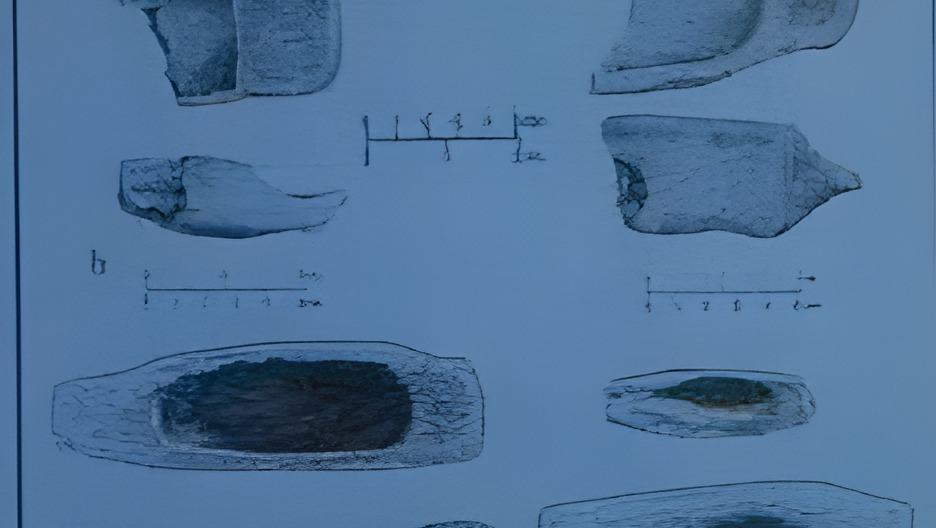
Evidence of these symbolic travels comes from artwork by the Maya. In this carving done on a human bone, a king seen here at the center of the canoe is taken on his journey into the afterlife. He's accompanied by wailing animals and solemn paddlers.
Dr. Jaime Awe,
"We also find evidence of this Maya art. You will notice from the pictures that we are looking at was carved on human bone in a tomb that was discovered at the site of Tical in Guatemala. Now it is carved on human bone and the carving is on three sides of the bone but we folded out those drawings. At the top, of the carving, you will see this canoe with two paddlers, one at each end of the canoe, and in the middle is the young king or ruler and there are several animals and they are transporting this dead king into the underworld. The middle section also shows the canoe now tilting and actually going into the watery underworld, sinking below the surface of the water."
The cave discovery is now proof that what was depicted in Maya art was actually practiced. This discovery, the first of its kind, gives Belize bragging rights.
Dr. Jaime Awe,
"This is the first wooden canoe found anywhere in Meso-America and this is the first ever too in the Maya region. It is just incredibly for us. We are incredibly fortunate, that is certainly the ca se here. But I think beside being fortunate and besides being luck, and Belize has produced some of the incredible discoveries in Meso-America, and I think part of the reason is that we have actively encouraged research in more remote areas of our country and this is important because you need to get out there before the vandals get out there. When we make these kinds of discoveries it is good for everybody. It is good for us as a nation, it is almost good because we add to our knowledge of the past, it also puts Belize first and foremost in the international arena, especially in terms of archaeology discoveries."
Because of this Awe says that here in Belize emphasis is being put on working in remote areas where little or no work has been done before. But Awe says the archaeology department is always mindful of the community impact.
Dr. Jaime Awe,
"The work at Santa Cruz does not only involve archeological research. It also includes a lot of community participation, community involvement. The more we involve local communities, people start to take ownership of these sites and they get the sense that they need to protect these things. These are part of our history, this is our heritage and if we preserve them they'll be there for future generations to enjoy."
Samples of the canoe have already been taken for carbon testing to determining the exact age of the canoe as well as what kind of wood it's made of.