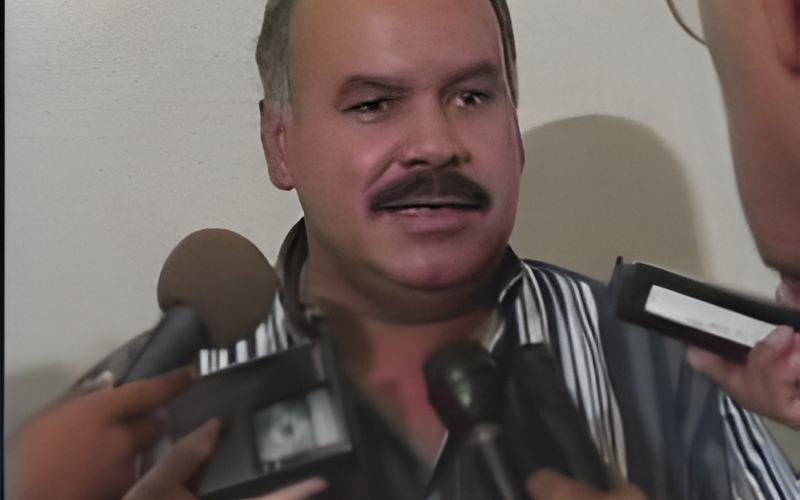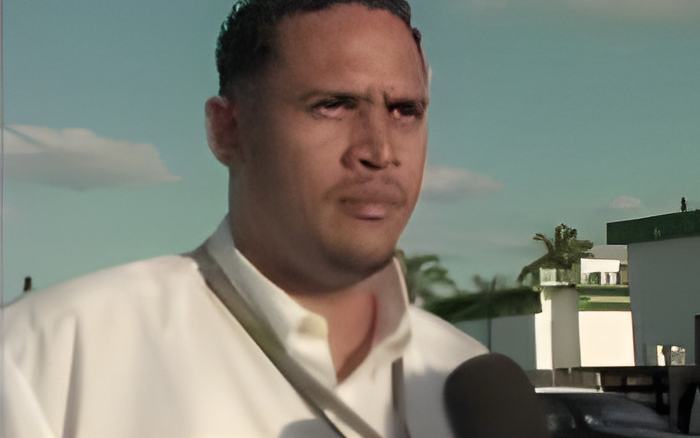

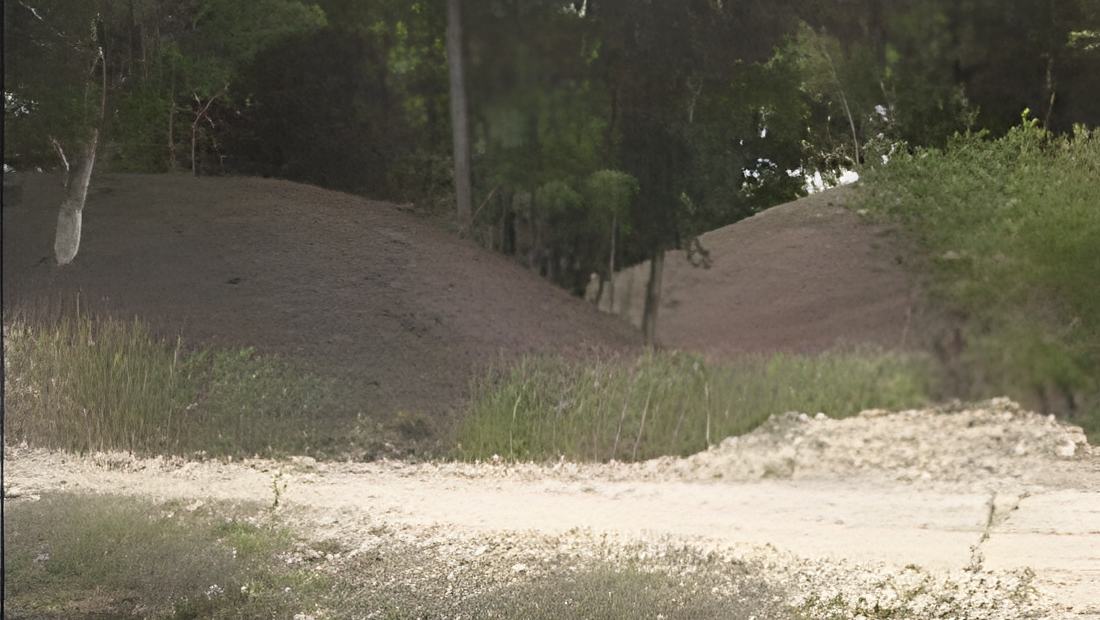
There are Mayan mounds across Belize and the rule of thumb is that wherever you see a hill in flat areas, it's probably a Mayan mound. And that's what had been going largely un-noticed at mile 12 on the Western Highway until developer Arnaldo Papi Pena began work there. The mounds are now completely exposed but no one clearly knows what they are. In 2005 the archaeological investigation started and today researchers connected the dots for us.
Alfonso Noble Reporting,
These mounds at mile 12 on the Western Highway have long been documented as vestiges of Mayan antiquity. Just passing by on the highway, they seem like curious mounds in the middle of a swampland area. For archaeologists the area known as hector creek has conventionally been considered minor. But that view changed in 2005. At that time the developer, the controversial Arnaldo Papi Pena asked Boston University's Dr. Patricia Mcanany to map the area. What she found was impressive.
Dr. Patricia Mcanany, Boston University
"The site actually extends a mile and a half to the north and there is about a mile and a half on its east-west axis, twenty seven of these big mounds total."
Director of Archaeology Dr. Jaime Awe says that up until the mapping was complete, no one knew how large the site actually was, and because of that there was little interest in it.
Dr. Jaime Awe, Director of Archaeology
"We did not realize the magnitude of the site and the importance of it in terms of the ancient economy of the Maya of Belize."
And the site was important to the Maya because it was an age-old industrial area, producing salt.
Dr. Patricia Mcanany,
"This site is the biggest salt producing site that has ever been documented in Belize and perhaps one of the largest along the Caribbean sea board. So we think a thousand years ago mangrove swamp was a pool of shallow, very salty water and that the water was taken, probably in the dry season when it was concentrated, and they would take water out of the ponds and then they would boil it down so all the water would evaporate and then they would just have the salt left in the bottom of their pottery vessels."
Dr. Jaime Awe,
"Heather MacKellog has referred to salt as the white gold of the Maya because people required it for subsistence and for their own nutrition. So by the Belize Maya, especially along the coast, by their ability to produce this and export it inland, it meant that they would have been doing very well economically."
Dr. Patricia Mcanany,
"I know that there are many important sites in Belize but we feel that this site is so singular that it truly is a very important site. It's a site that probably, we're still trying to figure out through our excavations whether people lived at this site or whether it was more of an industrial production site."
Archaeologists are now trying to prove the theory by digging for it. So far the dig has yielded artifacts like these clay cylinders used to prop up the water boiling pots as well as pieces of the pots themselves.
Dr. Patricia Mcanany,
"These mounds are a bit of a mystery and that is why we are conducting the excavations so that we can know something about what archeologists call 'site formation processes' or how the mounds were constructed. The soil on these mounds is a very beautiful soil, very different from the clay and the sands that you see in the area between the mounds but it is full of artifacts. Right now the plan is to do a series of trench excavations, this is one of our larger trenches, some of the other units are small, squared units, two meters on the side and we will as we go down we collect all the artifacts and then the Institute of Archeology will come out inspect our trenches. So far we far we have found nothing that could be conserved for display. It is quite likely that this site will always be seen as big mounds but perhaps in the future at some point there'll be a visitor's center that will help to tell the story of this site at mile 12 on the Western Highway."
Dr. Jaime Awe,
"There is no stone architecture that we can preserve but I think that in the future, if a visitor's center can be built out here, which tells the story of Ancient Maya salt economy, how our salt is produced. If we had a visitor's center that you could go in with reconstruction paintings and artwork which show these kind of buildings with the Maya utilizing them with them making the type of pots that they use in the production of salt and then with some information as to how the salt is exported inland and the importance of salt to the economy etc., that's what I would like to see in the future."
The site was very important to the ancient Maya and modern archaeologists, but it is yet to be seen if it will be as important to the developer.
The team from Boston University will be working at the site until the end of March.