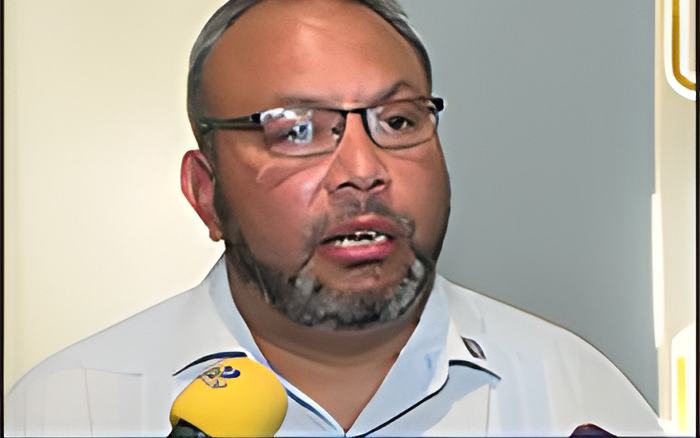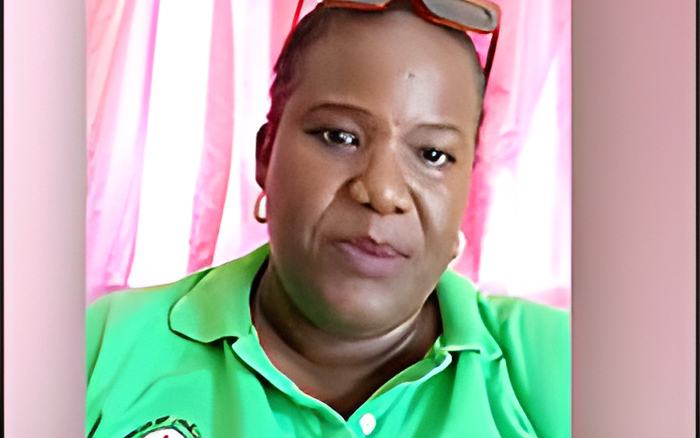

Tonight we're talking to husband and wife archaeologists Dr Arlen and Diane Chase, as well as Director of the Institute of Archaeology Dr Melissa Badillo about the recent discovery of the tomb of the first ruler of Caracol.
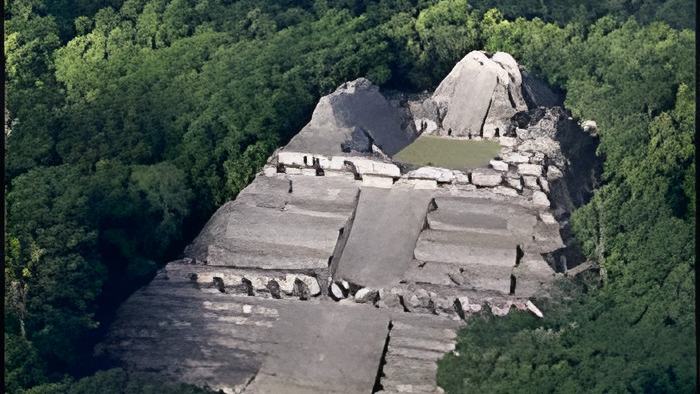
It was unearthed early this year by a University of Houston team led by the Chase's - who have been working at Caracol for 40 years. This morning via Zoom, they told Jules Vasquez more about the are of Caracol where they found it - and what the ornament are so significant:
Dr Arlen Chase, Archaeologist
"But realistically, it's over 40 years in the making. Because it was in the Northeast Acropolis of Caracol, and we've actually dug in the North East Acropolis multiple times, including a trench that we originally did in 1993. And what we did this year was go back to that 1993 trench. We reopened a small portion of it and went through a tomb that we found in 1993 to get to this new tomb."
"But as soon as we went through the previous tombs' floor, we were into this chamber and so it was a lucky find in that sense, because there's a time discrepancy of over 500 years between the two tombs."
"And tombs are nothing unusual for Caracol. We've dug over 170 tombs and some 850 burials. And so, but this is a special one because of the kinds of contents that were in it."
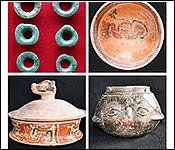
"This is the first tomb at Caracol that actually had a jadeite mask, for instance, which is usually a sign of rulership. And it it follows a lot of the general Caracol patterns."
Dr. Diane Chase, Archaeologist
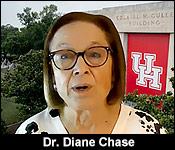
"That this particular, interment, you know, this particular tomb helps us see that the Maya system of rulership, dynastic rulership, in Belize and at Caracol started there. That it was not imposed from someplace else. It didn't get imposed from Teotihuacan, from central central Mexico. So that in and of itself is incredibly important. But in addition to that, all of the various finds from this time period that are mostly in this Northeast Acropolis area help show us how connected the Maya at Caracol were at this point in time with other places across Mesoamerica."
Dr. Melissa Badillo, Director - Institute of Archaeology
"Well, certainly we were really excited about the discovery."
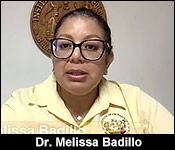
"I mean, it adds so much more intrigue to the site and a lot of interest, and partner that with the new road into Caracol, we expect a lot more visitations and interest in the site. Now, we do have the artifacts here in Belize, and in fact, we are planning on maybe showcasing a few of them, next week."
"We also want to work on some, digitization of these artifacts so that we maybe may be able to feature them in a technological way at Caracol, which would be easier for us, to display them on for people to, to interact with the, the artifacts."
Notably, the artifacts reflect ties to central Mexico's Teotihuacan, pointing to high-level diplomacy in the early Maya period. But, this find puts Caracol above that site in the political hierarchy. We asked where Caracol ranks in the Mesoamerican hierarchy of Maya sites:
Jules Vasquez
"You have these apex sites. Guatemala may have one, Mexico may have one. Is this a way to to to give us preeminent bragging rights that we have one of the most seminal and important sites now, again, underscored in this discovery that established that it had sort of like original jurisdiction. It did not derive its authority from regional affiliates."
Dr. Melissa Badillo, Director - Institute of Archaeology
"Yes, it does showcase that Caracol is amongst these top sites. And we definitely want to highlight that, we can no longer consider Caracol and Belize on the, back burner or anything like that. We are at the, apex of Maya archeology and within the region as well."
"Caracol being the largest site in Belize, we certainly want to do our part in ensuring that people are educated on that and that they understand that Caracol had not only influence in Belize. And in this region, but across the Mesoamerican area all the way up into central Mexico."
Dr Arlen Chase, Archaeologist
"But Caracol is bigger than Tikal. It's bigger than Calakmul. It's bigger than Chichen. It is, in fact, the largest known Maya archeological site in all of the lowlands. And it is densely, densely occupied, more densely settled than the other sites as well."
"So this site is incredibly important to the ancient Maya, and it is probably one of the foremost sites. They're not interested in telling you how important they are. They know how important they are, and that is what is going on also in this tomb. He knows how important he is. He doesn't have to prove himself."
Jules Vasquez
"It's been 40 years. Do you believe that you have now exhausted the excavations? That you have uncovered Caracol's last secret?"
Dr Arlen Chase, Archaeologist
"Absolutely not. There's a lot more."
It is estimated that at its height around 650 AD, Caracol as a regional city state, spread over 240 square kilometers with a population of over 100,000 people.