
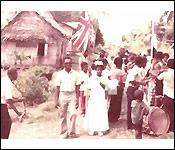
Tomorrow, Saturday, August 1, is a public and bank holiday, as Belize observes Emancipation Day for the sixth time.
But why must Emancipation Day be remembered?
Well, it commemorates the abolition of slavery across the British Empire, a major and complicated part of Belize's history. Jaleeza Roberts went looking for answers:
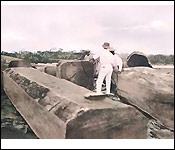
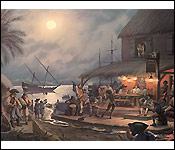
Tomorrow, Belize will mark Emancipation Day. But beyond the drumming, food and celebration, August first is a reminder of a painful chapter that shaped the nation. It is the story of thousands of enslaved Africans whose forced labor built the British settlement that would eventually become Belize, and whose resilience gave birth to much of the country's language, culture and identity.
The observance commemorates the abolition of slavery in the British Empire on August 1, 1834. While freedom did not come overnight, many formerly enslaved people were forced into an apprenticeship system until full emancipation in 1838. The date remains one of the most significant in Belize's history. For the National Kriol Council, President Wilford Felix says it's about ensuring that history is never forgotten:

Wilford Felix, President, National Kriol Council
"Emancipation Day is one of the most important observations within the Kriol community because it reminds us and it highlights a time of our sojourn where our forefathers were enslaved and were liberated from the physical slavery so the remembrance of it, the observation of it is to never let the story die, for us to remember how we got here and what all we went through to survive up to this point."
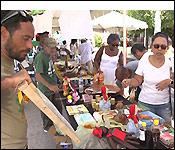
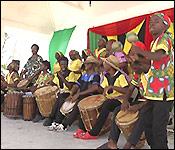
This year's celebrations once again center around the historic Eboe Town Festival in Belize City. The name itself carries centuries of history.
Wilford Felix:
"The Eboe Town Festival will highlight most of the Creole culture. It will highlight some other cultures too, but because the Creole people in Belize, the ancestors of the Creole people were the ones who were enslaved, the Creole culture is the focal point of the Eboe Town Celebration. What I want to say though is the reason why it is named Eboe Town and that is because the settlement where our African forefathers resided, within the British settlement at that time, the majority were the Igbo people. So they called the settlement Igbo Town."
As time moves forward key elements of Kriol culture are being left behind, but the National Kriol Council is working to preserve that heritage for future generations, including by standardizing the written form of the Kriol language:
Wilford Felix:
"Creole culture overall, yes. Because it's our culture primarily was being ostracized, was being erased, was being controlled and redirected by the colonizer. So, it's not so much that Creole culture has been whitewashed, but it has been influenced externally by the European or the colonizing factors. When you look at Creole culture as what it is, Creole culture is still full of a lot of African and Miskito heritage."
"One of the main things that we have been able to implement is beginning the process to standardize the written form of the language. If you go on social media, you will see people spell it all different kinds of ways, however they feel like in Creole. What we are using the standard writing form to do is to bridge those divides and to establish that one form as how we will write Creole anywhere we go, regardless of how we talk it."
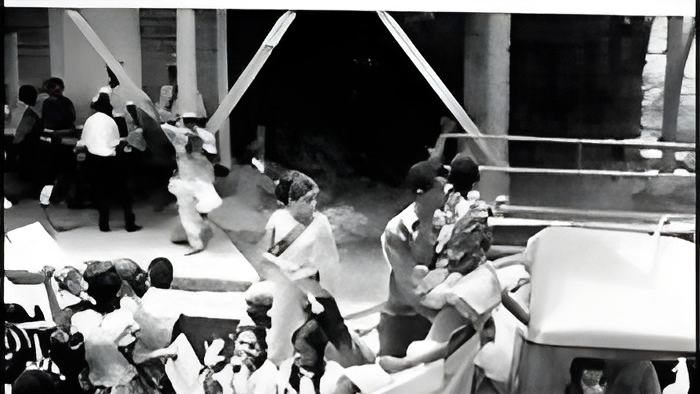
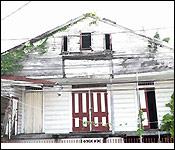
And perhaps nowhere is the struggle of Belize's Afro-descendant community more visible than at Liberty Hall, on Barrack Road. It may look like an old dilapidated building, this was actually the historic headquarters of Marcus Garvey's Universal Negro Improvement Association in Belize:
Wilford Felix:
"This old Broke-Up Building. This is Liberty Hall. This is the place where a lot of our own Belizean people gather, not just for the sake of coming together, but to strategize what will be the way forward, not only for Creole, but for Afro-descendants as a whole. Liberty Hall was established by the Honorable Marcus Mosiah Garvey as the headquarters in each country of his movement, the UNIA, Universal Negro Improvement Association, which had heavy influence on UBAD and UEF and the entire conscious and black community in Belize. Liberty Hall was the place where Excelsior High School started off. Liberty Hall, historically, is also a home to the Black Cross nurses who have been instrumental in the health care within Belize. So if you look at it old and broke up, but check it out so that it still stands up. So I like to tell people that Liberty Hall, as we see it now, directly represents the condition where we as a people are in now. We are here for King Hachett was a hammer, just like Liberty Hall. We are here to see so much hurricane pass, so much storm, so much disaster, as natural and man-made, but we still stand up. With foundations still strong, that is why we still stand up."
Jaleeza Roberts, 7News.
Tonight there will be an Emancipation Day church service at Queen Street Baptist Church at 10:00 p.m., and tomorrow at the Isaiah Mortar Square in Yabra they will have the Eboe Town Festival from 11:00 a.m. to 8:00 p.m.