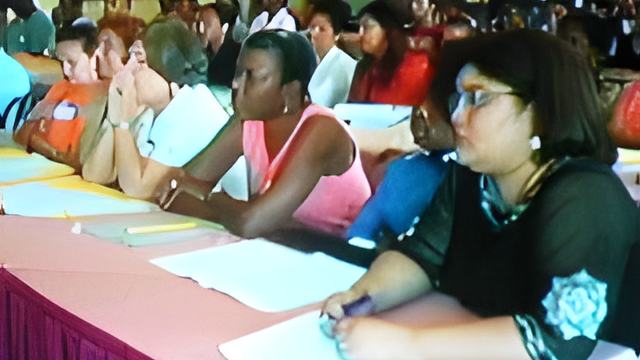
More than Said Musa, Dean Barrow, or for that matter, Dylan Reneau, crime is the single most important social determinant. It tells us what to do, when to do it, and who to do it with, just to ensure personal and family safety. And while we know how crime affects our behavior as adults, in September of last year the Community Rehabilitation Department conducted a study to look at the impact crime and violence has on children. Today after 4 months of work the study was presented to the Ministry of Human Development and partner organizations like UNICEF and the NCFC. We were on hand as the results and solutions to the problems were delivered.
Alfonso Noble Reporting,
Crime may well be the single most detrimental force in Belizean society today. Its effects are felt even more greatly in the young population and today researchers presented Belize's study on the impact of crime and violence on children and adolescents. Not surprisingly, they are the ones suffering most.
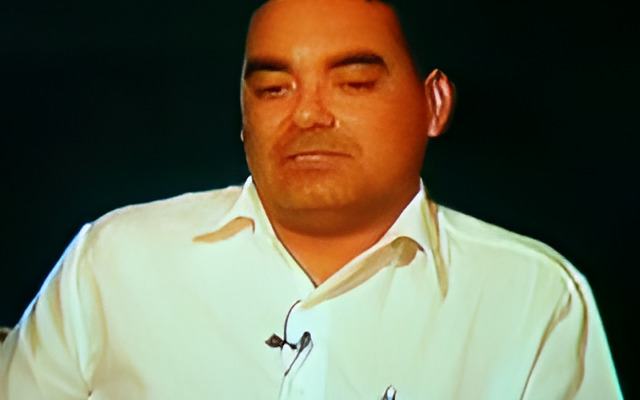
Michael Rosberg, Consultant
"What we learned from them, (is) first that they live in many situations which is very insecure. We got surprising

results from the study (when we) asked the young boys and adolescents in the country did you feel your mother loved you when you grew up. 80 out of every 100 boys said 'no I didn't feel she loved me,' but 83 out of 100 girls said 'I didn't feel she loved me,' very surprising. But also the amount of stabbing of children, whipping of children, and caning of children, there is a lot of severe crime and violence that is inflicted on the children while they are growing up and lots of it happens in the home, some of it happens in the school yard, and too much of it happens, as we know, in the streets. We do see, I think it was 12% of boys in the study 7% of the girls, so that means 12 out of every 100 boys and 7 out of every 100 girls joins a gang. Now they don't all stay in gangs but 12 out of a 100 is a lot of kids to be losing to gangs."
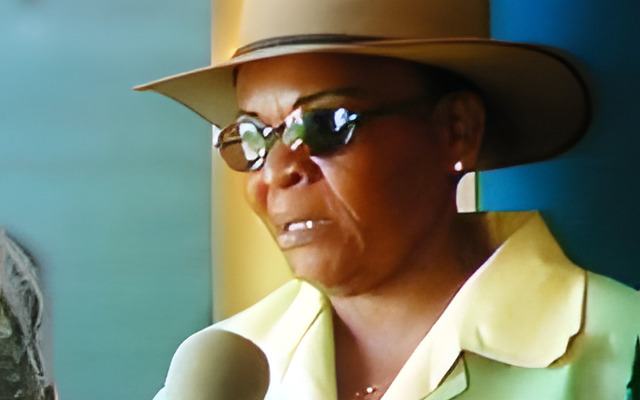
Sylvia Flores, Minister of Human Development
"I think this report gives us a small glimpse of what is happening to our children. Not until we have heard from them will we truly understand the impact of crime and violence on our children."
According to Rosberg, the glimpse into the life of children is showing that a lot of the unsettling behavior by our young people can be directly linked to a child or young person's security or lack of it.
Michael Rosberg, Consultant
"The more insecure the child feels physically, 'I don't have enough food, I don't feel safe in the streets. Emotionally, 'I don't feel they loved me', neither my mother nor my father, or financially that I need school books, I need shoes. That will then show up in security seeking behavior and very often that behavior is anti-social behavior. As they themselves are saying, if we can't get it one way, we will get it another so that the reaction usually to that is let's stop this violence and lets show them whose the boss but that seems to be contributing to it. In other words, that makes them more insecure and then it gets worse."
The challenge now is to find a tangible and effective solution to this method of guiding our children, turning away from the rod and offering more nurture. To this Minister of Human Development Sylvia Flores says we need to look at the community as a whole.
Sylvia Flores,
"We will seek to, again as I said, join with other partners in helping us to come with a more holistic approach to how we're going to develop a needs
program that will help to address some of these situations. When we look at the larger society we recognize that poverty levels in families can truly affect how children respond and COMPAR is trying assist parents, and especially young parents, because when we look at our society with the large number of young people who are having children, especially teenagers, they need assistance in helping to bring up their children and when they have to look at ways like how to develop their children, their emotional, their socio-needs they need assistance in that area because they themselves are still children and we need to support them. Community parenting is an effort that we at the Ministry have initiated to assist parents."
But more than working with parents, Roseberg says that recommendations have been put forth in the study to set up and reinforce already existing infrastructure to deal with the problem.
Michael Rosberg,
"I guess the solution is to turn in the other direction, to say look, if they have physical, emotional, and financial needs this society has an obligation to do something about it and then the recommendations deal with that. The recommendations deal with sowing together a national response so that we could provide for the needs of our children and adolescents in Belize. The second set of recommendations look within that to say how shall we respond when we find that there are security needs in the home, in the schoolyard or other institutions, and in the community at large. We had to make the recommendations doable, achievable. Yes they are, we are talking about building on what we have and there's a lot that's going. A lot of the monies is to be spent on improving the training and shifting the focus from what we are going to offer to figuring out what people need, the young people need, and how we are going to provide what they need."
So now that is the challenge because while the study does point to some of the problems in the young people of Belize, figuring out what they need is a bit more difficult to ascertain.
The Crime and violence study was supported by UNICEF and they Continue on this agenda by allowing youths in the region to express Their concerns through an internet forum at www.unicef.org.