And how did the schools do? Well again, private schools dominated. Of the top ten schools, 8 are private. They are led by Blue Creek Mennonite, which only had one student take the test, Hummingbird Elementary, which was tops last year, and Island Academy. Belize Elementary, the fourth best, which fielded 47 candidates and Grace Primary the ninth which fielded 42 are the only schools in the top ten with more than 15 students. Notable big schools in the top 25 are St. Joseph in Belize City whose 107 students ranked 16th. Holy Redeemer, whose 96 students ranked 22nd and La Immaculada whose 94 students ranked 25th.
Still private schools with their smaller classes ruled, and in a press conference today, the heads of the Education Department discussed why and looked to where the public education system is going wrong.
Allan Genitty, Deputy Chief Education Officer
"Although private schools have maintained top positions in the PSE over the past five years, some schools have shown significant improvements in overall performance. Such schools, just to mention a few, include Grace Primary in Belize, Crooked Tree Government School in Belize District, St. Andrews School in Cayo District and I think that's an Anglican School, Holy Redeemer R.C. School in Belize City, St. Joseph R.C. School in Belize City, La Immaculada R.C. School in Orange Walk District, and Pancotto Methodist School in Belize District."
And the Chief Education Officer says these schools improved because there was a team effort.
Maud Hyde, Chief Education Officer
"We refer to some small schools that have traditionally been at the very bottom of performance if you look at the list. We refer to Crooked Street Government School. We refer to Pancotto. These are schools that have taken themselves from the bottom of the barrel right up to the top and we are looking there at a community effort. If you talk to the management in those schools, they will tell you the parents are there, the teachers are there, the principal is there; it is a combined effort. There are schools that have shown quite a lot of increased performance over the years. There are schools that traditionally would have been seen as schools that would be expected to perform well; small rural schools, multi-grade situations. We have seen these schools move from the bottom right up to the top ten or 20 performing institutions. So there is something happening out there that we need to capture in more of our schools."
But that was not captured in most schools. Of the approximately 260 schools that entered students to take the exam, only about 40 of those schools had an average score above 60%. That means 85% - more than three quarters of the schools that took the exam had a school wide average score below 60%. For the nearly 6,000 students, the average score was 57%.
Allan Genitty,
"The mean performance, and as we said averages hide some information, but the mean performance in math and science has informed while there has been a slight decline in English and social studies and in addition to that the overall student performance is now at roughly 57% of all students are doing satisfactory."
Yvonne Davis, Director of Examinations Unit
"While 57% may be doing a lot better, this year it is not necessarily
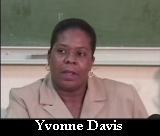
satisfactory according to our standards. We are hoping that we could improve performance to at least 60% and then we could be looking at satisfactory performance. We still are more or less at the adequate level where we are just over the 50% mark in most areas. We have been trying to maintain that."
And while the goal is not to slip below the failing grade of 50% - who is to blame for all this failure.
Maud Hyde,
"With respect to who has failed, I would say that all of us in a way as a system has because it is our responsibility to ensure that our students, our children get the best opportunity to a good education. There is a principal and teacher on the ground that should be the manager inn that school. There are managing authorities that should ensure that proper conditions are available for children to learn. All managing authorities have the responsibility to ensure that good provision is made for the children in their care and this is why we are licensed to operate a school. So there is the partnership that we need to refer to with respect to moving the performance of students to a higher level.
There are lots. Parents have their role, Ministry has its role, managing authorities have their role, children have role and somehow we are not bringing all the pieces together. So as a community we have to work harder to hold each other accountable. Hold the Ministry accountable for what the Ministry should be doing. Hold parents accountable for what they should be doing and hold the managing authorities of our schools responsible for what they need to do."
Yvonne Davis,
"There has to be some accountability built into the system. Those schools who have not been performing for years and keep at the bottom, keeping performing at the bottom of the range should be accountable for those children that they are putting out there."
And while there is enough blame to go around, the only ones who've been told and judged as failures are 4,123 students who got a failing grade. Of course, they aren't the ones that failed - the system failed them. But the Ministry isn't about to abandon or remodel a test that continues to belittle, humiliate and misjudge primary school leavers.
Maud Hyde,
"We need to keep the standard and pull our system to meet that standard otherwise we will be behind everybody else. We need to work harder at it."
We should note that of the 5915 candidates who took the test, not all came from primary schools. A small number including prisoners, and independent candidates did it on their own.