
body,td,th { font-family: Arial; font-style: normal; font-weight: normal; }
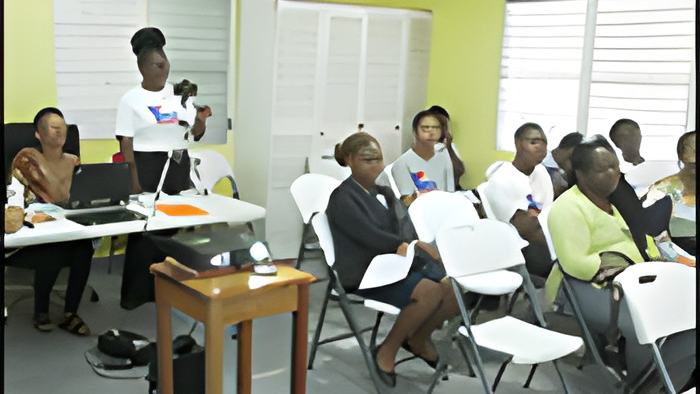
This summer the YWCA, hosted a course called the Bilingual Way. And if you thought that would be English and Spanish, you'd be wrong.
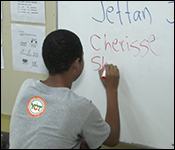
Instead, it's a 3-week summer course for 15 high school Kriol speakers aimed at developing kriol literacy and getting better at English grammar too.
Cherisse Halsall dropped into the class to see what it was all about.
Over the past few weeks the MCA has played host to a course in Language, Culture, History, and Self-Esteem.
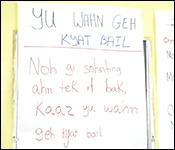
It's a course in Kriol and English organized by linguist Sylvanna Udz to help native Kriol speakers become more comfortable with the grammar rules of English by first making them literate in what is often their native language, Kriol.
Sylvanna Udz, Kriol Linguist
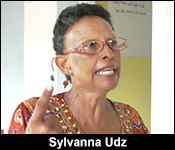
"So, this system we developed is like a transitional system for someone who is educated in the literacy of one language or maybe two, Spanish too but say English but they are bi-lingual in Kriol and English, you could do it with Spanish and it is try-lingual right they don't read or write Kriol or they do ad hoc, you know, thier own way so what we try to do is show them two things, the bilingual way. If you use, give them the knowledge about Kriol rules because they know Kriol but they don't know how you form past tense in Kriol they just do it."
"We are dealing at the remedial level, we are using this bilingual way in a remedial way but also developing pride in the Kriol by using a standard spelling."
It's a curious method that an old school English teacher might have thought of as counterintuitive, but the results speak for themselves.
Clara Cuellar, Strategic Leader
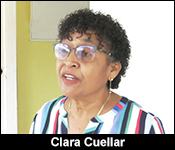
"If I can show them in their own language first instead of treating them like they don't have any knowledge of language then. When I tell them in English you can't say he left or he went or he is coming or he is not here, that is what it does it helps them to understand immediately that wow it's a different meaning I can't be confusing them now I am better motivated with the understanding to learn the rules of that language.
Cayron Jones, Student
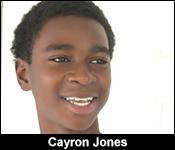
"I have learned more in Kriol than we used to and then like when we first came here we didn't know that much about Kriol but Ms. Sylvana helped us and that improved our Kriol language.
Reporter:
"Are you more proud now of being a Kriol speaker than you were before this course?
Deandre Middleton, Student
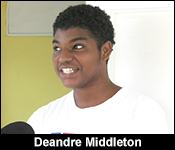
"Definitely because, I'll be honest, I didn't really know much things about Kriol I didn't know the words most of the words I thought were wrong so I would say definitely.
And equipped with the grammar and syntax of Kriol, these teenagers will be better able to embrace the language that they've been fluent in all their lives, the one in which they feel most comfortable expressing their feelings and finding connection.
Clara Cuellar, Strategic Leader
"It's easy for me to get involved when you start to touch my heart."
"When you use that Kriol language as you know and you hear that especially if you are in a strange place, it's like I'm not by myself, I belong. So if you let a young person feel a sense of belonging and love they are inspired and when you're inspired you work hard."
Udz says that unlike the regular writing-improvement course, the Bi-lingual way, quote: "taps into the participants metacognition about the home language they speak." end quote.