
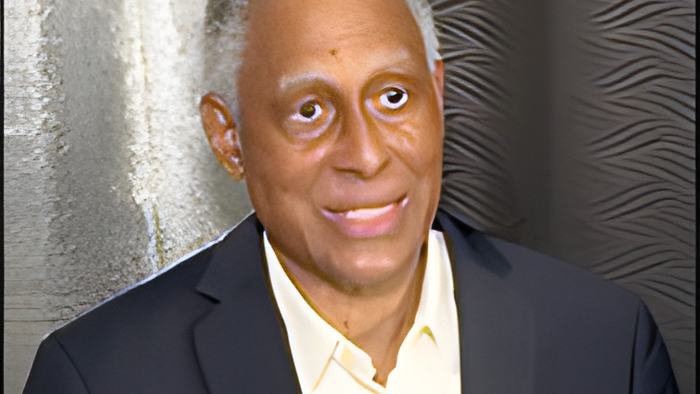
In July, Justice Adrian Saunders stepped down as the President of Belize's apex court, the CCJ. He sat on the CCJ for twenty years, seven of those as the Court's third President.
He's currently visiting Belize for a regional law conference and he came to our studio today where we asked him about the CCJ's role in decolonizing justice:
Justice Adrian Saunders, Former President - CCJ
"Decolonizing justice is a task which all the branches of government have to assist with. And decolonizing justice is not really about blaming Britain or seeking to escape from the thrall, the bondage of colonialism is also about modernization because justice in the 21st century is not what it was in the early 19th century. We have to embrace core technology. We have to ensure that we are in step with new concepts of courts."
"In other words, you have to not regard the physical structure of the court as the necessary locus for your decision making and for the work that you do with your customers. And you have to regard the litigants and the lawyers as your customers. You have to think about what Professor Susskind calls outcome, thinking that is, don't get caught up in the form. Don't get caught up in the process. Get caught up in the outcome. The outcome is justice."
"And sometimes those ways and means are fettered by the colonial constructs and models that we have inherited."
Jules Vasquez
"I'm saying that the the norms of the court were probably defined in the 1800s. But in this 21st century, especially with the advance of media at every turn, the local courts are very visibly out of step. The CCJ is not. The CCJ has all its hearings online."
"What is it that has guided the courts to such an enlightened position? Cynically, one would say, well, it's hawking its wares in order to try and induce the other other countries to join."
"But favorably, one would say it's trying to keep step with the times."
Justice Adrian Saunders, Former President - CCJ
"Both of them. It was important that the institutional mechanisms that underpinned the CCJ were, such as to ensure that the court was efficient, the court was transparent, the court was independent. And we have built on that foundation over the years."
"And the point that you've just made, that the importance of transparency, of the public being able to have a look in, we talk about open court. These days, the concept of open court is not the courtroom. The physical courtroom door is open for people to go in. That is all right."
"But the court could only have 20 people or 30 people or 40 people. The concept of open court is that people, the housewife who is at home, can look on her monitor and see the case that she has an interest in, what the judge is saying, what the lawyers are saying, what the witnesses are saying, have that made available to them through the modern methods of communication that are available to us."
Jules Vasquez
"Would you exhort local courts to follow that example."
Justice Adrian Saunders, Former President - CCJ
"By our example, we do. And when we have conferences, we point out the advantages and benefits of it, because to it is also a check on the, frankly, the conduct of judges."
"So I certainly am a big supporter of cameras in the courtroom. There was a time, 30, 40 years ago when people were skittish about it and not sure. I think we've gone past that. And it's something that, people like yourself should champion."
We'll have part two of that interview tomorrow when we ask Saunders about the court's inability to get the big Caribbean countries to adopt theCCJ as their courts of final appeal.