

As children, many of us dream of being a medical doctor, but life has a way of convincing most of us that it's too hard, or it would take too long. But for Keira Medina, that dream came to life after she had finished high school and had three children. She pursued her dreams at medical school in Nicaragua and then came back to Belize to live that dream, and contribute to her community as a doctor. But, tonight, that dream lies shattered - because she says a punitive and punishing internship at the KHMH broke her. Here's part one of her story:
It wasn't easy for this child of the city - who didn't even speak Spanish before she left.

Dra. Keira Medina, Seeking License in Belize
"I started my career when I was 26 years old. And like I said, I had three kids at the time. I never thought I could have do it but eventually I ended up doing it. You know it took, it took a lot of time and effort. I failed a couple of classes and I'm not ashamed to say it. You know, the language was, a very difficult thing for me. And in time, I proved myself."
"I was so proud, I was so proud because I had accomplished something that I never thought I could have accomplished. I wouldn't say I'm a victim. I am a survivor of teenage pregnancy. I had my two, my first child when I was in my fourth year of high school. And, I thought that was it for me. You know, all I had was a high school diploma, and, when I got the opportunity to go and study medicine, I was like, I don't think I can do it. You know, like, I have three kids now. Like, who am I going to do it? But as I told you with that strong support I had, it made it possible for me."
"So, coming back home and being so proud, coming back home to serve my country. After obtaining my title of being a doctor, being recognized and being respected and acknowledged in a different country, I was proud to come back home and say, you know what? I can do it."
And she tried, but says she had a hard time getting the sense of Belize's medical system:
"It took me a year to find out that this system here in Belize, it, it is different."
"I studied medicine but in a different country. Now I come home an dI want to practice but I wasn't given a clear explanation or a clear introduction."
"And it never felt right because I am required to perform a specific task, I need an introduction, you need to at least show me how to use the system in Belize, this is supposed to be a learning, nurturing experience."
"So, where is my introduction into the program? I never got that and I felt lost"
And that's why she lasted only one week - in a one year medical internship which she started in 2022.
Jules Vasquez:
"So no, but other people are going through it. Hundreds have matriculated through this internship system, and they came out on the other side, licensed, perhaps to wiser for the experience. But it didn't work out that way for you."
Dra. Keira Medina, Seeking License in Belize
"No, it didn't. I was so disappointed with the rejection. Of coming home and just not feeling accepted. So I decided to withdrew from the internship."
She tried again in 2024, and it was more encouraging:
Dra. Keirah Medina, Seeking License in Belize
"Everything was painted good. Everything was painted good. Everybody treated you with respect and love and welcoming and everything until you really get into the work. Then you start to see familiar patterns starting to come back out."
Jules Vasquez:
"Specify."
Dra. Keirah Medina, Seeking License in Belize
"Specifying? in the sense of the bullying, bullying and degrading degrading yes."
Jules Vasquez:
"Explain how it is that an adult who is a doctor is subjected to bullying and what you would say is degrading behavior."
Dra. Keirah Medina, Seeking License in Belize
"I would say like, for example, you're required to do an on-call."
"Our on call are for 24 hours on call. And this 24 hours on call, you have to repeat it every three days. So, for example, let's say on Monday, I'm supposed to be on call. I will report to the hospital at 7 a.m.. And I can't, I won't be leaving until Tuesday 3 p.m. because I have to do my on-call which is 24 hours. Then we have our regular schedule, which is 7 a.m. to 3 p.m. Monday to Friday. So within one day, you would be at least subjected to 32 to 36 hours every three days."
"With those on-call you're responsible to know everything that happens in the ward."
"And if you don't know or if you're, oblivious or blinded to, "Oh a patient came in, but I was sleeping." The head doctor will degrade you in front of the patient. They would ask you certain questions if you're unable to answer, and you will be humiliated and degraded."
"as a patient, hearing another doctor degrading you in front of him or her, it, it feels very embarrassing."
And Dra Medina says she has chosen to speak out in the hope that it will force change:
Jules Vasquez:
"Dozens, scores of doctors have probably gone through it. Why are you complaining?"
Dra. Keirah Medina, Seeking License in Belize
"I understand that many doctors go through it and many keep silent, but many do complain. But their complaints aren't being heard."
"I was sleep deprived. I was overworked, and I couldn't. I couldn't function. I couldn't function, and that reflected poorly on my my performance at work. Not only at work, but my personal life too."
"You have other words where, for example, the specialists would come in and wouldn't even acknowledge you, wouldn't even give you an introduction into their their ward. Just blatant disrespect as you don't even exist."
Jules Vasquez:
"But all of the interns went through this."
Dra. Keirah Medina, Seeking License in Belize
"All of the interns went through it, but nobody. Each one of the interns, they do. It does affect them, but nobody wants to speak up about it. These are complaints that we would go and we would take it to our coordinator and we wouldn't get our response. We wouldn't. It's not like you said. We all went through it, but then we're not getting any response."
Jules Vasquez:
"And you all made formal complaints."
Dra. Keirah Medina, Seeking License in Belize
"We do."
Jules Vasquez:
"So it's a culture. It's a culture."
Dra. Keirah Medina, Seeking License in Belize
"But then that's the thing, because I know that me speaking out right now, I will get a lot of backlash. I don't care, I will accept everything. They can't do nothing more to me than they have already done. You know, so. Somebody needs to speak out, but you are speaking out because you have a daughter. I have a daughter that's studying medicine. She's in her first year of medicine, and I refuse for my child to go through what I'm going through right now."
In part two find out why she says they can't do anything more to her - as her journey culminated in being locked out of the KHMH
We'll have part two of the story tomorrow.
But, it culminates in Medina being locked out of the KHMH - so she has not been able to finish her internship.
Now, first of all the internship program is run by the Ministry of Health and Wellness. It was started in 2007 to give all returning doctors one more year of medical exposure.
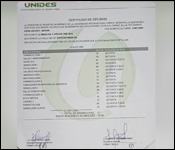
We spoke to the Director of Hospital Services Jorge Polanco who told us that he has been following up closely on the concerns and issues and the issues Dr Medina has raised with the management of the internship. He says in her case, it is the consensus of the medical professionals at the KHMH managing the program that her grades have not been satisfactory in a number of the medical rotations.
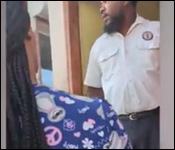
As for her being locked out of the KHMH, he says there were issues with a police report being made against her by another doctor, and there were concerns about her capturing video with her cell phone in the hospital. You'll hear her side of that story tomorrow.