

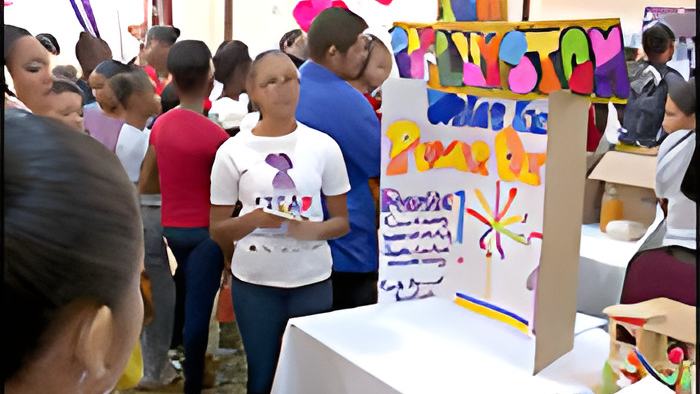
With a focus to encourage more young girls to pursue their studies and a career in STEAM, the Ministry of Education held its first-ever STEAM festival in San Ignacio on Saturday, giving students a chance to showcase their innovative solutions to community challenges with the help of science, technology, engineering, and arts. Here are the highlights from the event.
Yolanda Gongora

"When we first envisioned this program in the Ministry of Education, Culture, Science and Technology, our ambition extended far beyond teaching coding, robotics, or artificial intelligence. We set out to create something transformational: an extra-curricular program that would inspire girls to see themselves not simply as users of technology, but as innovators, creators, scientists, engineers, entrepreneurs, and leaders who will draw upon the fourth industrial revolution skills-such as critical thinking, resilience, adaptability, curiosity, collaboration, and environmental stewardship-to build a stronger Belize."
Dr Consuelo Godfrey, Consultant, Girls in STEAM project
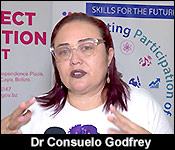
"So today's event is really a culmination of 2 weeks of hard work for the high school. But prior to this day, which is the main event, we had a primary camp which lasted one week, and we had the participation of 17 different primary schools across the country, and we were working with over 300 girls from standard 4, 5, and 6. And the goal was for those girls to be exposed to all aspects of STEAM-science, technology, engineering, arts, and mathematics-and the girls built robots, they did problem solving, they did prototyping, they did designing, they did critical thinking, analytical thinking. And we have a primary showcase here at the festival so when guests come in, they could see what the girls did in that one week. Following that, we had 2 weeks of high school camps where we worked with first and second form girls, and the goal was for the girls to add technology to all the different STEAM areas, so science, technology, more technology. So, we had a gaming-had them do a game design, we had them do a windmill, a digital windmill, we had them build robots that could move and have different behaviors. The girls were allowed to have guests come into the school, and the guests were from different sectors of society-conservation, arts, engineering, folks from the agriculture unit, we had folks from the ITVET come in and work with the girls and talk to the girls about real-life STEAM initiatives led by women, because it is women in STEAM."