

And while the Environment Department is supporting environmental education, PACT is throwing money, and management, at conservation problems. The Protected Areas Conservation Trust yesterday handed over a hefty check to the Friends of Conservation and Development. The $800,000 will be used to establish multi-sectoral management programs inside the country's largest reserve. And the need for management is well warranted. The Chiquibul Forest Reserve is under constant and persistent threat by persons logging illegally, poaching, and by Xateros who are continuously decimating the much sought after Xate leaf. Multiple threats that should be considerably minimized with the new plan. Here's more.
Alfonso Noble Reporting,
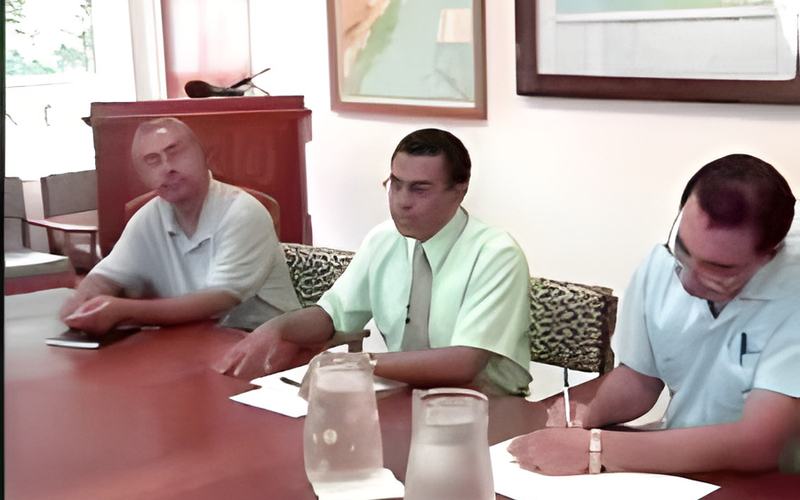
With the signing and handing over of this $800,000 check the Protected Areas Conservation Trust activated the concerted management of the Chiquibul Forest Reserve. Because of the unmatched expanse of 266 thousand acres of pristine forest and biological diversity, protecting such a vast expanse has always been difficult.
"Unfortunately up to 2005, and this has been said over and over by the past speakers, we've had limited presence in the area except for military training, occasional patrolling, and the research activities that Las Cuevas researchers do in this particular area. The Forest Reserve, which is in the middle of, nestled within the national park, even though it contains commercial densities of timber, it is considered an after thought, simply because of the difficult terrain and the limited know how of the industry itself to access the area and extra the timber from the area."
Valdemar Andrade,
"For many years we've been talking about the Chiquibul Forest Reserve and the lack of attention that it gets, the fact that there is heavy incursion for Xate illegal poaching, illegal logging, and the fact that there are many key areas that need to be protected. The $800,000 actually is a drop in the bucket for the kind of work that is going to be done on the ground. As we saw here today, there are five rangers that are going to start on the ground and really what they need is about thirty rangers so that alone tells you the scale and the magnitude of the work."
Now with that drop in the bucket through funding from pact, the critical ecosystems partnership and other stakeholders, the Friends for Nature Conservation and Development will come up with a comprehensive management approach to the Chiquibul.
"The main objective of this consolidated initiative is to develop and implement a comprehensive and integrated sustainable management program for the conservation areas of the Chiquibul Maya Mountains' key biodiversity areas for the long run. This initiative will include the support for the maintenance of the forest ecosystem, conserving biodiversity, stimulating economic alternatives, and sustainable livelihoods, promoting public awareness, promoting financial sustainability, increasing protection through enforcement of rules and regulations, promoting monitoring programs, stimulating an integrated, coordinated, and focused collaboration between scientific research and management, and strengthening cross border neighbor confidence building measures and cooperation at the technical and community level. The first level consists of the direct local users, the users of the resource including the farmers in the nearby areas of the Vaca Forest Reserve, Maya Mountain North, and Maya Mountain South Forest Reserve. This level includes primarily the local people of Benque Viejo del Carmen, San Jose Succotz, Bladden Village, Trial and Medina Bank. The next level consists of the direct institutions and companies having stakes on the natural resources and these include the military, mining companies, hydro companies, tour operators, timber concessionaires, research institutions such as Las Cuevas, educational institutions such as University of Belize and Galen University. The final level are those directly responsible for the management of the area and it includes the Forest Department who stands ready to help, the National Institute of Culture and History, the Bladden Management Consortium and Las Cuevas Research Facility in the Chiquibul. On the Guatemalan side the main partner of this initiative is the National Council for Protected Areas."
"The significance of conducting work in the Chiquibul because it is the largest national park in Belize. It certainly has a magnitude for the protection of ecosystems at large but because also we border with Guatemala and certainly the impact of the work here, it really cannot only be manifested as nationally but as regionally so the effort of management in terms of a great expanse of forest, I would say it goes even beyond the expectation of doing some work in Belize but it is regionally."
And the involvement of Guatemala's National Protected Areas Council is critical according to Chief Forest Officer Wilbur Sabido. He says that the major pressure on the Chiquibul comes from that neighboring country.
Wilbur Sabido,
"This cross border collaboration is a collaborative approach to curve the influx of people coming into Belize to cut Xate and other non-timber forestry products to have this timber and to poach. The Ministry of Natural Resources and the Environment through PACT is making a significant investment into the Chiquibul to ensure that we manage the area and its resources for the benefit of our people."
"This particular project that we are launching today that is funded both by PACT and the Critical Ecosystem Partnership Fund represents an important milestone for the Chiquibul. The project will develop and implement an integrated sustainable management program for the core conservation areas of the Chiquibul and Maya Mountain key diversity areas. The implementation of this particular project should be pragmatic and it will be pragmatic and flexible in its approach."
And when dealing with the Chiquibul Forest Reserve that must be the only way to go.
The $800,000 grant is part of a larger $1.9 million raised during an awareness campaign on the Chiquibul after the PACT challenge of 2005.