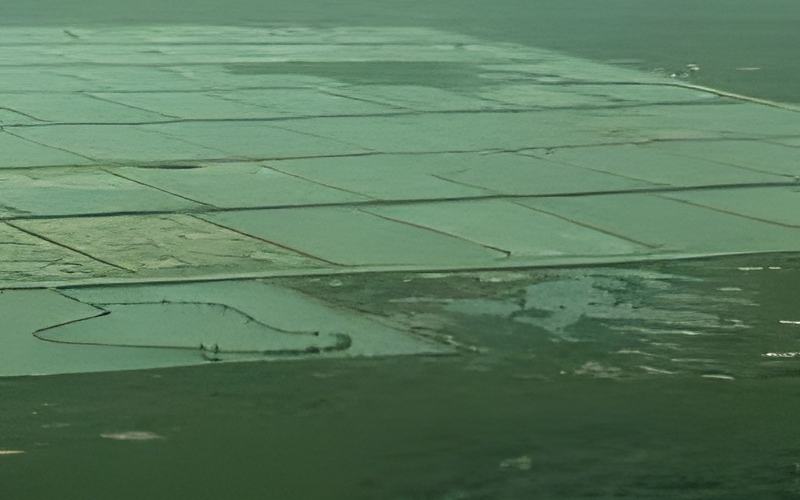

But even if government does make the decision to reverse, rescind and move on - conservationists argue that the damage is already done and claims there's more damage being plotted. Melanie McField is one of those who worries about what she feels is irreversible damage to Belize's international reputation as a conservation-inclined country. She's from the Healthy Reefs for Healthy People Initiative and has been involved with Bacalar Chico from 1996 when the area was given UNESCO World Heritage designation, one of
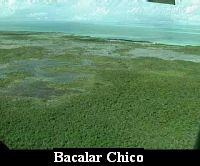
7 such sites connected to the barrier reef system. She says the conservation community reacted with incredulity when the news was first reported on Wednesday, not only because of the proposed sale but because of the international implications.
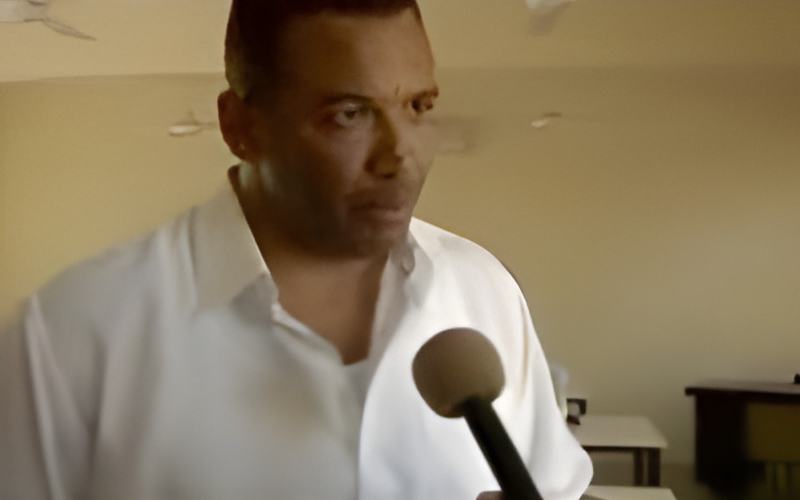
Melanie McField, Healthy Reef for Healthy People
"Our first reaction was there must be a mistake, something is wrong, they wouldn't do that, not in a World Heritage Site. Its hard to believe that we're considering this because it is a World Heritage Site and there's certain things you've decided for good reasons and many of years of studying which of the areas you're going to protect.
You can't eat into the World Heritage Sites without going back to the drawing boards essentially; going back to UNESCO and saying we've decided as a nation that we need to change these boundaries and we're going to have to redraw the lines of the Bacalar Chico National Park and this is where we want it and then UNESCO will reconsider our entire application."
Jules Vasquez,
The government is the government of Belize; UNESCO is not the government of Belize. The government decides what it will be stewards of.
Melanie McField,
"That's right, the land is ultimately within the powers of the government of Belize to do with what it wants. So any of our cultural sites that are archaeological reserves and the natural reserves, the government of Belize has the right to do what they want with it which includes getting rid of them but UNESCO has the right to either observe or not observe those sites as World Heritage."
Jules Vasquez,
What are the implications of this, apart from UNESCO perhaps de-classifying us and us having to resubmit?
Melanie McField,
"Well the MBRS project which is an $11 million project in the first phase, I am not sure of what the total amount is in the second phase, it may be close to that, but it is headquartered here in Belize, it's a regional project so there are activities in the four countries. But they are right now in critical negotiations getting the plan for the next five years finalized and I am getting worried.
I am worried about the message this sends to that international community. And again, the only reason they come through and give these grants, this amount of money, because we are viewed as good stewards and I think a lot of that, it takes maybe years to build back your reputation once that's lost and I think the fact that the government is even considering it has done a large amount of damage because it shouldn't have been on the table for negotiation.
Going inside the boundaries of the one area that you've promised to the world that you're putting aside as reserve, it goes against the grain of veracity and just telling the truth, following up on what you promised."
Jules Vasquez,
Where will it end? Who will win? Do you the conservation's lobby will be powerful enough to force government to reverse a decision that Cabinet has made and return money that has been paid?
Melanie McField,
"Well I wouldn't say force government to do anything but I would like to think opening the discussion to more groups and more people, you do change your mind sometimes. Sometimes you have decisions and then with further thought and understanding you change your mind and that's just what I hope the government's going to do. They are going to realize that it's not worth all of the negative aspects.
They might not have considered all of these aspects. It's not an arm-wrestling contest. Whose gonna win, they've obviously got the decision making power but its going to be very costly in terms of international relations and international reputation if they choose to do this.
Let's hope we can get through this and turn it around. We all have hope that it's not going to happen."