He was elected on a promise to “clear the land” but last week that got Belize Rural North Area Representative Edmund Castro in trouble. A month ago Castro began building a causeway in Crooked Tree Village. The problem is that Crooked Tree is a wildlife sanctuary – a protected area which is co-managed by the Audubon Society. Earlier this week Audubon chastized the junior Works Minister for failing to conduct an environmental impact assessment and they convinced the Forestry Department to halt the project.
Well today Castro responded and he says it was his bad- he didn’t know he needed the EIA. But he isn’t backing down and he says he has the community is behind him. He told us this progress needs to continue despite its problems.
Keith Swift Reporting,
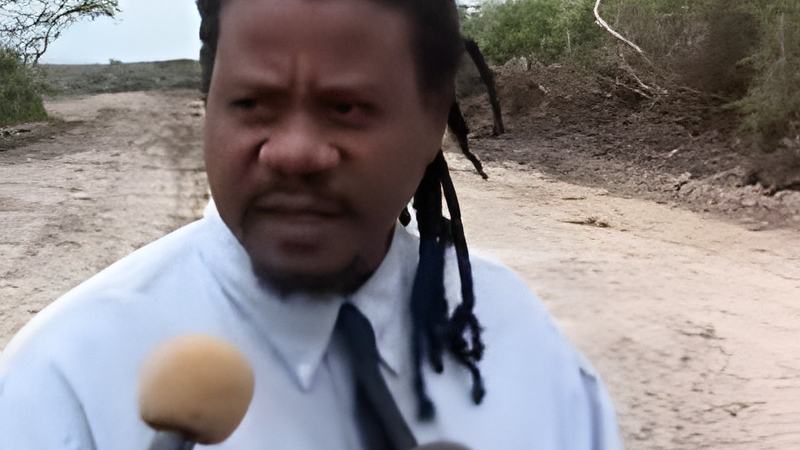
It’s a dirt road now but this is the Crooked Tree-Blackbon Causeway. Its 700 yards long and will connect the island of Crooked Tree to farmlands across the lagoon in Blackbon. To build the causeway – and true to his name Edmund Castro has been clearing the land – miles of it.
Edmund Castro, Belize Rural North Area Rep.
“What are you looking at here is the beginning of the work that we have been doing since Easter Sunday. Easter Sunday is when we got together with the villagers of Crooked Tree and we started with the first phase of getting the road across the back of the lagoon to get to the area known as Blackbon. So this is the entrance of the boulevard that is leading us to Blackbon that will eventually get us not just to Blackbon but also to the area known as Cha Hich where a Mayan temple is.
Bear in mind across the lagoon in the back is only 700 yards which is the point of contention.”
The point of contention and the reason why the Forestry Department has applied brakes to Castro’s project. It turns out he didn’t conduct an environmental impact assessment. It is a fact he easily conceded today.
Keith Swift,
Didn’t you know that you needed an EIA for this project, a project like this?
Edmund Castro,
“That’s a tricky question, an EIA. An EIA sounds like a big word, many of us don’t know what the EIA really is but what I do know is the people need to get across the 700 yard line whereby we can increase productivity for our people in Crooked Tree and for the rest of the country. The country needs development and sometimes we got to do unconventional things to bring the greater scheme of goods for the majority of people.”
Keith Swift,
But you knew you needed to do an EIA though right?
Edmund Castro,
“I kind of think so, at least now I know.”
Janelle Chanona, News 5
“How could you have not made sure that you had your Is dotted and your Ts crossed well in advance?”
Edmund Castro,
“Most of the time to be honest there is a lot of bureaucracy in getting things done and sometimes we need to just do what we need to do to make sure that we get things done.”
The Audubon Society says it is concerned about the potential impact the project could have on the Crooked Tree Lagoon which is the village’s main source of water. They are also concerned about the potential impact on wildlife in the area. But the villagers say forget the wildlife -they are concerned about their livelihoods.
Gerald Tillett, Crooked Tree Villager
“People first. Human beings first before the wild animals. They are protecting alligators and tigers and what not but what happen? They want them to live and we to die? We want to cultivate. The cost of living is very high and we want a better way of living.”
72-year-old Gerald Tillett was born in and has lived in Crooked Tree and farmed across the lagoon in Blackbon his entire life. The causeway will save him a 20 mile journey. For him - that’s the definition of progress.
Gerald Tillett,
“We used to walk or ketch a horse and get our dorey from over there, go over and back everyday with mud and water, mud and water and now by grace of God something great is taking place for us.”
Keith Swift,
And why do you need to access over there?
Gerald Tillett,
“Because our farmland is over there. It is not over here. Things would be better for all of us, generation upon generation once we get across.”
Keith Swift,
So you personally, living in Crooked Tree for 72 years, how will this make your life better?
Gerald Tillett,
“How this will make life better? Well because I won’t have to use the mud and water again, I won’t have to use the horse back, I won’t have to use the dory again. There will be a vehicle to come in and out.”
Keith Swift,
What is your village’s position on this project to build the causeway?
George Guest, Chairman – Crooked Tree Village
“The villagers are very happy because its going to make them more better off than they have ever been for the last 25 years. They could not get their farms to the back. Now they are going to get their farms to the back. Their farmlands, their rich farmlands that they have to paddle through water with a dory on the back of a horse to bring things out, now they don’t have to do that. This is not destroying nothing, because this will grow back. What they don’t realize is that they are trying to stop progress.”
Steve Anthony, Crooked Tree Villager
“I was originally born in Crooked Tree but I have been here over three years now and I live here and all we want to see is progress for Crooked Tree. Right now as it is we need Blackbon. Blackbon is a lot of fertile land, we need to get back into farming for the country and the sooner that Audubon can agree and get onboard with this, the better it is going to be for everybody involved.”
But right now the Audubon Society isn’t on board and the project is on hold. Castro says its completion is imperative as its part of a broader vision for the area.
Edmund Castro,
“This is a wonderful chance now for us to even increase our tourist destinations and that things. We also will be able to go northwest and we will be able to run into the New River which is the shortest point whereby we will be able to span a bridge about 40 feet. Quarter mile from Indian Church we will put the bridge and we will be in the Shipyard community and Guinea Grass area and so we will be able to assist those people who will be able to use this route to come and deliver their goods and produce in Belize City. So developing this road will not only facilitate and help the farmers of Crooked Tree that have their cattle ranch on the other side of the lagoon in the back.
We are not doing anything bad in the sense that we are not disturbing the ecosystem. I am environmentally friendly. I do my best to make sure that everything kind of remains the same and we must live one in nature with the birds and bees and the rest of nature. But at the same time we cannot forsake the human factor.”
And that’s why Castro says the project has to continue.
Edmund Castro,
“We pause for a little to make sure we get the necessary clearance and paper work through so that we can go on a fast track. So hopefully within the next few days, all the government departments will come together, the Forestry, the DOE, and including Audubon who is now willing for us to finish the work. So we are just waiting for all those clearance and we will just continue with the work to make sure we get in the necessary culverts.”
Keith Swift,
So the Audubon has given the okay now?
Edmund Castro,
“Well Audubon been saying for the past few interviews that I heard them that they are not against the project, it is just a legal standing that they were bickering about.”
Castro says that about $4.5 million has already spent. He says it is a partnership between the community and government. Once the project resumes – there’ll be about two weeks more of work. We were unable to reach an official from the Audubon Society for comment but on Monday they made it clear that were not opposed to the project. Their problem was with Castro’s failure to conduct an environmental impact assessment.