For the past two nights, we’ve been showing you some of the natural wonders of the Chiquibul Forest Reserve and examining the pressures on those who are tasked to protect the national park and forest reserve. Tonight in our last instalment we take a diversion and show you one of the natural wonders within the park.
Jules Vasquez Reporting,
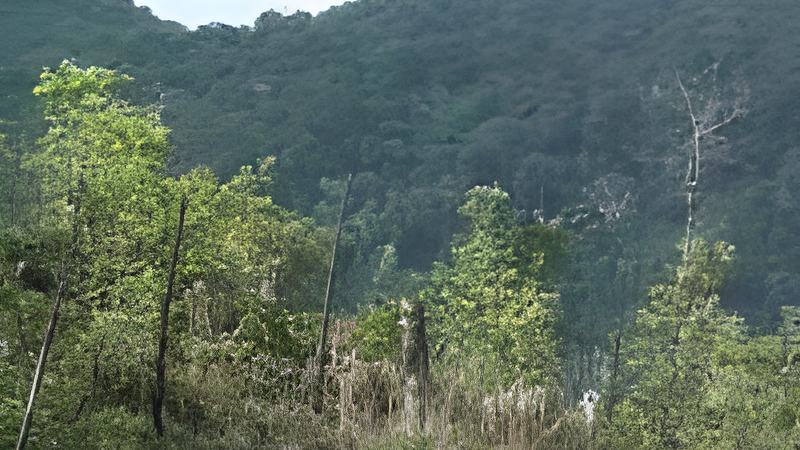
It may look green and gorgeous, lush and verdant, but the Chiquibul is a tough, hard land – its 200,000 plus acres rest on a layer of limestone strata – and fresh water is hard to find in the forest.
But, it’s there. This long abandoned handcar buried in the riverbank marks the spot where decades ago a logging camp used to be. These spokes interred in the soft shoulder of the flood plain are probably there from the 1930’s when history tells us that a rail system that ran though the logging camps in
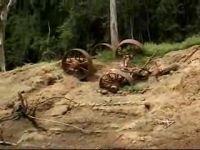
the Chiquibul was scrapped and sold to Mexico.
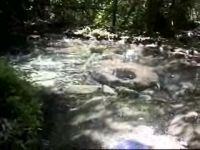
A short uphill hike takes us in through massive limestone boulders formed into pools, carpeted in emerald green moss, in the rainy season, water fills these pools and pours out in a cascade. Today though, it is dry and hot and shortly we find out why this was a logging camp, fresh drinkable water trickling down from the glistening limestone formation.
But that’s just an opening act, above is a network of what guides tell us are travertine pools, full of clear fresh water. They all feed from this one, guides here call it the blue hole, it is a magnificent sinkhole, stretching up some 30 feet – leading down into a pool of crystalline water. Guides tell us it is a natural spring that the water comes from subterranean streams tied into Chiquibul’s enormous cave system.
Like an oasis in a desert, this aquamarine pool where the water is always cold – is the last thing you’d expect to find in a dense forest on a
day of blazing sun hot. But here it is. And that’s why the loggers came here. And the same roads they used are now frequented by Guatemalan Xateros who collect waters from these same pools for the long journey either back home – which is 15 miles west, or into the Xate rich areas which are across the river.
For forest weary travelers it is a sight to behold, the smoky reflection of the water, on the limestone formation, the cool shadiness, invites even a leopard frog to rest inside one of the limestone depressions. The world seems to almost slow as the endless drone of the Oropendula bird so plentiful in this area sets the mood.
For men like logwood cutters who lived in this hard land for 6 months at a time, this must have been a pre-modern Jacuzzi. For the Xateros, it is a watering hole right next to one of the major crossing points – one of so many areas that park rangers have to keep a close eye on.
Our thanks to the Friends for Conservation and Development for facilitating our visit.