
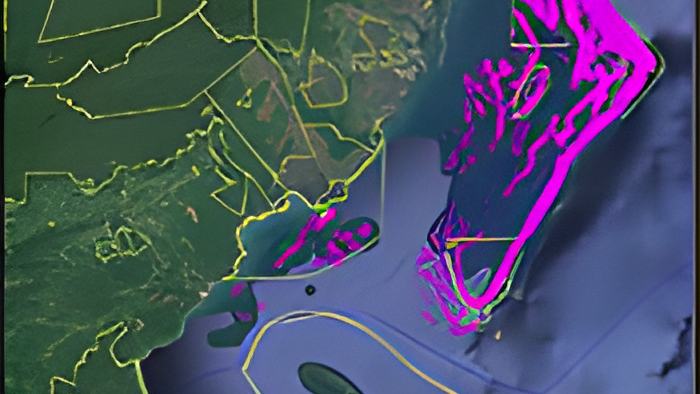
Last week, we told you about what should be big news about the Corona Reef, or the Cayman Crown, as it is officially known.
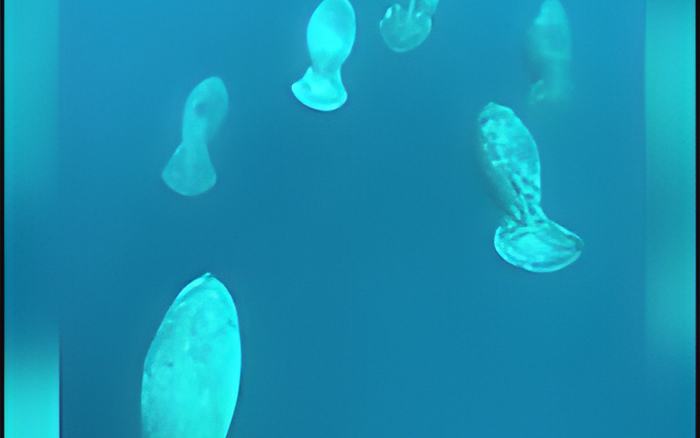
Last year, this important reef system was officially recognized as an expansion of the Sapodilla Cayes Marine Reserve. Early information on this reef system is that it is believed to be a biologically important hotspot, a fish spawning aggregation site. It is being described as "pristine" and as the "most underrepresented habitat in the marine protected areas system of Belize and Guatemala".
It also should have been hugely positive news that Belize's Toledo Institute for Development and Environment (TIDE), and their Guatemalan counterparts, FUNDAECO, would collaborate with the Healthy Reefs for Healthy People Initiative in a bilateral effort to protect the Corona Reef.
Instead, all the focus is being placed on its actual geographical location, and whether or not it is in Belizean territory. In a joint press release sent by the Ministry of the Blue Economy, the Belize Fisheries Department, and TIDE, they certainly give the impression that not all the of Corona Reef's system is in Belizean territory.
They said, that it, quote, "straddles the maritime boundary between southern Belize and Guatemala." End quote.
The press release also says that the system was declared protected in both Belize and Guatemala and that Guatemala's FUNDAECO is, quote, "...responsible for the management of the Guatemalan portion of the Cayman Crown site" End quote.
What also caught the attention of some of the Belizean conservationists is the suggestion that TIDE, quote, "...intends to access research permits from Guatemala when conducting research in the Guatemalan marine protected area." End quote.
The issue is that current coral reef maps don't indicate any reef systems located in Guatemalan territorial waters, and so, Geovanni Brackett, the Belizean grassroots activist, and nationalist, doesn't want to hear any talk of getting permission from the Guatemalan authorities.
In a press release sent this morning, Brackett says, quote, "As a committed environmentalist I am dismayed by the acquiescence of vaunted environmental organization, the Toledo Institute for Development and Environment (TIDE), in choosing to obtain research permits from Guatemala..." End quote.
Via teleconference, he and border activist Wil Maheia granted us an interview on the topic. Here's what they had to say:

Geovannie Brackett, Activist
"We should countenance any information that Guatemala owns any section of our reef. We shouldn't be appeasing Guatemala by going into getting any agreement so that we don't have any trouble with Guatemalan authorities. What kind of legal implication will that have at the ICJ at the Hague and so it is for that reason that I lobbied, I try to get the peace movement and they have to convene meetings, but Wil Maheia has always been a true patriot who have always been forthcoming and speedily and so I checked with Wil first and a few other friends and they felt the very same way that I did."
Wil Maheia, Border Activist
"I believe that the government of Belize have a responsibility to show the Belizean people where this Corona reef is at. I know that last year it was declared an extension to the Sapodilla Caye Marine Reserve, but I think the government have a responsibility to educate the public about where the Corona Reef is exactly."
"I know that the Corona Reef is close by the border area. We have a border with Guatemala up the Sarstoon River. I don't know if the Corona Reef is like that. My knowledge of the Corona Reef that it is inside Belize. There is a chance that the reef extend into Guatemala, but I know the documents that I have seen shows that the reef is in Belize, so I know that in the past the Guatemalans have demanded that Belizeans try and get permission from them to do their research on the reef and I don't think that we need to ask Guatemala for permission to dive within our reef, if its inside their reef system, then sure, but within our reef, no and I also want to take this opportunity to really applaud the work of the Belize Coast Guard who have been patrolling in that area for a number of months now or since the declaration and have basically hauled up a number of gillnets from that area."
Reporter
"Do you have any issues with any bilateral efforts to protect it?"
Geovannie Brackett, Activist
"I don't have a problem on a policy that surrounding countries signed on to agreement to protect the sea to do their part to lessen pollution, to do their part into protecting the marine environment. That is no problem. When you live on your property you don't need permission from your neighbor to check your yard if it is clean. What you need is your neighbor to work in harmony and partnership with you to manage their portion that what they do in their territory doesn't affect what happens in our territory."
Wil Maheia, Border Activist
"I think that working together joint efforts Belize, Guatemala, Honduras will just make the entire gulf of Honduras a better place. I think the same should be done in the Colombia Forest Reserve and the Chiquibul Forest Reserve. Working with the Guatemalan counterparts to improve the health of the environment, but not to exploit it."
When we spoke via telephone with Andre Perez, the Minister of the Blue Economy, he told us he would prefer to focus on the fact that an important marine resource is about to be better protected, and that there are talks of bilateral cooperation between conservationists from the two countries. He tells us that all the officials who have visited the Corona Reef have only positive things to say about this newly discovered marine habitat.
We also contacted the executive director of TIDE for a comment, and she told us that a press release will be sent tomorrow with clarifications.