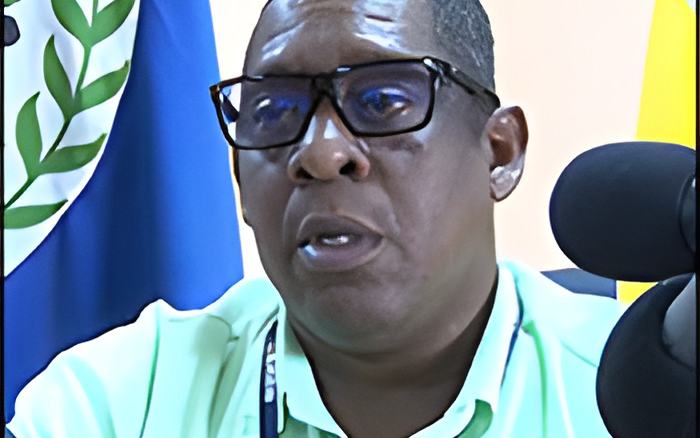

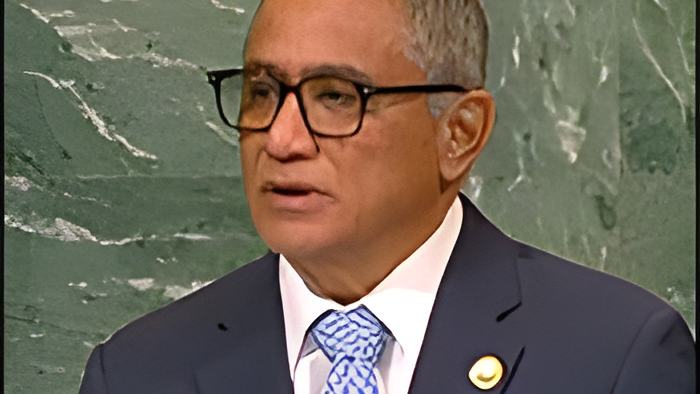
During those 23-minute remarks, Prime Minister Briceno went hard in the paint on behalf of Belize and other Caribbean "Small Island Developing States" that continue to suffer the brunt of increasingly hostile weather patterns linked to climate change.
As viewers will remember, last year, the world's larger nations went to COP-26 to say that they can't - or won't reduce - their greenhouse gas emissions in time to meet specific deadline targets to mitigate the damage.
The Prime Minister told the global audience about their "paper promises"::
John Briceno - Prime Minister
"The planet is being destroyed by climate change. Global temperatures have already increased by 1.2 degrees Celsius above pre-industrial levels. Greenhouse gas emissions reached record highs in 2021 and continued to rise this year. Fossil fuels are still dominant, while renewables account for an abysmal 15% of global energy sources. The current energy crisis in Europe has triggered more fossil fuels as a panacea rather than a doubling down on energy transition. Biodiversity is declining at a faster rate than ever before, with profound and unknown consequences for our environment, health, productivity, and well-being. These realities heighten climate risk, especially for vulnerable states. Belize is ranked 8th out of 183 on the global climate risk index. We are but one hurricane away from catastrophe. Yet, financing needed for climate adaptation remains woefully inadequate. Only about a quarter of all climate finance goes to adaptation. Public sector expenditure on climate-caused loss and damage cannot continue to be classified according to fiscal orthodoxy. The IMF is largely devoid of ways to quantify consequential climate impacts on public debt and countries' capacity to pay. The high price obstinate focus on primary balances on debt for GDP ratios ignores the empirical evidence that nature is in revolt. Incredibly, a recent analysis revealed that of the 80 IMF-funded country programs around the world, the climate was central to the country assessments in only a single case, Samoa. We had great expectations for COP26 in Glasgow. COP 26 was considered 'a make or break moment' for the world's leader leaders to make more ambitious pledges, to keep 1.5 degrees Celsius within reach. We were wrong. Rather than getting global commitments to keep 1.5 alive, we left Glasgow with commitments that will see global temperature increase by 2.7 degrees Celsius by 2100. This is utterly unacceptable and morally unjust. Our people continue to suffer for something we did not cause. Rather than meeting their commitments to deliver $100 billion annually, we left Glasgow with a finance roadmap, yet another paper promise. Rather than delivering a loss and damage facility to help our countries deal with the loss and damages caused by climate change, we left with 'Mas Palabras.' In the meantime, Belize continues to suffer from climate-related damages, equivalent to 4% of its GDP annually, among the highest in the world. Let's try this again. Less talk and more decisions at the next two COPs. At COP 27 in Egypt, the G20 must bring new commitments to close the emissions gap, bring the financing for adaptation, and establish a financing facility to substantially address loss and damage."