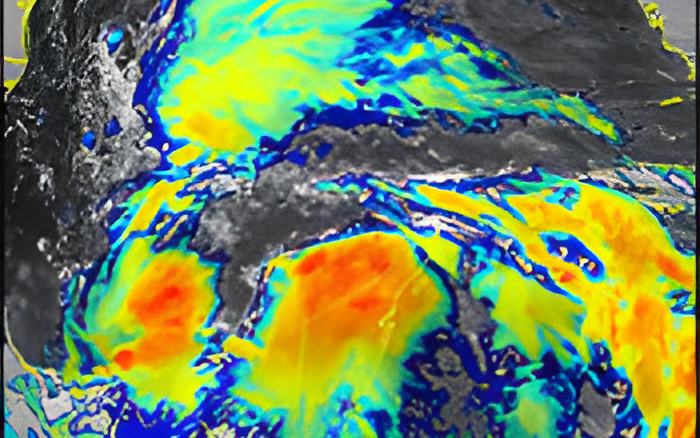

There are dark clouds on the horizon tonight as June's heavy rains are here and rain is expected over Belize and Central America for the next three days.
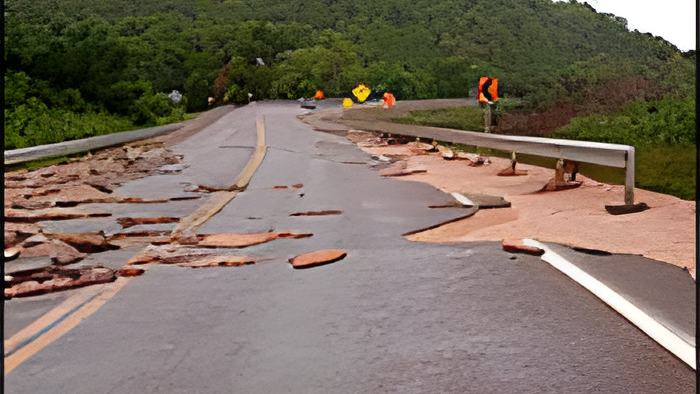
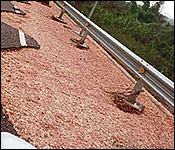
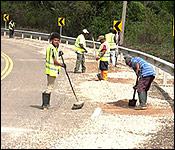
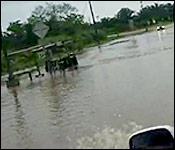
But before those many inches of rainfall, a shocking video emerged this morning of the Coastal Plains Highway in a tattered state after rains on Sunday in the Stann Creek District.
Shocking because that highway was just inaugurated in July of 2023, and this morning it looked like someone had dropped a bomb on it.
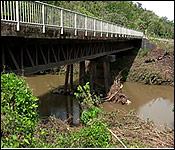
It happened at mile 17.5 on the northern approach to the Soldier Creek bridge. The Chief Engineer spoke to us via Zoom today to explain what had happened to a pair of overflow culverts:
Evondale Moody, Chief Engineer, MIDH
"What I found out this morning was that there are land clearing that are being done upstream of the Soldier Creek itself, whereby logging is occurring. And of course, we had the forest fires that we had in the last two months within that area as well. And so what basically transpired was that you had blockage of the Soldier Creek itself in terms of logs. And because of that, it affected the overflow culverts that we have on the approach to the Soldier Creek bridge."

"We have two culverts there that are three meters wide by 1.5 meter high. And so because of the blockage of the Creek, that runoff was diverted to the tributaries that are the inlet for those culverts instead of going into the Creek itself and under the bridge."
"From what I saw on the site, there was also a large log, which is like the whole tree itself that was blocking one of those culverts. And this new area by the bridge has never flooded before."
"So we were kind of amazed when we went out there. And when I saw the pictures this morning of what had transpired, because we had also raised that road approximately two meters to the approach of the new structure."
"So it was like really amazing to see the water crossing that area. Definitely climate change is affecting us significantly. However, we are being affected by other people doing works upstream of these tributaries, which is basically beyond our control."
"We will have to try and do our best to try and get it rectified. Definitely we will try and look at possibly doing another concrete floodway at that section just in case it reoccurs again. Because if it does, then we will have the same problem, so it doesn't make sense for us to reinstate asphalt. So it's something that I will have to discuss with the CEO and the Minister to see if we could do those type of work within that section."
Jules Vasquez
"Perhaps you all should have anticipated this and had the culverts cleared. Your response?"
Evondale Moody, Chief Engineer, MIDH
"Well, we have done that already. We cleared, those culverts for the coastal plain were cleared this year because the contractor that was working on that project just finish his defect liability period in April."
Jules Vasquez
"When one sees the image of the deterioration of the pavement, I'm not an engineer. I'm an amateur, but just optically, it looks like it's very insubstantial. It looks like it's lightweight. It looks like waver biscuits. Explain to me your assessment of the integrity of the pavement structure."
Evondale Moody, Chief Engineer, MIDH
"The pavement structure that we have there is the bituminous surface dressing, which is just two coats of bitumen with stone chippings on top. So that is the traditional paving that we use in Belize and that was what was implemented on the Coastal Plain Highway. Photos that you have seen, yes it will depict that it is something critical that has occurred on the Coastal Highway but I believe as individuals and as a country we need to look at the project holistically because the entire project is 36 miles."
"The damage that has been done to the highway on the approach to Soldier Creek bridge is only a hundred meters which would be, I would say 0.00 or one seventh of a mile. So it's very minute."
Reporter
"Can you just dispel this idea that some people seem to have that the asphalt itself was not thick enough?"
Evondale Moody, Chief Engineer, MIDH
"Of course the surface dressing is a thin film of bitumen that we place and then we place chippings after that. So it's only about an inch to two inch thick with the two surface dressing that we have done."
"However, it's just as I said it's just a thin layer so once water undermines that of course it will go and that's the reason why we have determined now that for the main highways that we're now doing we will be changing to the hot mix asphalt."
Jules Vasquez
"Would you have called in the contractor to repair it under the warranties and defects or would you call it a force majeure?"
Evondale Moody, Chief Engineer, MIDH
"No in terms of the defects liability period based on what I have seen today it's not as a result of workmanship because there was no fault of the contractor in what happened over the weekend. That was not his fault that was just the fault of nature."
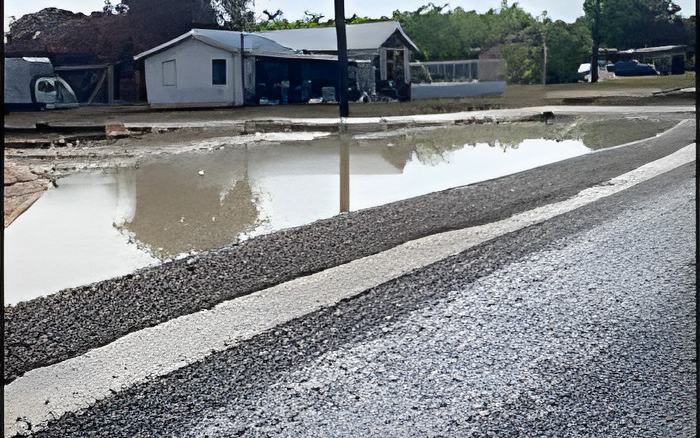
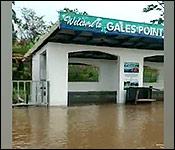
There was also flooding at the entrance to Gales Point but that did not damage the pavement.