
And in less controversial news about conservation...
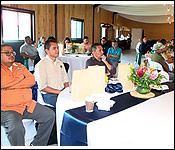
co managers for protected areas, conservationists and other stakeholders came together today to partake in a National Biodiversity dialogue hosted by the Ministry Of Sustainable Development, Climate Change And Solid Waste Management, under the theme "Biodiversity Beyond Boundaries: Connecting Ecosystems And Empowering Communities Through National Collaboration." That's a mouthful but Jomarie Lanza found that it's the details of conservation and resources use which can be the most challenging:
Belize has over 103 protected areas within the country, which range between parks and nature reserves but often at times the co-managers who look after these spaces encounter numerous challenges and threats in keeping these zones safe from poachers, hunters and illegal log wood cutters. By sharing their experience with other co-managers they came together today for a National Biodiversity Dialogue to learn more about how they can better manage their protected areas.
Orlando Habet, Minister of Sustainable Development
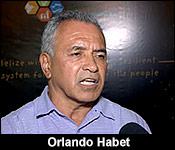
"This Biodiversity discussion is timely because the National Biodiversity Office has been looking at the protected areas management and issuing a few co-management agreements. And so what we have done is that those co management agreements sort of outline what the co manager has to do. And then at the end of the year they do some revision as to their accomplishments and to look at how they are being assessed so that their office will be able to see whether or not that co- manager of that particular protected area can get another two or three or five years depending on the standards that they have. And so today is more to look at some collaboration and sharing of information, sharing of experiences so that from the comanagers now you can tell that the national biodiversity office how it is that you have been operating what are the gaps that you have encountered in managing that protected area and what are some of the opportunities you have found in your protected area so that you can possibly manage it better."
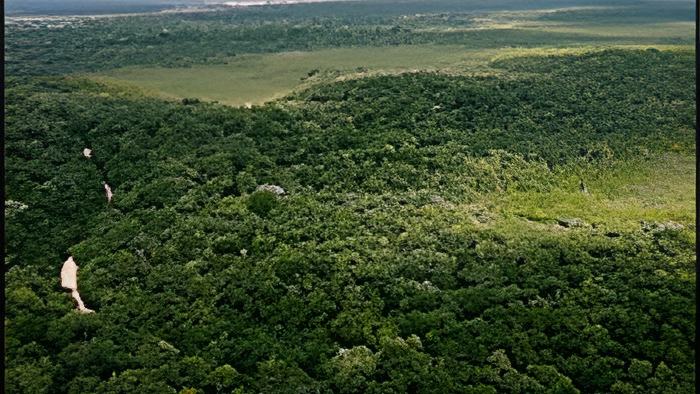
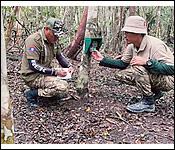
The Bladen nature reserve is probably one of the most challenging protected areas to manage because of its size. They are presently under the co-management of the Yaaxche Conservation Trust, and their executive director told us more about how they have been trying to fill in some of the holes in their management.
Christina Garcia, Executive Director, Yaaxche Conservation Trust

"Our engagement is more towards being a co-manager, we manage the Bladen nature reserve which is about 100k acres so we do that formally with the government of Belize. And this session today is very important because one of the main things we are engaged in for that particular protected area is management planning. We have to develop a thorough management plan which outlines procedures in terms of how to manage that particular protected area so this session today gives us that insight in terms of this new management framework that is required by all co-managers that manage these protected areas in Belize."
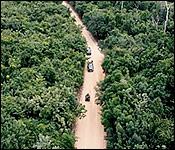
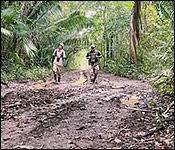
"We have been around since 1998 but for the Bladen Nature Reserve we have been a co-manager from since 2008 one of the main challenges that we see in protected areas is really some of the incursions that we have been seeing within the Bladen nature reserve, specifically trans boundary incursions. Because the reserve is very near Guatemala we see a lot of illegal logging happening we see a lot of, in some instances clearances of forests but mainly illegal logging coming in, but because it is very close to Guatemala you see a lot of people from Guatemala coming in extracting logs and taking it with horses to Guatemala so that is one of the biggest problems. The second problem is that the reserve is very remote and there is no access road so to go there you need to walk nine days to reach these areas where these hotspots are so that is the most challenging part for us at the moment."
"So because there is a little bit of hostility in the Bladen Nature Reserve we have a partnership with the Belize defense force so they accompany our rangers whenever they go on patrols to the Bladen Nature reserve so we try to do this probably every two months trying to go in on foot to basically document and monitor some of these activities that are happening within the area. So we have a total of 23 rangers that currently patrol the Bladen nature reserve because we also have 2 other private protected areas that they also do enforcement and compliance within that area. Of course that is not enough manpower for the vast amount of forest that we need to manage so that is when our partnership comes in with the Belize defense force to continue doing these patrols within the area."
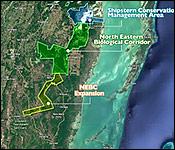
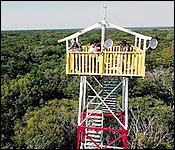
Further north lies another protected area within the North Eastern Corridor. It falls within the radius of Shipstern and Sarteneja, but unlike Bladen, their conservation efforts have been met with pushback from those who farm in these protected zones.
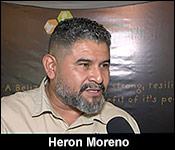
Heron Moreno, Director for Corozal Sustainable Future Nature Initiative
"This session is really bringing together a lot of the partners that are involved in conservation and protected areas management across the country so we are one of the very strong partners of the government of Belize, we manage a private protected area in the northern part of Belize that we have now integrated into the national system and so we view ourselves as a very major player when it comes to conservation initiatives in that part of the country so for us it is important to be here so that 1 we can listen to what is happening but at the same time be able to share our experience in the northern part of Belize."
"So for us some of the major challenges really has been how do we create a module of conservation that really does complement people, right? Again as I mentioned Corozal isn't really a typical conservation area because a lot of the agriculture happens in that district. We are also through the mennonite communities, other farmers also the sugar belt and so you can see where there can be a direct clash between agriculture development and conservation. So for us the major challenge is how do you really develop a module that can achieve the conservation needs of the country but at the same time can't be seen as a major threat to people and their livelihoods."