

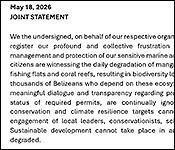
Tonight, a coalition of Belizean environmental and community organizations has issued a joint statement demanding immediate government action to protect the country's marine and coastal ecosystems. The statement says Belizeans are witnessing the "daily degradation" of key natural resources. They accuse government agencies of failing to properly enforce environmental laws, pointing to incidents of illegal dredging, unauthorized mangrove clearing, wastewater dumping, and insufficient monitoring of development projects. They said violations are often addressed only after irreversible damage has occurred, and repeat offenders are rarely subjected to meaningful penalties. According to the statement, this pattern has created what they called a "culture of impunity." The coalition is now calling on the Government of Belize - specifically the Ministry of Sustainable Development, the Ministry of Blue Economy, the Ministry of Natural Resources, and the Department of the Environment - to suspend all approval processes for development projects in sensitive marine and coastal areas. Areas specifically named include Bacalar Chico Marine Reserve, Hol Chan Marine Reserve, the Placencia Peninsula seaside and lagoon, Corozal Bay Wildlife Sanctuary, and several offshore Cayes.
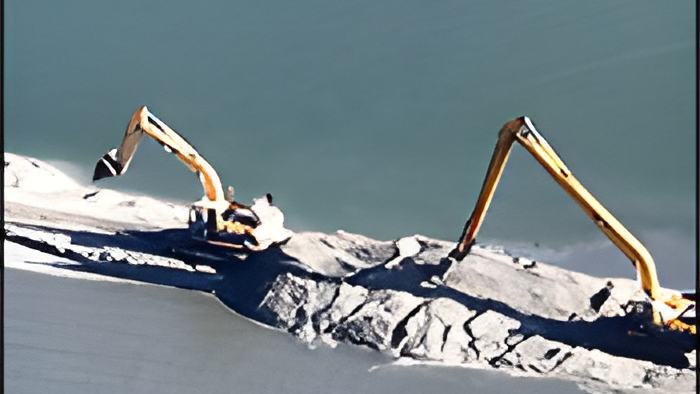
And the trigger event for this strong collective position may have been the story that made news last week about dredging in the Placencia Lagoon. Since then a verbal stop order was issued to Seaboard Holdings Limited, the company responsible for the dredging as the Department of Environment continues its investigation.
On Saturday, village councillors and Placencia residents protested in the dredging area, blocking heavy equipment from working.
Speaking following the protest, village councillor Kristine Small said residents mobilized after noticing ongoing dredging operations and large rocks being placed along the beachfront despite previous environmental concerns and scientific recommendations. She says those findings, which reportedly warned against the current style of coastal modifications, were ignored, while the same operations continued. She spoke on what they met when they got there:

Kristine Small, Village Councillor
"So when we got there and and the, the guys were just about starting to get work to get the work, you know, go to work. And we basically were telling them no this is not going to happen. They had called the police. The CEO, you know, showed up with all the other police officers, and they told us we needed to leave the this the property, we told them we were on Crowns land, and that we had every right to be there. So that was the back and forth in the video, it showed that he was basically on phone calls with whomever that he would not share with us, but he was very rude to us, and he didn't want to hear anything from us he just wanted us to leave, and we said we wouldn't leave because we are standing our grounds, that this is against all the recommendations from the science. And so we stayed there."
"So after the protests, all of the operations halted. And we stayed, I basically stayed there until the end, a bunch of us, every, the workers had left the machinery is basically had shut off. Except the in the lagoon where they were still judging the, the sand, and that continued up until Saturday night. And there was a lot of lot more violations happened there because in the mining agreement they were supposed to remove all of the material. And from what we know because we had left two people there to do monitoring, because mining was supposed to the agreement that they made with both parties with the village councils and the foreman of the project that, you know, someone from mining would be there at all times while there was the while they were dredging, and there was work going on. And in fact they had left from Friday evening, and operations were still going on. And so, Saturday evening they basically started to just throw the materials back into the lagoon, carelessly, just spreading it out."
Small warned that changes made in the northern section of the peninsula could have lasting impacts on communities further south, as erosion and altered currents affect the entire coastline.