
Say what you will about the KHMH but it’s the national referral hospital and most of the critical care cases – from gunshot victims to traffic accident survivors show are wheeled into its emergency room. So it was fitting that the hospital is hosting an event on critical care management. Jacqueline Godwin found out more today.
Jacqueline Godwin Reporting,
This gentleman seen here being wheeled out on a gurney after being treated for a broken left leg at the Karl Heusner Memorial Hospital may not be considered a critical case however KHMH does receive at least ten seriously ill patients each week.
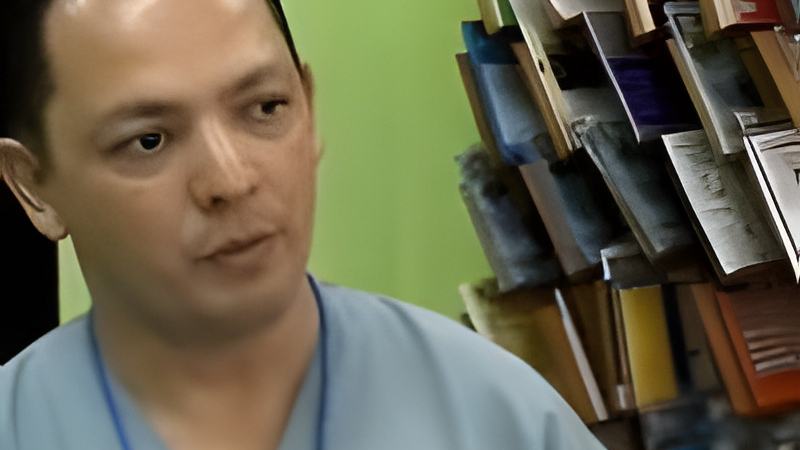
Dr. Khalid Ghazy, Director of Medical Services – KHMH
“The patient comes very critically ill with chronic diseases, diabetes, hypertension, coronary heart disease plus traumatic patients, injury or accidental.”
Dr. Jorge Hildalgo, Coordinator - Critical Care Workshop
“Obviously we have seen all these patients with several complications everyday and also it is not a secret that the country has seen an increased in the violence and we have to deal with a lot of trauma patients or patients with gun shots.”
That is why it is important especially for all first care responders to be well equipped to provide the first few hours of critical care to save a patients life.
Dr. Khalid Ghazy, Director Medical Services – KHMH
“To recognize the critically ill patients as soon as possible, do the assessment, evaluate, treat and if possible also send to the tertiary care institution which is Karl Heusner Memorial Hospital. The key point here is to get those patients well and healthy as soon as possible. If you receive those patients critically ill and there is a delay in the response you will mess them up.”
That is why medical personnel from regional hospitals to the KHMH, main referral hospital in the country, private institutions including the Belize Defence Force for the next two days will be exposed to basic principles of critical care
Dr. Jorge Hildalgo,
“It is basically for nurses, general practitioners, internists, respiratory therapists and the idea is to provide them with the knowledge of how to handle patients, a critically ill patient - how to stabilize a patient for the initial twenty four hours or at least to stabilize the patient enough to send the patient to a facility where there are more resources.”
But do health care facilities like the KHMH have the resources needed to provide the intensive care?
Dr. Jorge Hildalgo,
“Definitely in countries like us definitely we have certain kinds of limitations and that is the idea to improve not only in knowledge but also in equipment.”
Dr. Khalid Ghazy,
“We are in the process of replacing aged equipment in the anaesthesia department, in the ICU department some ventilators will be purchased; a brand new anaesthesia machine will be purchased very soon. We try to modify those equipment. Additional equipment, yes, we are in the process of that. Yes we are operating with a strict budget but that should not really restrict us from expanding. In the human resources aspect, I think at the present time we do have enough staff but now what we are gearing to is to improve their training improve their skills and this is what we are now thinking about. So in 2009 it will be arming our staff with the new knowledge, expanding knowledge and that is what we are doing.”
The two day critical care workshop is conducted by a team of specialists from the American Association of Critical Care. Reporting for 7NEWS, Jacqueline Godwin.