

When we think of mental health issues, usually we think of psychiatric patients, those suffering from mental illness. But increasingly mental illness is being defined in terms of overall wellbeing – meaning that road rage, temper tantrums and chronic anxiety are all part of the picture. Today, the Mental Health Association started a two day symposium to tell counsellors, cops and community workers that wellness is not unattainable.
Jacqueline Godwin Reporting,
These are not patients of mental illnesses but they all work with persons who may be struggling from the simple daily pressures of life to an increasing problem of financial difficulties, behavioural problems, crime, peer pressure and addiction, addiction.
Jennifer Lovell, President - Mental Health Association
“How to cope with stress, how to cope with your kids that are acting up, how to cope with the lack of finances and those kinds of things. In one room over here we have a gentleman whose talking about anger. Everybody gets angry and it is a human emotion but it is how I cope with anger that makes it a problem. Sometimes if they don’t deal with the stress properly they can become delusional and then they go into mental illness.
What are some of things happening with our youths that are making them so angry today and it is okay to be angry but how are you now going to properly manage that. and then he talks about conflict resolution. Conflict resolution isn’t just between kids that are fighting, it is between husband and wife, boyfriend and girlfriend, sister and brother. How do we resolve the conflicts we have with each other, we could still get up and agree to disagree and love each other and keep on going.”
For today and tomorrow the participants who come from all sectors of society will learn the skills to help mental health patients, children, students, parents and couples suffering from a specific problem to admit and then make the change necessary to improve their quality of life.
Johanna August, Wellness Centre Nurse – UB Central Farm
“And the things we are taught here are things I would love to share
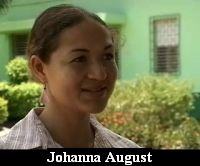
with parents and so one of my plans is to go back to UB, we have single moms and we have parents at UB who I would love to educate about these things that we have learnt here like motivational interviewing, they discuss how things like caring and support, things like positive peer pressure, things like encouraging your kids in what is right. And I think the higher your self esteem is, the more motivation you have to go through life and become successful.”
Jennifer Lovell,
“We have a problem with change. It may be change that this person has left me and now I have to adapt to living without this person in my life right – change.”
Collin Estrada, National Resource Centre for Inclusive Education
“To be able to better help the students because remember the students are the ones who will be the future of our country so if our mental perspective, in a mental health perspective they are not adequate and we are not able to find out what is happening with them within the classrooms then we have problems 15, 10 years down the road and then we start to wonder why is it happening now when it just an accumulation of events that could have been occurring all along.”
Jennifer Lovell,
“Parents can use it with their kids, husbands can use it with their wives, teachers can use it with the kids in school and it is marvellous techniques.”
The conference is the first in Belize by the Mental Health Association. MHA’s President Jennifer Lovell says because of the many challenges that now confront us all there is an increasing need for education.
Jennifer Lovell,
“We have a hard time to change but once I buy into it, once I realize why I need to change then it becomes so much easier and that is what the whole thing is about motivation; I need to sell this to you so you jump on it and you want to make the change.”
Johanna August,
“Because I believe it is something that is very important to not only work at UB but also the whole nation of Belize and as a nurse I believe that we play a key role in educating the public and people look to us for information and so the more prepared we are to deal with whatever situations arise we can give more benefit to all our Belizean people.”
The sessions are conducted by visiting professors from the United States, they are Dr. Debra Murray, a motivational interviewing specialist from Viterbo University, Dr. Ryan Jackson and Neilson Waither of Yale University and Dr. Shirlene Smith a Belizean born currently employed by the University of North Carolina.