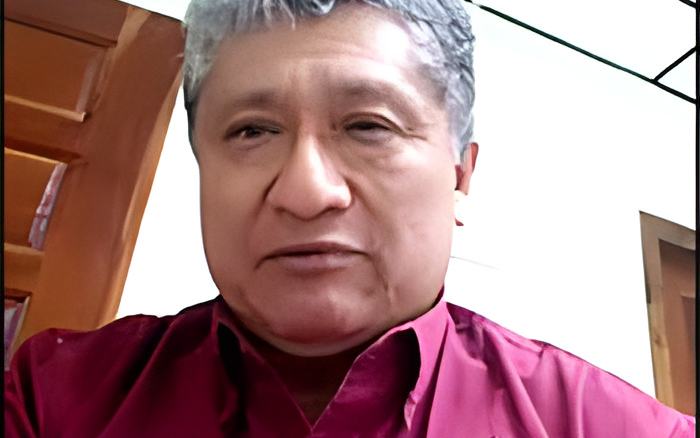

The press also asked Dr. Fernando Cuellar, one of the presenters at today's congress, for his opinion on whether or not COVID is still a major public health threat.
The number of recorded infections are way, way down; deaths have been at nil for months, and Belizeans have returned to their pre-COVID routines.
So, Is the pandemic over? Here's what Dr. Cuellar had to say about it:
Reporter
"Are we almost there? Are we there? We see our numbers falling drastically."
Dr. Fernando Cuellar - Internal Medicine Specialist
"We have to wait until an official declaration of the end of the pandemia. And we've only relied on one international body, which is WHO, who will formally do that. But we are close to that, both on a local level, On a global level. We are close to that. We will have to go from pandemia to endemic, meaning that we will have it with us all the time in just the same way that we have dengue with us all the time, chikungunya, and those other transmissible illnesses. So, we're going to use different terminologies. We will still have COVID, but not in the large numbers and the mortality associated with them. And the other point that you made about the long-term effect of COVID, yes, we are seeing - to me what I call the easier ones, the lung COVID. You know, people complaining of shortness of breath, of coughing, of respiratory illness. You do the CT scan; you notice the scarring. That makes sense. But, they're seeing some 'weird' symptoms that we're not able to prove or disprove if it's associated with COVID, from hair falling, insomnia, menstrual irregularities - fatigue is another one. I, for one, am a survivor of COVID, and I could divide my life into pre-COVID and post-COVID."
Dr. Cuellar recommends that citizens should still continue to get their boosters. He points out that even when COVID is reclassified from a pandemic to an endemic, the virus will continue to mutate and change.