
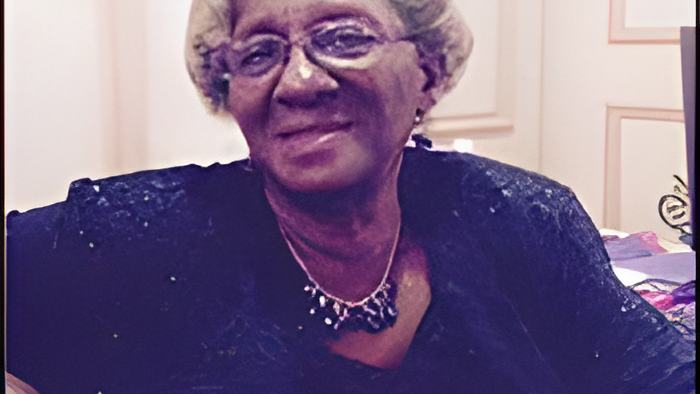
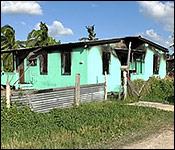
Last night we brought you the devastating story of the Elita Coleman, an 83 year old who perished in a fire that consumed her Rasta Street home.
Questions about how exactly she perished, whether by smoke inhalation or extensive burns are still live tonight, but there are also questions about who is ultimately responsible for the elderly woman's terrible end.
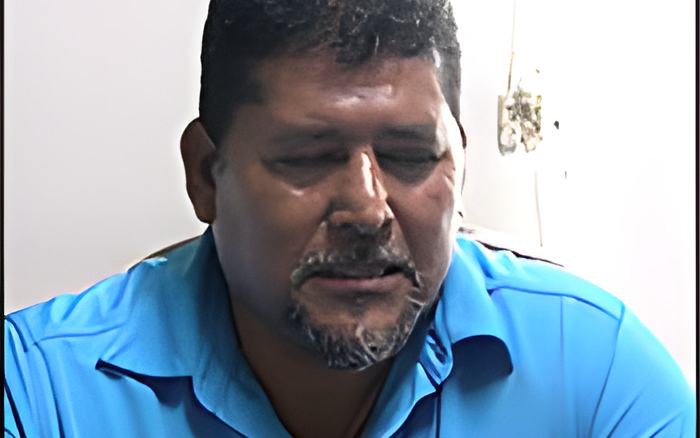
Tonight, we're exploring those questions with more from the interviews of Coleman's son and station supervisor Kenneth Mortis as we delve a bit deeper into a painful story that does have some lessons for the community:
Last night you heard the outraged words of Raymond Pitterson, a man whose mother became the victim of a terrible house fire.
Raymond Pitterson,Son of the deceased
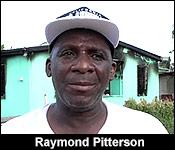
"I don't like what happened, everything the whole inside of the house burned up everything burned and that was sad, that was sad I'm telling you and I blame the fire department and I blame the police two of them have the fault so I think something has to be done."
But is Elita Coleman's death truly and solely the fault of the first responders?
Fire Station supervisor Kenneth Mortis would refute that and yesterday he questioned whether the octogenarian should have ever been left alone in the home.
Kenneth Mortis, Station Supervisor
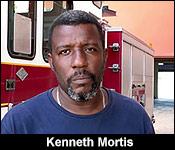
"It's never easy to respond to these scenes and that is the last image you are left with, um, we learnt that she rightfully lived by herself and then during the normal course of the day she was assisted with a caretaker. Unfortunately, the caretaker isn't a 24-hour live in caretaker so whenever darkness settles then she is basically alone until the next morning, that is something that we will have to take a negative to learn from and see how best we can apply it to our daily lives if we still have the elderly that we are taking care of and see how we can put a better mechanism in place for them instead of having them by themselves."
"There are age range whereby an 83 might move much more swifter than another 83 I really can't tell what was her case, maybe she was that type of person, I don't know but like I said the message. Would probably be to see if we fall into that bracket then to see what better preventative measures we can put in place."
But for Raymond Pitterson those measures can only be considered in retrospect
Cherisse Halsall:
"I do have to ask you though sir, you say your habit is to lock the door when you leave, do you mean the house's door or her bedroom door?"
Raymond Pitterson, Son of the deceased
"The house's door, I make sure that the front door is locked and the backdoor is locked and then I tell her just make sure that one of the locks are locked on the front door in case anything happen, you could come out. So only one of the locks was locked on the front door and the back door is locked good because I don't want anybody to go in through the back."
Cherisse Halsall:
"The reason I ask is because she was screaming out to people to get the key, do you feel that if she had had that key she would have had a better chance?"
Raymond Pitterson, Son of the deceased
"Uhh, nooo because if she. Had the key, I tell you the police got here early enough. The police they got here early enough to open the door and get in there but they never did do it."
And back at the forestation yesterday Mortis reiterated that the unequipped police officers and even the firefighters were faced with an impossible situation.
Kenneth Mortis, Station Supervisor
"Unfortunately that building's back door was separated by a cement wall meaning that Miss Coleman's bedroom which was situated on the southeastern portion of the building, She would have then had to travel in a northernly direction within her home, an additional 20 feet before she could have then turned left which would have led her to the kitchen and travel back another 10 feet to the front door."