
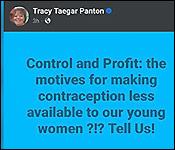
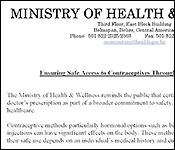
Social media rage spread like wildfire after the Ministry of Health and Wellness issued a statement explaining that what were once over-the-counter contraceptives will now require a prescription. The post led to complaints and criticisms of creating a barrier to access, which will, in turn, detrimentally affect the most vulnerable population.
According to the Ministry's press release, before prescribing a contraceptive, the healthcare provider will assess risk factors such as a history of blood clots or stroke, high blood pressure, smoking habit, and other underlying conditions. They added that doctors can provide contraceptives for extended periods with refills available for up to 12 months. They also noted that visits for contraceptive services create opportunities for broader health support, such as STD screenings.
But while this sounds good on paper, how will it affect women on the ground? The Belize Family Life Association's executive director says it's a harmful move against women on the part of the government. Courtney Menzies spoke with her today and has this story.
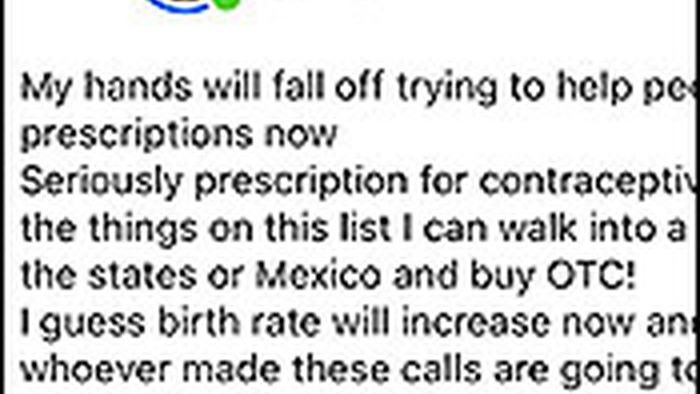
This Facebook post from Dr Shanna Pott is what started the social media reproductive rage. That's when it became apparent to the public that the Ministry of Health and Wellness had started enforcing a prescription requirement for what was once over the counter contraceptives.
The backlash since yesterday has been intense, with many arguing that this move - which is said to be done for women's safety - is harming them rather than helping them. Which begs the question - who was consulted before this decision was made?
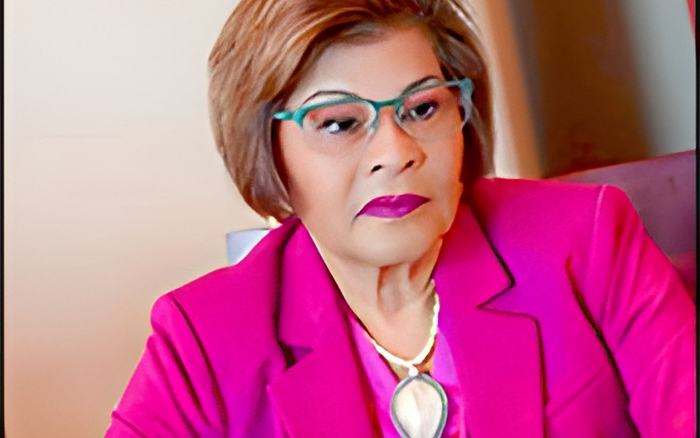
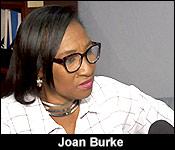
According to BFLA's executive director, they were not involved in the process and were as shocked as the rest of the public. Joan Burke explained that this move sets women's reproductive health back 50 years.
Joan Burke, Executive Director, BFLA
"When I got it, I was in total awe because I looked at it that we are losing almost 50 years of accomplishment in terms of looking at the access to contraceptive as part of women's empowerment and the whole issue of women's reproductive rights. We talk about bodily autonomy and the woman has the right to choose if and when she wants to have a child and we have a duty and responsibility to make sure that the environment is being created to enable that decision making. We endorse the WHO policies and everything that has to do with rights and so I just feel like if we go through with this, this is a big loss to women and young girls."
Burke further explained that contraceptives don't simply prevent pregnancies, but they also save lives.
Joan Burke, Executive Director, BFLA
"We can definitely prepare ourselves for an increase in unwanted pregnancies, and I hate to use that term but it's a term, unwanted or unplanned pregnancies, we can definitely see an increase in unsafe and clandestine abortion because when a woman finds herself in a situation with a pregnancy that she doesn't want, she will definitely seek any opportunity for termination. And also we can prepare ourselves for increase in maternal deaths because when a woman can plan her pregnancy because contraceptives is not to say oh you'll never have children. It empowers a family to plan their pregnancies. So I am seeing an increase in maternal deaths and an increase in infant mortality."
According to the MOHW's press release, the reason for just now beginning to enforce this law is that, quote, "Contraceptive methods particularly hormonal options such as birth control pills, patches, and injections can have significant effects on the body. These methods are not one size fits all, and their safe use depends on an individual's medical history and current health status." End quote.
But Burke says that explanation doesn't cut it.
Courtney Menzies:
"What would you say to this reasoning that they gave that it's for women's health and safety?"
Joan Burke, Executive Director, BFLA
"That is weak. It's a very weak explanation. For years women have been accessing contraceptives over the counter, for years, so what's the evidence? One of the things that we encourage though that once a woman or a young girl decides to go on a method that she does consultation because what might work for me might not work for you so we encourage every woman or young girl to do a consultation first because there's certain assessment that must be done. Yes, it's hormonal but it must be done and the professional is equipped to make the decision as to what is the best method of this individual based on family issue, medical conditions."
"But to say that yes it was there and globally, no, that's weak, very weak, I'm sorry."
And while women across the country will be affected, Burke explained that it's the poorer, more vulnerable women that will be most at risk.
Joan Burke, Executive Director, BFLA
"I think about the poor woman in one of these hard to reach community with children. When you have to get on a bus - because we don't have a doctor in every community - so when that woman has to go and find a doctor and take her children with her, we can very well see one packet of pills that probably will cost, the price of it is $10 or less but the cost to that woman could be almost $200 depending on where she's coming from."
"And then also what about the working class woman who can't get time off to go to a doctor's consultation every month she needs a contraceptive, no. so there are many factors we have to take into consideration."
"The age to consent in this country is 16 and a doctor may not do a consultation with a 16 year old because she's not an adult but yet she can consent to sex. So even that in itself leads to questions."
Courtney Menzies:
"Do you consider this move maybe reproductive discrimination or even systemic reproductive violence?"
Joan Burke, Executive Director, BFLA
"Of course. And it would be interesting to see who were at the table. Is it once again us as women being victims of patriarchal systems where men believe they can make the decisions for us and make decisions on matters that affect us directly?"
Burke is now hoping that the government will hear them out:
Joan Burke, Executive Director, BFLA
"I would hope that we will be given the space to have a sit down with the minister and the powers as well if needs be, a hearing with the AG or somebody from the AG's office because this has serious implication for the health of our young women and girls."
When asked for an interview, the Director of Health Services, Dr Melissa Diaz, explained that she would be unavailable until next Monday.