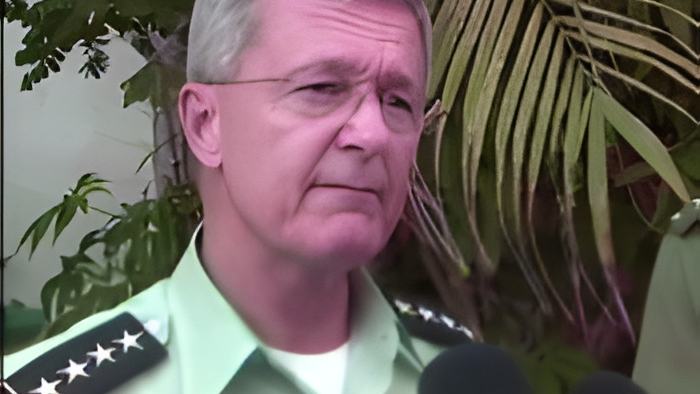
The Central American security conference ended today and as it did we got the opportunity to speak with SOUTHCOM Commander, 4 star General John Craddock. Limited in the number of questions we could put to the General, we asked him what the possibility is that the U.S. will set up a permanent military posting in Belize.
Alfonso Noble,
The importance of Belize as regards the development in the south of the region where communism is on the rise. Can we see military increase, U.S. military increase presence here in Belize?
Gen. John Craddock,
"For a lot of reasons Belize is in a strategically critically important location. If you look at this region it is a transit zone for what, for transnational threats; traffickers of drugs, of ammunition, of money, of people. From that perspective we see this region and Belize is strategically located here and that's important to the United States because it's part of our security as well as the security for the nations here in the region. So we value the fact that we have a good relationship with the Belize Defense Force. We have good relations between the two nations, we want to continue to develop those relations, encourage as much as we can to grow and to be mutually supportive. Whether or not that leads to increased U.S. presence, only the future will tell so we will again assess conditions and work with our partners."
Alfonso Noble,
Are things different because of communism in the south?
Gen. John Craddock,
"I don't know that it is communism, I think that there are some extremisms, if you will, and it causes change and it think we have to watch it carefully and we have to assess it and we have to consult with our friends and partners here in the region, get their assessments, and then make judgments because of that."
Stewart Krohn, Channel 5
"Is the U.S. military playing an active role to discourage any military conflict between Belize and Guatemala?"
Gen. John Craddock,
"Look, the differences between countries are differences that arise over time for various reasons. We respect that, the fact that they are sovereign nations and they will at times have different perspectives on what is right and what is wrong from those perspectives. We don't want to take sides, we won't take sides. We know that reasonable people will address these issues in a responsible fashion and that they will be worked out accordingly. We want to be security and stability in the region. We look at it from a collective perspective."
Also speaking with us today was General Lloyd Gillett who gave us recap of the conference.
Brig. Gen. Lloyd Gillett,
"We want to find out how we can measure how we are making success in terms of security. The General mentioned that this is a transit region in that illegal drugs pass through, arms are passing through-how can we measure success against the trafficking of drugs. One indication is the amount of tracks leaving Colombia and reaching the United States. There are sensors that can detect these things moving and over time we are going to track how many tracks continue to go through. Secondly, the other thing we can use to measure is the price and purity of the cocaine reaching the United States and over time we will see whether the price goes up and the purity goes down, that means we're making progress. The third way is to see how the regional security initiatives are taking hold."