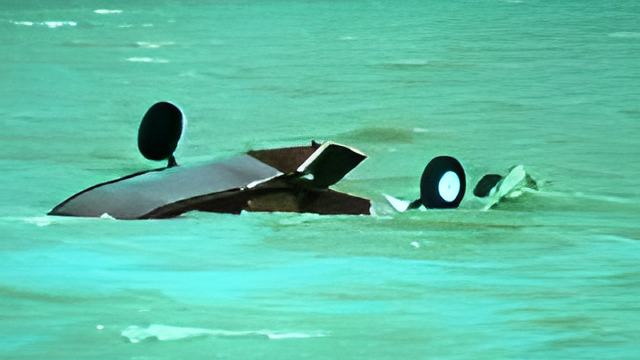
4 people are still hospitalized tonight after yesterday's crash landing of a Tropic Air flight in the sea. The single engine Cessna Caravan was en route to San Pedro carrying 13 passengers plus the pilot when a few seconds after liftoff it had to make what the airline calls an emergency landing in the sea. The plane was piloted by Gerry Proehl who has more than 25 years international flying experience. So what went wrong? 7NEWS was back on the story again today with more first hand accounts from survivors who say the answer may lie in the wind.
Keith Swift Reporting,
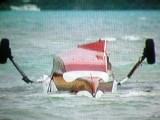
The wheels of the Tropic Air Cessna Caravan which crash landed into the sea yesterday evening were still visible today off the coast of the Hangar Area. The body of the single engine passenger plane was still submerged. A release from Tropic Air points to a sudden change in wind direction sending a strong, northwesterly gust behind the plane, overpowering it, and sending it down into the sea. This sudden, strong change in wind is confirmed by residents in the area and what the airline calls "expert witnesses."
And while he's no expert, Police Constable Jose Castellanos was there, sitting in the co-pilot's seat, and says it was a flight that was doomed even before take-off. He told us how it unfolded.
Jose Castellanos, Survivor
"When we were on the runway we reached (to) about where the Tropic Office is and I heard a noise in the engine. From then I said to myself we are going
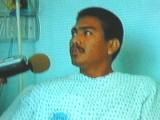
to crash. When we reached almost to the end of the runway, the plane lift but it sounded like it didn't have any power to lift off very well. When we lift off, I would say at approximately 30 to 40 feet the most, I saw the pilot struggling to make the plane catch a higher altitude. So I then saw the plane was going head forward down towards the water. First thing I did was brace myself. When the plane crashed and I saw the plane going down, all I could remember was a bang and then I saw I was upside down. No water was in the plane as yet so I was shouting at the pilot to tell me how to take off my seatbelt. I asked the pilot how to take off the belt because (it's the) first time I sit down there and that is a different type of seatbelt. I was asking him how to take it off and he didn't answer me. He opened the door, came out of the plane, and that's when water started pouring in. I then managed to take off the two belts that was on the strap and I then struggled to loose the other belt. I still couldn't come out but like how we were upside down, somebody saw my foot and was pulling me by my foot. But instead of they pulling me out I was getting more stuck because the seatbelt was tight and I couldn't loose it. So I managed to come out and I swallowed a good amount of water before I come out."
Castellanos escaped only with a headache and he suspects he swallowed aviation fuel. Ernesto Gomez wasn't so lucky. He was seated to the rear of the plane and received a broken left arm, bruised left eye, and a fractured foot. Gomez says he had to dive out of the submerged plane.
Ernesto Gomez, Survivor
"Several windows were shattered and we were able, well most of the people
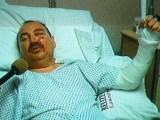
were able, to get out through the windows, the glasses, that were shattered. By the time I decided to get out, because I was giving the priority to the ladies that were behind me, the window already went under water so I had to basically dive out of the airplane. When I came out there was already a skiff docked at the plane picking up the passengers."
All 13 passengers along with the Canadian pilot were evacuated and treated by waiting ambulances. These survivors say they feel lucky - lucky to be alive.
Jose Castellanos, Survivor
"The first thing I thought when I saw the plane going down was that I was going to die. That's the first thing cause I was seeing everything, the water and just how the plane was going down. It was frightening."
Ernesto Gomez, Survivor
"I think we were very lucky because the plane did not manage to capture enough speed so that we can crash into the water at a bigger speed limit. Also the plane didn't manage to capture enough height, probably if it had got more height we would have just rush into the water at a greater speed and we would have hurt ourselves more."
Jose Castellanos,
"I thank God for this because my minor damage is definitely better than death. We got hurt but I think God was with us."
The Civil Aviation Department has launched an investigation into the crash and Airworthiness Inspector Brian Dominguez is leading it.
Brian Dominguez, Civil Aviation Department
"What we do know is that the aircraft originated from the Municipal with 13 passengers bound for San Pedro and somewhere after takeoff something happened and that's what we're trying to find out."
Keith Swift,
Could the wind have been a factor?
Brian Dominguez,
"Far too early for us to tell again, we are gathering the data from
the Met Office to see if that could have been a factor and all this will be reflected in the report. There should be a preliminary report within 4 to 5 days and we will follow through with a final report anywhere within 2 to 3 months. This is an isolated case. I'd like it to be looked at that way. There is absolutely no factor to have people alarmed. Aircraft accidents happen. For instance how frequent do you hear of an accident like this in comparison to one involving an automobile? There is absolutely no reason why people should be alarmed. The country's fleet is fully operational, well maintained, and is maintained by competent people."
And even with that assurance from the Airworthiness Expert, these survivors are split on their air-readiness.
Jose Castellanos, Survivor
"I can't say as yet. I can't say. That will be determined in time."
Ernesto Gomez, Survivor
"I feel so confident in flying and I will continue flying. Yes, definitely."
And tonight the miracle is not that he'd choose to fly again, it is that he still has the luxury to choose because looking at this wreck, it's clear that excessive good fortune was on the side of these passengers.
The Civil Aviation Department and Tropic Air plan to remove the plane tomorrow morning using a barge and a crane. Tropic Air is paying all the medical expenses for the passengers. The Cessna Caravan is 3 years old and valued at US$1.5 million. It is insured with Regent Insurance. Tropic Air now has a fleet of 6 caravans. Their total fleet is now 8 planes. Tropic Air has 12 daily scheduled flights to San Pedro. The crashed flight was their last of the day.
The last time a Tropic Air flight crash landed was March of 2004 just outside of Punta Gorda Town. There were no passengers on that plane.