
Last night, we showed you how the Belize Defence Force took the media on a helicopter ride to see the jungle training being offered to their counterparts who are participating in Exercise Tradewinds 2022.
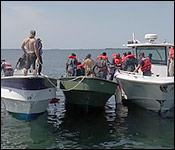
Well, today, it was the Belize Coast Guard which invited the press to observe the maritime training taking place between them and their Tradewinds counterparts inside the Turneffe Atoll.
Our Daniel Ortiz and cameraman Angel Noble were embedded with sailors from all across the Caribbean for most of the day, and here is their report:
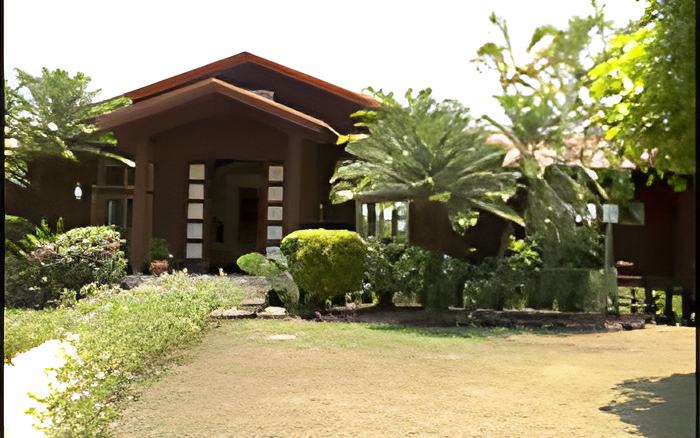
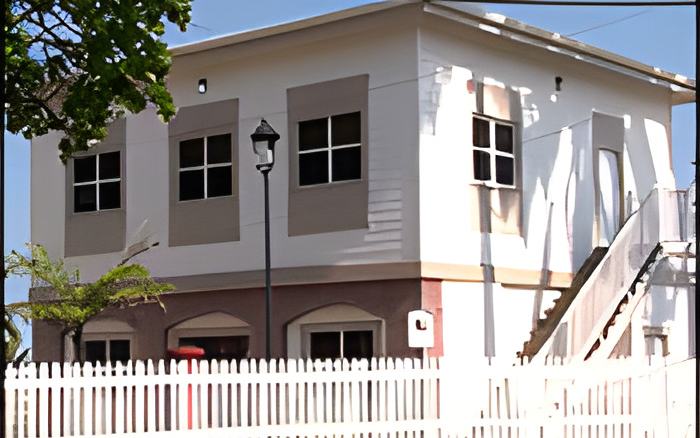
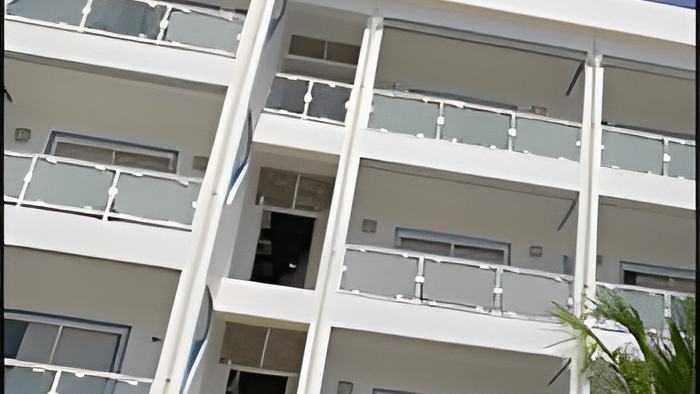
For this year's Exercise Tradewinds Initiative, the maritime military forces of all 22 partner nations are based out at the Turneffe Atoll, more specifically at the Belize Dive Haven Resort.
For the last few days, this sprawling 4-story facility and its amenities have been available to all the military personnel of the participating countries. If it were not for all the battle dress uniforms of the different countries, this summit would have resembled a luxurious vacation outing; marred only by the lingering stench of rotting sargassum on the Dive Haven's beach areas.
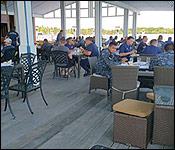
But, these officers are here to train, network and share professional experiences and best practices. We even found them breaking bread together and enjoying each others' company during the lunch hour.
It's all part of the bigger plan of allowing these allied coast guard units to become better teammates when interacting in the field in real-time.
Lt. Commander Roque Canul - OIC, Service & Support, Belize Coast Guard
"The Tradewinds Exercise is a multidimensional exercise, and it covers land, air, and sea operations. What we are going to see today is what is happening on the maritime side of the overall exercise. So, out there, you will be able to see what you guys learned or reviewed in the past couple of days when it comes to small boat handling and maritime law enforcement."
Petty Officer 1st Class Tyler Morrison - Maritime Enforcement Specialist, US Coast Guard
"Overall for trade winds, we're out here trying to share best practices."
Lt. Commander Roque Canul
"At the same time, our guys get to know the people. They established a network with our other partners and participants. So that is great for us."
The organizers have a Maritime Operating Center set up at the Belize Dive Haven as part of their training regimen. The on-duty personnel is the intermediary between the officers in training and the military leadership of all the participating nations. This provides the officers with insight into the communication that takes place within the chain of Belize's operational command.
Lt. Jr. Grade Allen Armstrong - Member, Belize Coast Guard
"We are at the Maritime Operations Center, which we call a MOC for Tradewinds. The Maritime Operation Center is basically somewhat a radio room, where we relay information to the CTF, the command task force that is the Price Barracks. So any activities that take place on the small boats that you will get a tour, after this, at every one time, we have personnel working shifts on the basis of every 2 hours rotation. The purpose behind the two-hour shift is because we want everyone not to work here in the MOC because we have 21 personnel working in the MOC from all different countries. The purpose of this is to have different personnel work along with each other, to get a feel of how we here in Belize do our radio communication because, of course, that is the purpose of trade winds to get and understand how all Caribbean partner nations work or can be better at working together."
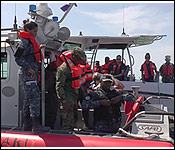
One of the training highlights for the maritime forces is the simulation involving the interdiction of cocaine traffickers at sea.
While on that mission, the press got a rare sighting of a friendly pod of 5 dolphins which came over to investigate the source of all the commotion in their marine habitat.
For today's demonstration, some of the sailors played the part of the fleeing narcos, while the others set chase as the enforcement team. In this exercise, they were practicing proper boarding techniques, thorough searching to discover all of those crafty hiding spots for drugs, and the professionalism needed to de-escalate tensions in this hostile environment.
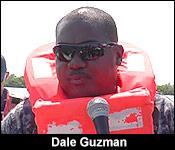
Dale Guzman - Petty Officer Class 3, Belize Coast Guard
"Well, based on Intel, we came out here searching for two known vessels that were trafficking drugs. Our team boarded the vessel, searched the vessel, and first, the guys asked them their nationality and where they were traveling from. And yeah, they seem to come up on drugs on the vessels. So, they arrested the guys."
Tyler Morrison
"With the ending, we have some culminating exercises that kind of give some activities that may not normally be seen by the local law enforcement teams. So, one of those scenarios is having multiple assets approach multiple different targets of interest, conduct a boarding during their routine patrol, and then implement those best practices to improve their law enforcement training experience."
Petty Officer Dale Guzman
"What we have learned from the U.S. is that usually, when they board vessels, it's really huge vessels. And, the vessels here in Belize City are usually skiffs, small skiffs. So, the training has really shown us where to search along these large vessels, because with a skiff, we can see inside and we see everything. It doesn't have compartments, the majority of the boats here, or in the country of Belize, rather."
Lt. Commander Roque Canul
"These guys are taught how to board boats, how to search on, you know, conduct the maritime law enforcement part of the exercise."
Tyler Morrison
"We try to make it as real as possible, right. These operators have a lot of professionalism. So, they know how to handle themselves and how to de-escalate a situation. Ultimately, you don't want to create a hostile situation in an environment that doesn't need it. But the professionalism that's already shown by the Belize Coast Guard is above par than we needed to train.. So, what we talked about most is effective communication, and implementing different communication tactics, talking back to the base, passing all the information needed so that when they are at the completion of their boarding, they have some way to have the disposition of the vessel and crew when they get done. And that's been a big addition, I think, is the communication piece. But, a lot of confidence-building and teamwork and camaraderie as well have been built in the past two weeks."
Lt. Commander Roque Canul
"It is great for us as a country and as an organization because we get to see how our countries are doing things and doing business. You know, it's a lot of - the difference may not be big, but we see how other people, other countries do best practices."
We understand that a major simulation is supposed to occur tomorrow in Belmopan.