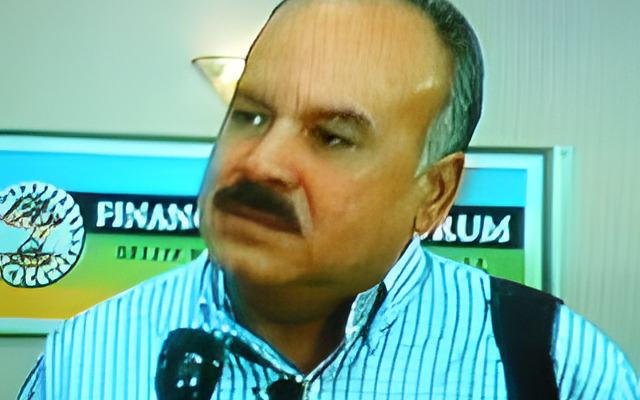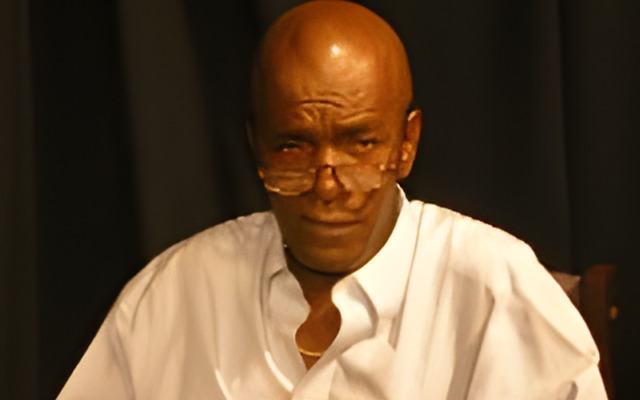

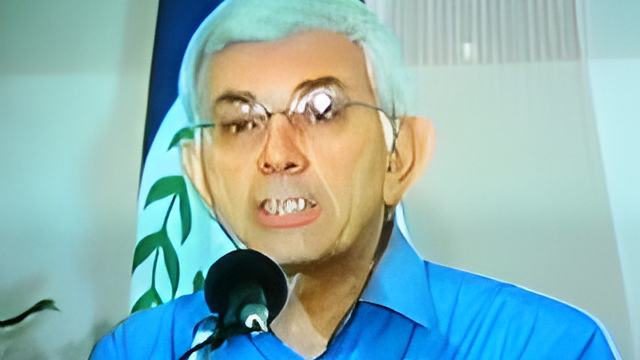
On Friday the Prime Minister will present a budget that will almost certainly introduce new taxes. And in an effort to perhaps soften that blow, the PM's finance team has been holding unprecedented consultations with stakeholders briefing them on what the situation is and what can be done to fix it. Today, those consultations continued with what, we gather, was intended to be a feel good, cheerleading session for the Prime Minister to prove he's committed to reform, by outlining the revised the Finance and Audit Bill.
Sure, the bill which is currently before the House, won't close the $61 million recurrent deficit or magically reduce the overall deficit which is projected to come in at 6% of GDP. No, today's session did not promise to ease or eliminate those pending crises, but it did give the Prime Minister the opportunity to say: he's sorry and he hopes it'll never happen again - how convincing was his make-up lines? We'll let you be the judge.
Jules Vasquez Reporting,
Faced by ministers, backbenchers, diplomats as well as the much touted social partners, meaning unions and business interests, the Prime Minister trotted out government's Finance and Audit Bill, which promises to bring sweeping reform to the way government's finances are managed, granting greater accountability and transparency. Musa says reform must follow after what has been revealed about the management of public funds in the last year.
Hon. Said Musa, Prime Minister
"The public debate that began around the middle of last year concerning certain transactions concluded by the Belize Social Security Board and the Development Finance Corporation has led to a general consensus that the time has come to examine how public finances should be administered. I have publicly stated that the government must accept responsibility for whatever errors and shortcomings there are in the administration of the people's business. I consider this paper, that I am presenting today on public finance reform, to be the start of the reform process towards improving and strengthening the way in which we administer public finances."
And those new measures include putting a ceiling on making loans, on the overall debt, making oversight offices more independent, and forcing greater transparency in how government manages public funds.
Hon. Said Musa,
"The proposals set out in this paper are substantial and require a culture shift in the way we do things. They represent a blueprint for the process of reforming the way we administer public finances. We have a challenge ahead of us and are under no illusion about that."
A cultural shift that presenter Godwin Hulse says is now casually coming years after the citizenry outrightly demanded it in national consultations.
Senator Godwin Hulse, Presenter
"It is no longer a consultative process that the people are requiring but simply immediate implementation. And while we may be closing the gate after the horses ran away, at least if the proper oversight mechanisms are in place it may contain future young stallions who may want to follow in the footsteps of their elders. Mr. PM do it now. I would urge the government to make all the necessary changes The time was 5 years ago. The people's patient may be wearing thin."
And Hulse says it has been made even more threadbare by the assaults and arrogance of government's highhanded dealings.
Senator Godwin Hulse,
"The public business must be conducted in the public domain, meaning that public matters dealing with public resources should not be conducted in private and in secret and that such public matters should be open to public scrutiny. There is no place in ort society for a repeat of the printers' debacle, the Carnival contract controversy or the Intelco fiasco. The mere suggestion in court on the part of the government, as the defendant in the Printers' case, that such contract is subject to public interest immunity is not only insulting to our intelligence and common sense, but smacks of the highest level of disrespect of our rights as public resource owners and of the greatest arrogance."
Arrogance which seems to have turned into a kind of public contrition, evidenced by the Prime Minister's embracing of blame. It's an admission which he's been making for months and which now seems to come almost reflexively.
Jules Vasquez,
How do you respond to Mr. Hulse's interpretation which is that much of the excesses which have passed, could have been averted, had this been undertaken earlier? And it being undertaken now is almost inconsequential because the stallions are out of the stable. How do you respond to this Sir?
Said Musa,
"Isn't this a classic case of taking Mr. Hulse's words out of context? Clearly many excesses have taken place with many governments in the past. And if you want to go back 50 years or if you want to go back to 1981, whatever excesses have taken place with governments. What we are trying to do here is to ensure that there won't be any new stallions to get out of the stable. But I would be the first to admit that yes we are conceding errors were made, mistakes were made, and excesses, if you like, but we are determined to fix the problem. That is the point of the whole exercise."
But today instead of consultation, in this half filled room, the spirit seemed instead seemed to be for consensus and momentum making for a leader under pressure to present a difficult budget in two days now trying to convince the public that while he may be offering them a bitter pill, he's not afraid to drink one himself.