Since the budget was introduced in mid-January, there's been a raging public discourse over the excise duty charged on the locally produced beer, Belikin. The government raised it from $1.80 a gallon to $4, but the unions have been asking that it be taken up to $17 where it was in 1998. The government was not hearing it and today deflected all those criticisms that it was bowing to special interests when it pushed the new excise rate through. And while government expected attacks from the Unions and the Opposition, nothing could have prepared them for the bombast that came from two of their own backbenchers, former Ministers Mark Espat and Cordel Hyde who rained down on the government policy on excise tax with rarely seen rhetorical fury.
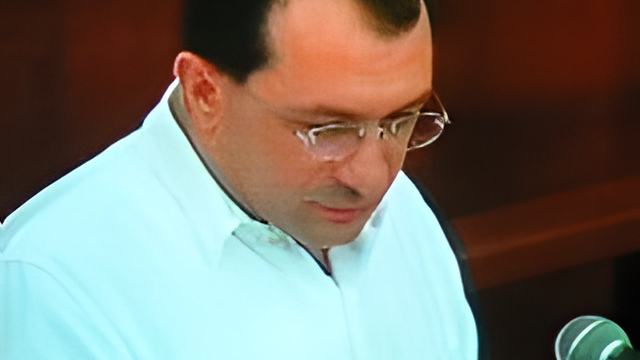
Unfortunately due to our own technical difficulties, we are unable to bring you the bulk of those remarks. We do have potions of the presentation by Albert representative Mark Espat who said that the government is protecting Barry Bowen, playing by the golden rule, meaning that those who have the gold, make the rules. Again here is a portion of Espat's remarks that we have pieced together.
Mark Espat, Albert Area Representative
"The beer company has pointed to their many programs supporting the community in sports and education. The issue is profit versus people. There is nothing wrong with profit, let me hasten to say, but I believe that profit cannot come before people. A government can be the friend of the people without being the enemy of profit. If not then whence does the government derive constitutionality? When our government, my government, came to office at the level it was in 1998 it would bring in an additional, approximately, $18 million a year in taxes. I am not proposing for a minute that the beer company lose money, no I am only proposing that it makes less of a profit. Less of a profit for the beer company means that the government would the charge less business taxes. We are in a time Madam Speaker of financial challenges, or some say financial crisis, let those who can pay, pay. Let them pay for the party. Madam Speaker I do not believe that the common man and woman, the teacher, the nurse, the policeman, the solider, the laborer, the union member, I do not believe that they can afford to pay anymore taxes. $1 less for tens and thousands of Belizeans who are on the margin of poverty is the difference between going to bed hungry or having a pack of unsliced bread to eat. $1 million to a few is nothing more than a campaign contribution. Madam Speaker government, my government's refusal, on the one hand to raise this tax to a level where it was being charged in 1998 and its willingness on the other hand to allow new taxes to hurt the masses of the Belizean people moves our country decisively in the wrong direction; that direction of putting profit before our people. Madam Speaker I think this moves Belize closer to what some call government by the golden rule. The one with the gold makes the rules. The consequences in my opinion will be far-reaching. I oppose this bill."
Regrettably we do not have Representative Cordel Hyde's remarks on the excise, but both of them joined the Opposition and voted against the bill on the excise. They also roundly criticized government's proposal for the environmental tax.
As has been reported government is increasing the environmental tax from one percent to two percent. According to the administration, it is a concession to move it from three to two percent. But by the reckoning of the bold backbenchers, it is in the words of Lake Independence Representative Cordel Hyde stabbing the taxpayer in the back with a 12-inch knife, taking it out only six inches, and expecting the taxpayer to be grateful. Albert Representative Mark Espat echoed those bitter sentiments.
Mark Espat,
"I believe today as I did on January 21st that this tax is unfair, it is without equity, and it will punish those who cannot afford to pay another penny in taxes while many of those who can pay and should pay continue to fall outside the tax net. If the government intends to tax profits instead of people then it should do so now. Madam Speaker let me draw an analogy of what is happening here with this tax package to a core model of the so-called free market economics approach. As you know, in a company or a corporation, there are ordinary shareholders and there are shareholders of preferred shares. If we imagine Belize for a minute as a corporation, frightening as that may be to some of us, then the masses of the Belizean people would be the ordinary shareholders. All of us that have a stake in the well-being and prosperity of this nation are the ordinary shareholders. It would seem to me though that there are some individuals and companies that hold preferred shares in this corporation called Belize. This special status has been given to them without the approval of the ordinary shareholders. There are not supposed to be preferred shareholders in this company. The people of Belize at the ordinary shareholders meeting last held on March 5th 2003 did not vote for any preference shares. In fact they voted for greater benefits to go to all of the ordinary shareholders and since January 14th the ordinary shareholders have been saying loudly and repeatedly, if you have issued preference shares, let those who hold preferred shares and have benefited from the special dividends on the last several years, let them pay their fare due. Collect the back taxes, including those due from the PIC bank, rollback the multi-year tax breaks to EPZs and concession holders. But Madam Speaker it seems the preferred share holders want to purchase these shares for little or nothing, these preference shares, and then they want juicy returns on these preference shares. And when there is a capital call, like right now when the country needs more taxes, they want the ordinary shareholders to pay again. But the ordinary shareholders have not received the hefty and disproportionate returns. They have no greener pastures to go to. The special dividends that the few preferred shareholders have been receiving, have not been available to them. And so you see even in the very free market model, this is not workable. The ordinary shareholders of a real company would never allow themselves to become the beast of burden for the preferred shareholders. In the case of Belize, the ordinary shareholders have been paying all along and watching others enjoy the dividends of their capital and labor. Madam Speaker if this House is the board of directors of this corporation called Belize, then I consider myself to be a director representing the ordinary shareholders and I have what I believe lawyers will call a fiduciary responsibility not to vote against the interest of those I represent. This Madam Speaker is not 1765 when the then settlement that was to be known as Belize was ran by the public meeting made up of the slave master and the small propertied class. This is not 1854 when the Legislature Assembly of the colony was openly run by the special interest. This is not 1854 when the Chairman of Belize Estate and Produce Company then the largest conglomerate in the company reportedly said that the interest of the company and colony were nearly identical. No, Madam Speaker this is not 1765 or 1854 or 1874, this is 2005, an independent Belize where members of this House owe their seat to the masses of the people, the voters who put us here to look out for their interests and not for the interests of the privately appointed holders of preference shares. Let those who have been awarded preference shares pay. I oppose this bill."
Again both backbenchers along with the Opposition voted against the environmental tax bills. In both cases of the very direct attacks on government from the backbench, the Prime Minister and his representatives ignored Espat and Hyde and responded only to the criticisms made by the Opposition.
With the stiff blows thrown today by Espat and Hyde, it's unclear what, if any, their future within the PUP will be. One thing is clear, the PUP could have foretold this when both men left the Cabinet in December. Today the Prime Minister refused to comment on what will happen next with the two rebellious backbenchers but Mark Espat told us that they are acting on a principle that they feel is still within the philosophy of the PUP.
Mark Espat,
"Jules we are on the backbench of the government side and I believe on any matter, whether it is budget matter or a constitutional matter or any matter that relates to our work in the House of Representatives, if a situation presents itself where we do not believe that a particular bill is in the interest of our constituency, or in the interest of our country, I believe we have not just s right but an obligation to vote against such a bill. I am sure the Prime Minister, since he has embraced the issue of reform, will understand that we do not want a House of Representatives that rubber stamps what the government puts forward. We want a House of Representatives with members that are able to think and process and able take a position that reflects their conscience and the concerns of their constituents."
Jules Vasquez,
But you did more than vote against the revenue measures, you made it clear that the government is pursuing a strategy which is not in line with the interest of the masses of the Belizean people and that is more than a policy error, that is a fundamental error in the spirit or in the principles of this party.
Mark Espat,
"I think that the party is made up of many people. The party is not made up of 1 or 2 or 10 individuals and I believe that there are many people inside the party, as well as outside the party, who will agree that in the instance where government needs to raise taxes as it has said that it does, in that instance the taxes have to be as equitable as possible and we are saying that those people who can afford to pay are languishing outside the tax net and those people who have been paying all along, as I call them ordinary share holders, those are the people who are being repeatedly called upon to pay. And so I think that a large number of people within, as well as outside, the party will agree with our position."
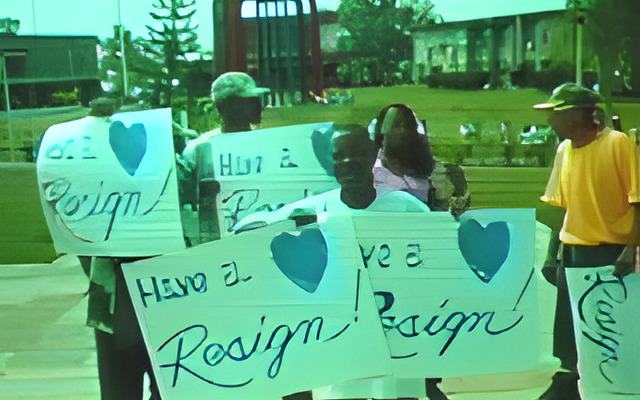
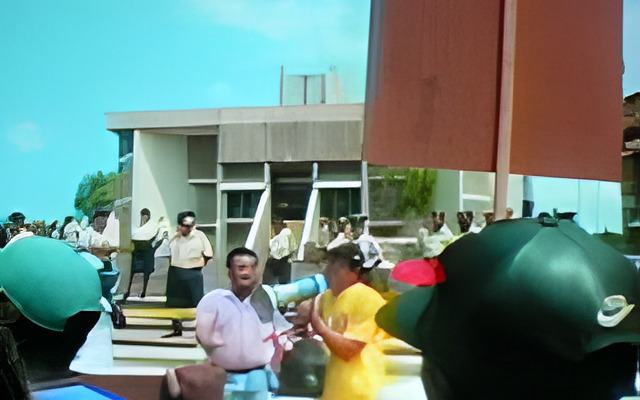
And while Espat and Hyde carried the days headlines, while they were raising dissent, the Unions held a modestly sized, highly spirited demonstration outside.