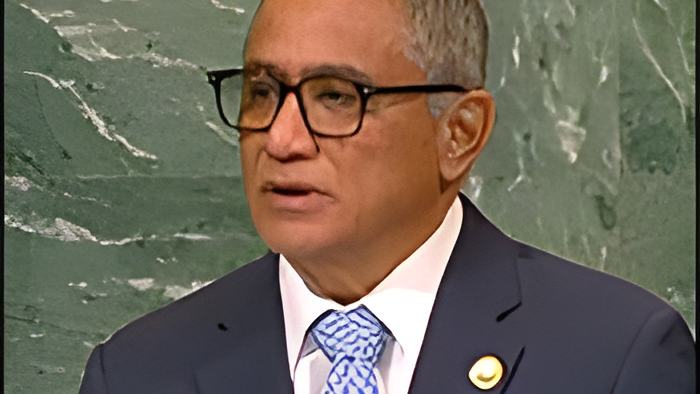
We turn now to the Prime Minister's remarks at the 77th Session of the United Nations General Assembly.
On Friday, he delivered a 23-minute speech on the state of the world's affairs, discussing the aftermath of the COVID pandemic, climate change, and ongoing military conflicts, such as the Russian invasion of Ukraine.
He said all these events have filled him with pessimism:
John Briceno - Prime Minister
"Mr. President, I take this podium with a heavy heart, more pessimistic than I was last year, more cynical and disappointed. We have come to depend on a multilateral system that has, as its center, the charter of this all our United Nations. Where is the collective will to adequately address the challenges of our time? Where's the shared conviction to work together for the betterment of mankind? Where is the hope? Today. They are conflicts on several continents. Geopolitical tensions are heightened. The unjustified, unprovoked, and illegal attack on Ukraine by the Russian Federation has shaken the foundations of the multilateral system. This is wrong. The consequential crises we face are not confined to the battlefield in Europe. They are global and affect us all. Democratic norms and human rights even were thought to be firmly rooted, are being rolled back. Poverty is on the increase. The post-pandemic recovery we anticipated is delayed, and the chorus of promises and commitments to pivot towards building back better, to getting the recovery right, have yielded little. Instead, global action and inaction have only resulted in deepening the many crises that we are facing. Our current systems and institutions, conceived for World War Two recovery, are straining under the weight of today's crises. In truth, they are broken and stand impotent in the face of the three Cs: Corporate, Climate, and Conflict. And yes, our people and planet are paying the price. We urgently need a new global financial architecture dedicated to achieving the SDGs net zero emissions and building resilience. We need a new global financial architecture that incorporates an effective global financial safety net with a capacity to respond to today's multiple, simultaneous and escalating crises. The financing needs of developing countries have increased significantly since we adopted Agenda 2030. The IFIS and NDBs have failed to meet the needs of developing countries. The figures don't lie. The truth is that the financing needs of developing countries are $4.3 trillion, more than quadruple the lending capacity of the IMF and well above the lending trends of the World Bank, which loaned only $99 billion last year. The availability of affordable, long term and dependable sources of financing is indispensable for the achievement of the SDGs and climate resilience."