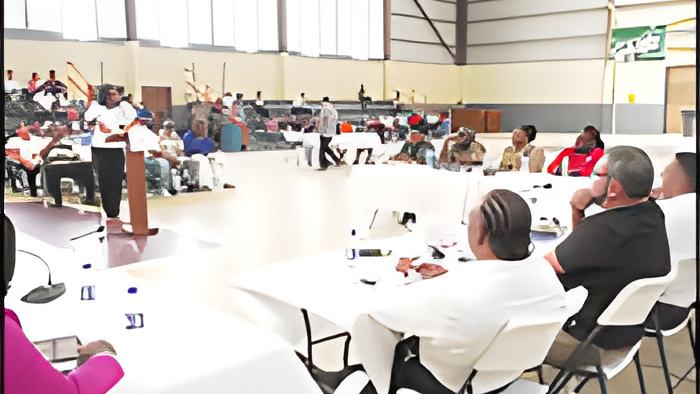
And UDP senator Sheena Pitts had also warned about the 13th amendment. She encouraged members of the public - particularly the southside residents - to attend the consultations, which were held today.
And while different sectors attended, and gave their opinions, there were questions of whether this form of hosting consultations is outdated - and if that is done on purpose.
Still, at the consultations, there were those that objected and those that supported the amendment. Courtney Menzies was there and has this story.
Today the Swift Hall was filled with individuals, businesses, and representatives who wanted to voice their opinions on the 13th amendment. This amendment has been met with controversy and pushback from different sectors.
And today at the consultations held by the House Committee for Constitution and Foreign Affairs, the feedback was mixed.
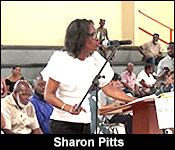
Sharon Pitts, Attorney
"Do the decent thing and don't strong-arm the constitution. What I see, all the features of police state. You're going to try and say, oh we'll have, and I see it a triple "benk," you will have some national security council. We have laws, we have a constitution, let those things work for the people."
Glenford Dennison, Union Senator
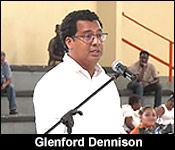
"I do not support the 13th amendment. Let's start there. When I read it, I said why does this sound so familiar? These terms sound like something I've read before. And I read it again and I said, this sounds like a law we already have. So I went to check. Members of the media, you need to pay attention because this needs to be on the news tonight. Copy and paste of the crime control and criminal justice act. Copy and paste. We already have a law to deal this. please put it because they have these poor people at the AG ministry wasting their time drafting foolishness, copy and pasting. They need to give them a raise."
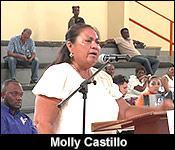
Molly Castillo, Senior JP/Fort George Resident
"This amendment is to bring clarity, simply to bring clarity and structure and understanding so that the police can effectively do their work. It's not here to condemn anybody in power or to throw blame or to bring up our ancestors. It's here to go forward, not to go backwards."
"So whatever we are doing, it's to go forward. Lets us go forward, not backward. I support the 13the amendment."
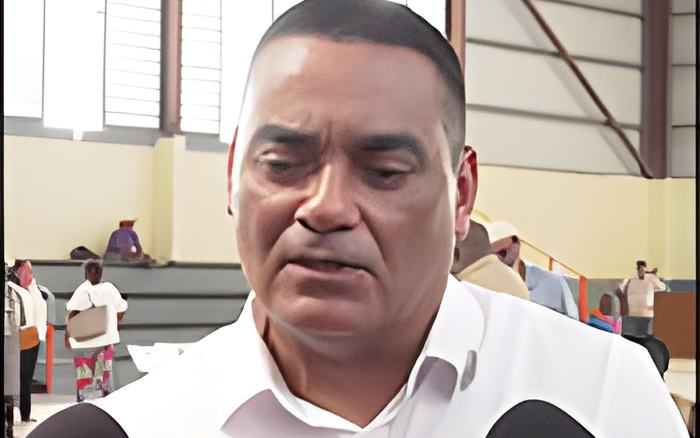
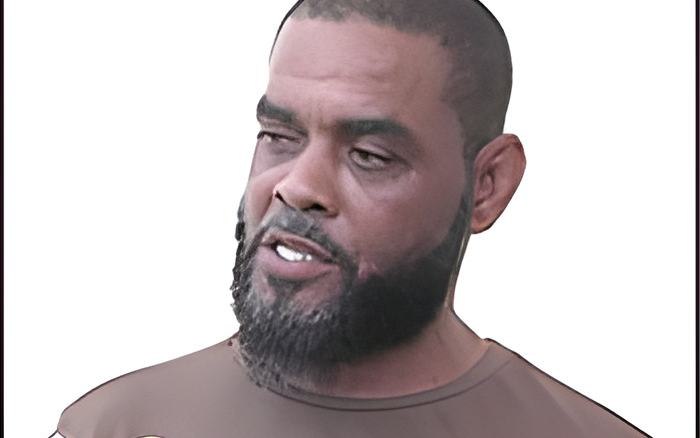
But the people who this bill would affect the most - those living on the southside in gang ridden neighborhoods - weren't the ones filling up the seats. However, one known street figure did voice his concern - Kenneth "Big Tom" Flowers explained why he is against this bill.
Kenneth "Big Tom" Flowers, Attending 13th Amendment Consultation

"I am a victim towards it, I am a person that has spent a lot of states of emergencies in jail for just being on the streets. I didn't commit a crime. I used to do drugs so I used to get picked up a lot but at the end of the day I was just fighting my own self going through my own problems but I got victimized by my past so that kept me going to jail whenever they have states of emergencies when I didn't even commit a crime so now I am against it because a lot of children who are not involved in crime will be in jail. So at the end of the day, I think they should make better decisions because in a country like this, all of us are failing."
"Crime has consequences but humans have rights so every time you punish someone for the crime, they get punished for their own human rights when they reach the prison because the prison doesn't treat you as a human."
Courtney Menzies:
"In your community, are people talking about the 13th amendment, are they aware of what's at stake?"
Kenneth "Big Tom" Flowers
"These people in the community don't even worry about these amendments. Some of them do and some of them don't care, they don't even know what it is until when it starts to knock on their door so by the end of the day, we are all blind in our country and the educators don't want to help educate the people so we will live like this for long."
And defense attorney Richard "Dickie" Bradley shared similar sentiments. He explained that he doesn't believe this is a genuine effort from the government to hear from the people.
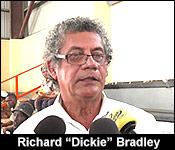
Richard "Dickie" Bradley, Attorney
"I don't know how we have sunk this low that we could propose to the country that any citizen who felt or feel aggrieved that they were unlawfully in violation of their constitutional rights, picked up, not charged for anything, not taken to any court, and taken straight to jail. Like, in all the years the white men were our slave masters and then our colonial masters, there has never ever been anything close to this. It's an incredible thing that in 2025 we are going to interfere with the fundamental rights and freedom of Belizeans by saying to them we are going to put in the constitution that you have no rights once the police come for you. That's like out of those nazi movies and communist… this can't really be Belize."
"You see the time they're having this? You really believe the working people would come here in Lake I? You really believe that they more educated people will come here to say A or nay to a matter of this emotional nature? Why this is not on the television that you can call in, nobody have to see you or camera you. I came all the way in this corner and you came to interfere with me."
"Serious problem is that this is not a genuine effort. The constitution of Belize requires that when you want to tamper with it like what they are going to do, you must give the citizens a 90 day period so they can try and digest what it is you are coming with. That is the only reason why they're having this."
But the chair of the committee, Francis Fonseca, disagrees. He said it's part of a healthy democratic process. And following the morning's session, they've heard objections, recommendations, but they've also gotten support.
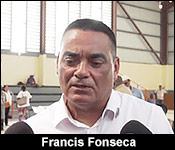
Francis Fonseca, Chair, House Committee for Constitution and Foreign Affairs
"You have people who are fully against the bill, who reject the bill in its entirety. And there are others who say, listen, we have recommendations, we have submissions to make the bill better, to make it more effective. So it's a combination of both."
Reporter:
"How will you determine at the end of it if whether there's a majority that's in rejection to the bill? And what's the course of action then?"
Francis Fonseca, Chair, House Committee for Constitution and Foreign Affairs
"Yeah, I think obviously, you know, we're taking, careful, copious notes of everything that is recorded. We have to report, to the House Committee. Of course, we have as well have to report back to our cabinet on the status of the bill. And I think coming out of those discussions, we'll be in a position to determine exactly, you know, where, where people stand, where the public stands on this bill. And I think any government, you know, wants to ensure that we're not doing something that the public is totally against. [But if there's an opportunity to refine the bill, to amend it, to improve it, to make it more effective and at the same time achieve our stated objectives, then we'll try to find that that middle ground."
The consultations began at 10:00 and finished at 4 this evening.