
It's cane season in northern Belize right now. The harvest started in late November and continues until June or early July. But for many farmers in the north, it's the toughest season in memory. And that's not just because of depressed world prices and shrinking quotas - those aside, it's proving hard for them to even get their cane to the factory because of awful road conditions. And we don't mean the highways, the roads we are talking about are special purpose and they are called sugar roads. Our Fortunato Noble went in search of some of them this weekend. He teams up with Keith Swift on this report.
These egrets on the side of the Buena Vista/Caledonia Road are snatching up the tiny field mice that scamper out of the cane fields when they are burned for harvest. It's business as usual for the egrets on a Saturday morning, but in this area, they are the only ones that can make that boast.
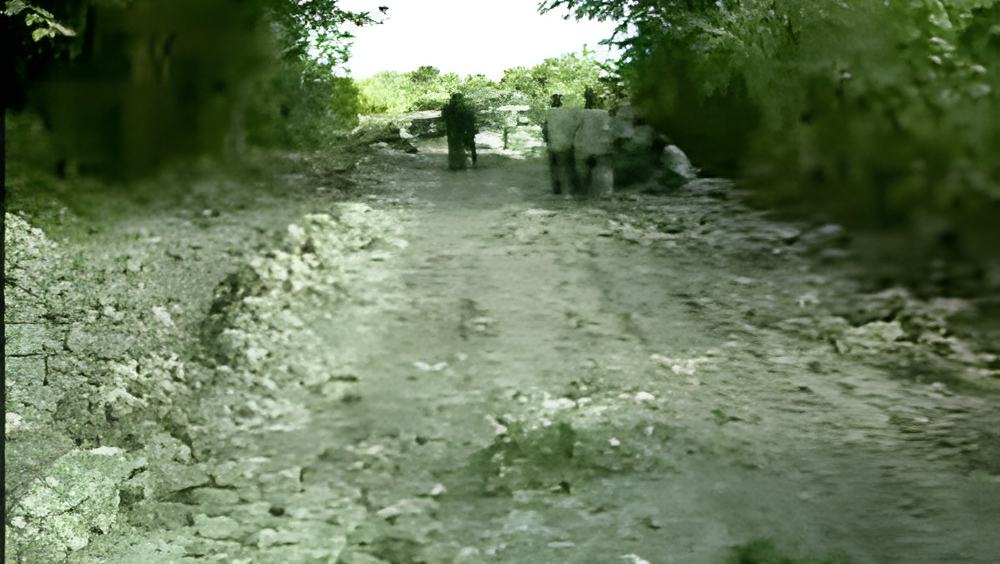
Almost everyone else in this sugar cane belt says their farms are in crisis - and it's all because of bad roads. But we don't mean your regular potholed filled streets which are plentiful in the villages - we mean deep, gutted trenches like these. We found them all across what are known as sugar roads. A network of these roads cover the cane belt and connect farms to the main roads; they are the arteries that pump life into the cane industry but now they are clogged and impassable. Gregorio Espiritu is from San Roman Village
Gregorio Espiritu, Farmer
"The problem that we have here is that the roads, the feeder roads in Santa Clara and San Roman are very bad, they are in a awful state that us the cane farmers, we cannot take out our product so that we can transport it to BSI factory."
Santa Clara, San Roman.... and Concepcion. Emilio Aban explains.
Emilio Aban, Farmer
"We can't pass with our trucks. As you can see, the sugar road, this is terribly bad. Who, this road it is like three years since they touched this road, the Concepion Area."
And not only in those villages, but all across the northern districts where sugar roads are used.
Gregorio Espiritu,
"There are thousands of sugar cane back there that not only me but several cane farmers have and if this road is not fixed in an adequate way, as how you can see it is in a very bad situation, we can take our our product right."
But one group that has been able to get out its products is Fruta Bomba Ltd.-
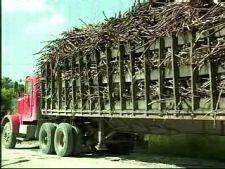
the papaya producing giant that uses these same roads to transport papayas. Cane trucks like this one weigh 25 to 30 tons and literally break their differentials on the bad road. Fruta Bomba on the other hand carries a lighter load and uses more powerful army-type vehicles - so for them the roads are a problem, but they are still passable.
So the problem rests squarely on the shoulders of these cane farmers. In most cases, they've been left with no other option but to repair it themselves. That means going into their pockets buying loads of heavy stones like these for $200 a load and filling it up themselves.
Gregorio Espiritu,
"We need assistance from the government because they are the ones to fix the road. We have come here to a limit that we have put stones and we have joined together with transport in loading stones and everything and this is the farthest we have gotten to now."
But central government has not been coming through and that's what has gotten these farmers angry.
Gregorio Espiritu,
"The roads are public roads, public feeder roads. This is not only the cane farmers' problem. The papaya farming has also contributed in the destruction of the feeder road. So if you were to tell me that the cane farmers are the ones to ensure the proper maintenance of the road, I believe that is not true because first of all we have a government, we pay taxes, they charge us as cane farmers, they charge us on every merchandise that we purchase at stores and so they have money for us."
And until they get that money in the form of paved roads, the hostility between these farmers and central government will continue to mount.
Farmers we spoke to tell us that Fruta Bomba Limited is paying government in cash or kind for its considerable wear and tear on the road but they allege government is not reinvesting the money in road repair. Despite numerous efforts, we could not get confirmation of this from a Fruta Bomba representative. Fruta Bomba is a subsidiary of a Florida based fresh fruit multinational called Brooks Tropicals.