
Belize's air space will be that much safer thanks to a state of the art approach control center that was inaugurated this morning at the Phillip Goldson International Airport. The Control Center was constructed by government in conjunction with the COCESNA - the Central American Corporation for Air Navigation Services. We were at the PGIA to find out how the new system will improve air travel safety and efficiency.
Keith Swift Reporting,
This departing Continental Airlines flight is one of the 150 planes that fly over Belize daily. Belize's airspace is managed here in the control tower at the Phillip Goldson International Airport where there is no radar - only radios, telephones, and pens and paper. It is basically all manually managed by air traffic controllers.
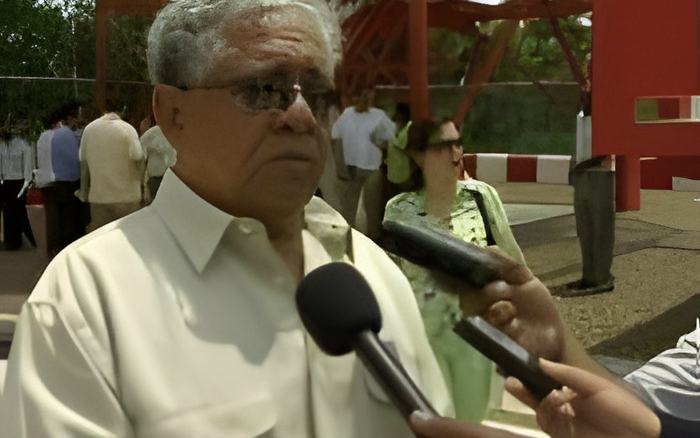
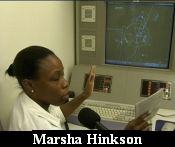
But that is about to change. This morning Minister of Transport and Communications Jose Coye and CECESNA"S Executive Director Eduardo Marin opened a new approach control center. Traffic air controller Marsha Hinkson says the approach control center is equipped with state of the art radars, which will allow controllers to see any aircraft that's within 250 nautical miles of Belize.
Marsha Hinkson, Air Traffic Controller
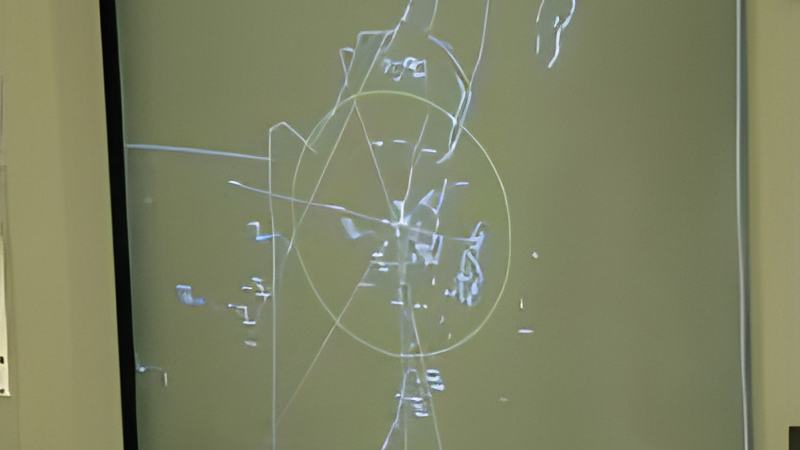
"We have a radar screen that will be able to see the aircraft flying
around Belize. Whenever they put on what is called a transponder code, for example right here is the transponder code 1200, and that identifies the aircraft on the radar. It gives you the altitude, how high the aircraft is flying, as well as the speed of the aircraft."
Keith Swift,
So can you tell how many aircrafts are over Belize presently?
Marsha Hinkson,
"From this within a 25 miles which is the circle right here, it is two but outside of the twenty five miles range we have three aircrafts that we are seeing right now on the radar."
Keith Swift,
So each of these is an aircraft?
Marsha Hinkson,
"Each one of these right here is an aircraft. This one right here is another aircraft, let's see, it is coming in I believe from Tikal Guatemala, a scheduled flight from Tikal. It can be either Tropic Air or Maya Airways."
Seems simple enough but it is new technology to Belize which Hinkson says increases both efficiency and
safety.
Marsha Hinkson,
"For safety you can see the aircrafts that are out there, that's the main thing and that improves everything. That improves safety, efficiency, the flow of air traffic, everything is improved that way. With not being able to see the aircraft there is more separation that is provided because since you can't see them you have to separate them further but when you can see them on a radar, the separations are minimized."
Along with the approach control center, this morning COCESNA and government also opened this secondary monopulse surveillance radar. You can call the monopulse radar - the heart of the system and coupled with the approach control center, Communications Minister Jose Coye says it will give Belize more control over its air space.
Hon. Jose Coye, Minister of Transport and Communications
"This radar which is very advanced, there are very few in the world I understand right now, affords us the opportunity, and to put it in layman's terms, what we had before was like the radio where we were able to hear the words, it was more audio type. What I would think we have today with this radar is more like the television - it is an audiovisual system in the control and the monitoring center that we were a while ago. We will be able to now to pick up those aircrafts and we can see them. This will take us very far in terms of reducing the risk and it becomes very timely with the expansion of this airport."
The radar control center and secondary monopulse surveillance radar were constructed at a cost of US$2.5 million.