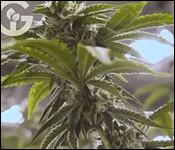
Cannabis, it's all the rage in entrepreneurial circles, touted as the next big cash grab, and perhaps the smartest thing Belizeans can do with their land in the next decade.
And it seems that more and more people want in, showing out in impressive numbers for a virtual public consultation on the subject and listening attentively to the counsel of the Minister of New growth's Cannabis Consultant, Alex Lavin.
He sat down with Cherisse Halsall this morning for a conversation on the potential new industry, and the standards Belizean growers will have to meet for both tourism and international markets. Here is that story.
Alex Lavin, he's Belize's Cannabis Consultant, the man poised to guide us into a greener economy. Still, many may feel that he's come out of nowhere, the ventriloquist dummy on Kareem Musa's lap
Many others have rolled their eyes at this white saviour of an industry pioneered and fought for by black and brown entrepreneurs. Lavin says he may look like a gringo but in fact, he's all Caribeno.
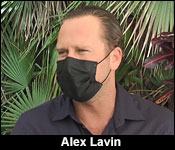
Alex Lavin - GOB Cannabis Consultant
"I can say this I know I look like a gringo or what have you but Soy Cubano de todo sinceramente. I would love to see even being able to help Cuba at some point but the reality is I came here before this administration was here, unfortunately when I came here during that administration, I just didn't feel as warm and fuzzy to be giving my services free and give the insight because I just felt it was going in one ear and out the other."
And that's probably due to the fact that critics of this industry say it's a stillborn proposal because no Belizean bank will finance it.
Alex Lavin
"When you're talking about banks federally it's illegal in the United States and in Europe and different countries, so you're never going to see banks start lending out money and saying here, go start building any of that stuff because it's illegal, this is always been just like silicon valley, just like any new emerging industry, it has always been driven by the entrepreneur spirit and the right amount funding to get it to a level where then banks will feel comfortable investing or financing future projects but until there is a clear definition of standards the protocols to those standards banks will never touch this with a ten-foot pole because the reality is there is a lack of standards and education for the average operator that's out there so I think as the educational piece continues to move forward as legalization keeps inching forward on a global scale, you're going to see banks get involved but when banks do get involved, they're going to want to see people who know exactly know how to do it. No one is going to write out a cheque and say good luck, go do it, it's all going to be based on merit and showing that clear distinction to take it from the point of the inception of a tissue culture or a seed all the way to the finished product where it can get into this."
And without financing what hope is there for the small man or woman to get in on the action?
Alex Lavin
"I will tell you that all sincerity that I came from the industry born and bred from it, I want nothing more than to be able to see the incorporation of people in its own way started the industry and kept the industry alive as much as it has but what needs to be understood and take the emotional aspect out of it. If right now you are buying everything from Mexico, the majority of it is being bought from Mexico and peddled,-the country is not making any revenue and the majority of the products that is being sold is getting people sick and they don't even know it, between powdery mildew and mould, that is a precursor to cancer, okay, the long-lasting effects of this are pretty damaging if the standards are not met that you are ingesting something that is to standard. That being said, I'll take an example from my own companies that I have in California. We incentivize people were from the illegal market to come out of the shadows, bring the clientele in and become part of the culture to take this to the limelight and that's what essentially, we did. We have countless amounts of team members that have what we call that stripe that badge of honour that did get in trouble or what have you. Don't expect handouts from the government to go and finance something when anywhere in the world, nobody is financing cannabis projects, no one, nowhere in the world, please I can't stress this enough, that is an emotional stand point and reality needs to set in. There's a lot of Belizeans that are very well off here take your idea and go to a Belizean that has the capability of being able to finance some of this stuff and let's take it to the next level but don't sit there and cry and have a handout because then people will be disappointed."
And if you're hoping to avoid such disappointment the saving grace is in the research, research of global hemp and cannabis standards, and staying up to date with the upcoming Belizean framework.
Alex Lavin
"The way that we have structured the new framework that's coming out that should be out pretty soon probably within the next 30 days or what have you that people can read and digest. It's all gonna be merit driven to ensure that Belize as a country is not held liable for giving back product and the people that are emotional about the fact of like oh we're gonna get cut out or what have you I would tell you it's the opposite if you are passionate about this industry and you want to get to the next level in this industry, do the application just like everywhere else in the world."
Lavin says he's paid to test Belizean products and from what he's seen, Belize has a long way to go.
Alex Lavin
"I am telling you staring at the camera, I spent almost $4000.00 on testing here from some of your rude boys that have all the products there to people that are smoking it you know in their own personal ways and I said here let me go and test the products, all of them failed, all of them not even close to passing the threshold so I can stress this enough Belize doesn't have the resources, if someone were to get sick from this, you have to do it based on standards, you have to if not we're just setting ourselves up for failure, you have to measure twice and cut once and understand where the industry is at."
Estimated costs for a cannabis basic startup include cultivation at 2 million, Processing at 1.2 million, and Lab testing at 1.4 million.