
For several weeks now, we've been reporting on the dispute between ASR/BSI, and the Belize Sugar Cane Farmers Association.
The BSCFA is the only association of Belizean farmers that haven't signed a long-term, commercial agreement with the millers for the delivery of cane. The other 3 associations are ready to start delivering their produce when the new crop season starts in a little over 3 weeks. But, in the BSCFA's case, their membership might only get a month to conduct business with the millers. That's because earlier in the year, they informed ASR/BSI that they wanted to terminate the commercial agreement, which officially expires on January 19, 2022.
As we told you, the miller says that without a new agreement, the BSCFA membership will not be able to deliver cane for the majority of the grinding season. And because this association is responsible for half of the total cane that is milled annually, there is the concern that this dispute could cause huge losses in product and revenue.
The two sides appeared to be locked in an impasse. On one side, the BSCFA says that re-negotiation of the commercial agreement is important for its membership's economic survival in these difficult times. On the other, BSI/ASR says that, among other things, the BSCFA no longer wants to share the financial burdens that come with exportation the of sugar after it is produced.
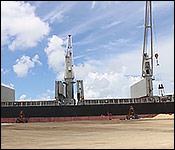
A month ago, the Management of ASR/BSI held meetings with the Association's Committee of Management and presented a proposal for an addendum that could be added to the current commercial agreement, which will expire in 2 months. In that addendum, ASR/BSI contemplates that both they and the Association's membership can share in the savings that will come from the shift in exportation logistics from the Port of Belize to the Port of Big Creek. According to assessments done by ASR/BSI, those savings resulting from lower costs in ocean freight and stevedoring could be in the vicinity of 1.4 million dollars to 2.5 million dollars per annum.
This morning, the company hosted a virtual press conference to answer questions about the proposal. Here's what the lead representatives had to say about what they think is a good compromise in this commercial dispute:

Malcolm "Mac" McLachlan - VP, International Relations, ASR/BSI
"It's late November, which means the crop has is almost upon us. We're aiming to start a crop around the 20th of December. And as things currently stand, we have long-term cane purchase agreements signed with three associations. However, the fourth association, the BSCFA, has explained to us it wishes to terminate the agreement to renegotiate. We have put forth proposals to extend the existing agreement with a few minor changes which are all in the farmer's favor, and it will help farmers to receive added benefit from the agreement moving forward due to greater efficiency and improved terms for selling our added-value sugars."
"I think you have to look at this as part of the bigger picture. Now, we at BSI saw the writing on the wall or raw sugar production a number of years ago. And that's because of changes to the EU sugar regime, which took away preferential pricing for raw sugar in Europe. And at that point, we looked for the future. We looked at how we can make this in the industry more long-term viable. And in the meantime, we've invested considerable amounts of money to move this industry from a predominantly raw sugar factory to a value-added sugar factory. So, producing direct consumption sugars already bagged that can be sold both in Europe and in the CARICOM. And the purpose for doing that is that the DC sugars attract a far higher price, and therefore that's the benefit to the industry as a whole. We've also looked at the bottleneck we have with logistics. You will recall that in the past, raw sugar has been shipped and a very onerous trip up in the river and down the coastline to be shipped offshore in the vessels. And we have, as you know, embarked on a major investment project at Big Creek Port to vastly improve the efficiency of that loading mechanism. And the main savings that will contribute to farmers will come from those two main investments because the DC sugar investment provides added value."

Shawn Chavarria - Director of Finance, BSI/ASR
"The benefit of the Big Creek transition is coming at a good time because shipping costs are going up worldwide, and how ships charge for freight is the amount of time that they spend at the port. So if you're reducing the time that ship is spending on imports, then that would result in more savings."
Malcolm "Mac" McLachlan "The way the sugar industry works in Belize, and in most countries is that there's a value share. the share is 60% in favor of the farmers, 35% for the mill of what we call the extra value of all the sugar and molasses sold. So, that basically means the value of the sugar minus the cost of its export, which is shared between the mill and the farmers, and after deducting a cost for taking that sugar to a direct consumption state."
We also asked the millers for their views on the counter-proposal that the BSCFA has made on what they would want to see in a new commercial agreement. ASR's Mac McLachlan told us that their experts have reviewed the proposal, and their conclusion is that the shift in responsibility for costs would cause the mill to go bankrupt. He explained why:
Malcolm "Mac" McLachlan - VP, International Relations, ASR/BSI
"BSCFA has put forth a proposal that would radically change the way the cane price structure works, and would basically amount to a major transfer of resources from the mill to the farmers. And it's a position that we're in at the moment where we're reached out to the BSCFA, to all their directors, to have a conversation about why their proposal would really make this industry non-viable for the future and to discuss the issues in the background."
"What is the BSCFA are asking for is basically to have a revenue share of the gross value of all the sugar and molasses sold, but not to contribute to the export costs of that sugar, molasses and nor to contribute to the refining cost of taking that sugar to direct consumption status. So that the value share, as it works now, is a value-share that's shared after the deduction of those costs. And that's what we call net strip value. So in short, what we are suggesting is a change to their share in the mill's favor, but not then contributing anything towards the very heavy cost of exporting and refining. And as we've said, we've run the numbers. It would mean from a mill that frankly has been losing money in recent years, it would mean a direct transfer of value of around 20 million dollars to the farmers. And that would not that would simply make our business non-viable."
"It's a fact that sugar yields, cane yield in Belize are the lowest in the region. It's a fact that the harvesting and delivery costs of sugar in the cape, from the cane, from the mill, are the highest. And those are issues that we, we of the farmers need to look at because it can't simply be a zero-sum game trying to take more money from the mill and hoping that that will resolve problems because it won't. I think it would lead to more difficulty and no further investment."
"We're not in a position where a massive transfer of value could be made to farmers because it would quite frankly, make the industry non-viable. We would go bankrupt. And so, therefore, you know, there seems to be a very a bit of a disconnect between what's being demanded or asked for, and where we really stand in the sense of developing this industry."
We also asked the company reps about the possibility that a new commercial agreement cannot be hammered out before the current agreement expires. They told us that they would only be able to accept cane from the BSCFA membership for a little over a month into the new season:
Reporter
"Will there be a point at which you will not accept can from the farmers if no agreement is arrived at before the expiration date?"
Malcolm "Mac" McLachlan - VP, International Relations, ASR/BSI
"We can't accept cane if there's no commercial agreement in place, Daniel, because that's the agreement that defines how that cane is paid for. So, it wouldn't be possible to accept came from farmers or an association that doesn't have a commercial agreement. But as Shawn said earlier, I mean, we're very hopeful we'll be able to have this clear, constructive discussion with the BSCFA with, both the CFA leadership, but also the BSCFA farmers, because I think it's really important that everybody understands what the strategy is moving forward and how the role we can all play because I'm convinced that it's a good one. In fact, it's the only thing. And from that perspective, I think it's important that we get rid of any misunderstandings that we might have. And you know, and get on and have a very successful crop, especially at a time, as Shawn said - when the price is considerably higher than it was last year demonstrated through both improvements in sugar pricing, but also the investments that we've made. You know, now's the time to start reaping the benefits of those investments and moving forward together."
We have contacted representatives of the Belize Sugar Cane Farmers Association for comment, and we hope to get some sort of response in the near future.