
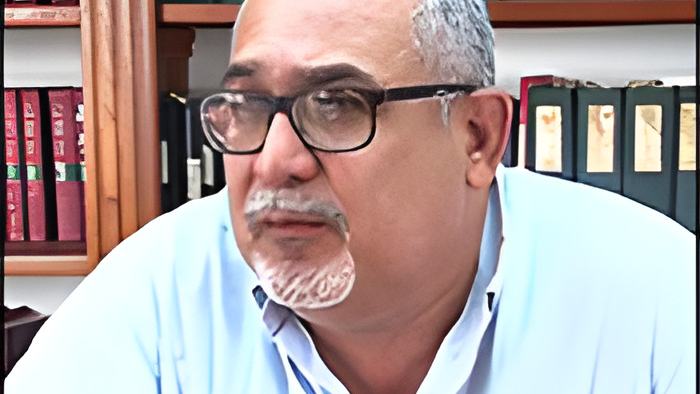
We learned about the final report for the Commission Of Inquiry at the tail-end of our sit-down conversation with Marshalleck.
He's also the Chairman of Belize Electricity Limited, and he wanted to ensure that Belizeans understand clearly why there is a proposal to increase your electricity rates, as recommended by the Public Utilities Commission.
Last night, we gave you a detailed look at the positions being held by the company and the utility regulator, as well as their dispute over the cost of power.
So, with all that technical talk on the topic, Marshalleck wanted to put it into proper context. Here's what he had to say about why BEL doesn't think a rate increase is appropriate at this time:
E. Andrew Marshalleck - Chairman, BEL
"We agree that the cost of power will be about $10 million more next year than what it was last year, so technically there should be a rate increase. The strict application of the rate-setting methodology would require the $0.02 increase that is being recommended. However, BEL has had a good year financially last year and the year before and is in a position to meet the anticipated costs in the upcoming period. So, given the overall economic environment and the pressures being faced with COVID, which we've seen in our books, BEL took the position that it would be better for any rate increase to be deferred to 2023 after everybody is back on their feet. We carry the balances and deal with them when people are in a better position to deal with them financially. We took that position. It's not a benevolent position, although some look at it that way. From our own perspective, over the past year or two years, we've seen arrears of electricity bills climb dramatically."
Reporter
"From your customers."
E. Andrew Marshalleck
"From our customers, so customers are having a hard time paying their bills. And we thought that given that our financial position is okay, that it would be prudent if the costs the rates are not increased any further at this time."
Reporter
"Because people already can't pay."
E. Andrew Marshalleck
"People already can't be on an increase in rates that will result in simply our arrears climbing."
Reporter
"Even higher."
E. Andrew Marshalleck
"Even higher. So that's the internal perspective. But. Even looking at it globally, it just makes sense to offer some relief at this time. And as I said, it is luckily enough financial position to carry it out for some period of time. The PUC is, of course, the regulator, and they're entitled position that they have. As I said, the position is technically correct on the numbers, but for the reasons I've just outlined, we took a slightly different position."
Marshalleck also discussed the complaints that the PUC brought against them about the cost of power, and whether or not they should have bought power from CFE in September of this year. According to Marshalleck, the PUC's position is unfair because they are looking at the situation with the benefit of hindsight:
E. Andrew Marshalleck - Chairman, BEL
"We don't accept that customers lost $2 million as a result of the decision. We think that's based on a miscalculation and we- in accordance with our calculations, there was savings to customers some $300,000 as a result of the decision. We come to that because given the levels in the dam and the anticipation of rains, had the dam spilled, the spillage would have cost some $2.3 million. Moving aggressively to reduce the levels of the dams at the time we did, avoided any spills, so the calculations of the PUC have not factored in the costs of any spillage, had the decision not been taken when it was taken."
Reporter
"So if we could pause quickly, sir, there is an insistence from Mr. Gomez that climatology studies would have suggested that the dam wouldn't have gotten to that dangerous point where you would have - the company would have been charged for that spill."
E. Andrew Marshalleck
"Well, it's easy to see that now the question is, would he have been comfortable saying it back in August when the decisions on September when the decisions had to be taken? You see dispatch decisions are based on what is anticipated to occur."
Reporter
"You're predicting the future."
E. Andrew Marshalleck
"Yes, what the PUC is doing is using historical data."
Reporter
"Hindsight."
E. Andrew Marshalleck
"Hindsight to criticize decisions that were taken in the absence of that data. What was before - If you want to be fair to BEL, you need to analyze the decision by reference to the data that was available to be ill at the time the decision was taken. If you look at the regional forecasts for rain that were issued and have shared a copy with you for September, it was predicted that there would be unusual readings and that it would lead to flash flooding and increased water levels in the reservoir. What would have happened if in the face of such predictions BEL did nothing and allowed $2.3 million in spillage Costs to accrue? Would the PUC then have criticized BEL for failing to have up to reduce water levels? It must also be recognized that you are making decisions based on expectations, and we can only be rational and prudent in making those decisions. We're not Nostradamus."
Here's what he had to say about deferring the pain of next year's cost of power, to a later date as compared to obliging customers to pay now:
E. Andrew Marshalleck - Chairman, BEL
"That's a role reversal. Historically, it has always been BEL pushing for a rate increase and the PUC keeping rates artificially low. That has, as you know, historically resulted in a very large regulatory balance being accumulated in favor of BEL. The experiences of the last two years have brought that balance significantly down. So again, for that reason as well, we thought that some accommodation could be afforded."
Reporter
"So that that justification, what do you make of a justification from Mr. Ernesto Gomez that it's probably prudent now to ensure that this regulatory balance does not claim to what it was in past periods."
E. Andrew Marshalleck
"Certainly. But remember, you're engaged in - that Is that correct -there's nothing conceptually wrong with that position. It's a correct position. And some may take the view that it's better to bite the bullet now than later. But remember, you're engaged in the business of predicting. The prediction might well turn out to be not as onerous as the increase makes it out to be. So that in doing it after it has occurred, in making a correction after the fact, we would be in a better position to calibrate the rates to meet the needs of everybody."
The general public still has some time to object to this final draft before the rate increase takes effect.