The press also used today's opportunity to get an update from BSI's Shawn Chavarria on how the negotiations between the mill and the Belize Sugar Cane Farmers Association are progressing.
The dispute over their commercial business contract caused a major disruption in the industry late last year.
Prime Minister Briceno and his team intervened and managed to convince the two sides to enter an uneasy truce to end the stand-off. For the good of the industry, they compromised and entered into an interim agreement. They also agreed to continue negotiations toward a new contract.
So, have those early talks been positive? Here's what the BSI's Director of Finance had to say:
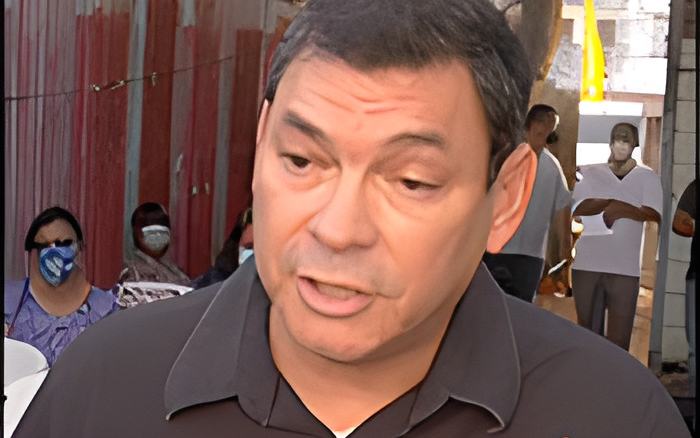
Shawn Chavarria, Director of Finance, A.S.R./B.S.I.
"Without getting into too many details because discussions are ongoing, we have had an initial meeting with the B.S.C.F.A. on the eighteenth of January. So, we received some questions, provided feedback to the B.S.C.F.A. Since then we have exchanged additional information. So, right now those discussions are ongoing. The next step really is for the B.S.C.F.A. to come back to us with some feedback on what we have presented, and keep the discussions going because we want to ensure that before the end of this crop we have a long term agreement in place with the B.S.C.F.A. That is really critical, because we don't want to go into another offseason where we have doubt lingering in our heads. All it will do is just keep back investments. There won't be any confidents from both stakeholders. I think both the mill and the farmers as well. They will wonder well, should I be planting if I am not sure if we will be having the same trouble next year. So, it is really important that we get a long term agreement signed before the end of this crop before we go into this off season, knowing that we are just focused on getting the mill ready, getting the second phase of this project done so that we can start on time next year and hopefully have a good crop."
We also asked about the negative impact that the early season protest had on the industry. It was anticipated that all those many tonnes of cane, which were cut and couldn't be delivered, would have been severely degraded. Here's our conversation with Chavarria on that topic:
Shawn Chavarria, Director of Finance, A.S.R./B.S.I.
"We saw that for roughly four days after the crop resumed on the third of January that the quality was really poor. And so, it showed that there was quite a bit of cane out there that had been prepared to enter the mill and didn't have the opportunity to do so. So, it took us four days to really get out that material. I think what we did was really in a sense the lesser of all evils, we took the cane in even though it is not of good quality. And then we will figure out with the stakeholders how we adjust for the quality matter that it wasn't at the right quality. At the end of the day though, everybody got the opportunity to bring in that cane and get the crop going. And now, we are seeing much better quality cane."
Reporter
"What ballpark estimate would you put that the amount of tons of poor quality cane that came in those few days?"
Shawn Chavarria, Director of Finance, A.S.R./B.S.I.
"A rough estimate would be around 12-15 thousand tons of cane that had deteriorated, because of the blockage."