
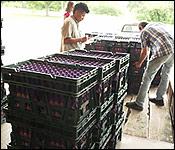
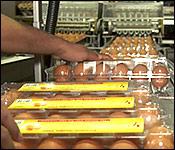
Poached, Sunnyside up, or boiled, how do you like your eggs?
Well, it won't matter much if you can't afford to buy the dozen, and that's just the fear that struck Belizeans last week when we reported that some stores had begun to retail eggs at 50cents each.
It's an inflationary phenomenon that we looked at extensively last week speaking to both a poultry manager and a policy analyst but tonight we're taking you to Spanish Lookout for a closer look at egg production and some opinions on production costs from the experts. Here is that story.

Last week we told you about the elusive but existent 50-cent egg.
But was it a side effect of inflation or just plain price gouging?
Well, we wanted to get the answers straight from the source and today we're at the friendly farm layer for table eggs to find out just how much it costs to produce an egg.
But asking the authorities, one thing is for sure no production price warrants selling a 50cent egg.
Issac Dueck, Farmer
"I don't think so and the shops I think take advantage. I don't know if I should say that, but it sometimes seems they do. We got very little of that profit we got. It's very marginal what we get. We had to raise our price. The price had to go up according to the feed costs. It was drastically flying high and it baby chicks are hired, feed is higher and the whole thing.And so we were basically basically lots of farmers were practically losing money. We just all of a sudden noticed that we had to go up. We kept the price low for a while and to see if it would stabilize, but it didn't seem to. So we had to take a jump. And so we just tried to make ends meet."
And form the farm to the industry at large poultry Association Manager Armado Cowo totally agrees saying that the profit margins for the stores who sold 50 ent eggs was exorbitant.
Armando Cowo, Manager, Belize Poultry Association

"When I heard from the feedback on the market that eggs were being sold at $0.50, the females $0.50 egg, I was shocked because if it was an egg, the $0.30, why would you sell it for $0.50? I mean, you're making a $0.20 perfect."
"Oh, farmers are making $0.03 profit on that. Just $0.03. It's marginal. It's just for them to basically to exist. Therefore, personally and as industry, I don't believe that the egg should ever have reached 50 cents and egg."
But between the farm and the store there's the processing plant and Irvin Plett whose the owner of the country's largest plant says that for him the reaction was an emotional one.
Irvin Plett, Manager, Country Foods
"When you heard that the egg had reached $0.50, what did you feel and how can it even have gotten?"
"I was I was really disappointed and surprised at the same time because I was seeing what the farmers were making and what it was being sold for. And then how could it reach $0.50? I could I could not understand how that could have taken place."
But there's an explanation for everything and while the egg professionals maintain that the 50cent egg is an exorbitant anomaly the price of an egg, like most things in the world right now, really has gone up. But why is that?
Armando Cowo
"Let's look at several factors because that's one single factor. Okay, but pre-pandemic, the feed was at $39.00 per 100 pound. Today it's at $38.00 or $29.00 400 per hundred pound. That's almost $10 difference. Right. And that's because of the inflation that was being brought about by all the economic activity all over the world. And we're not an isolated country. We deal with the rest of the world and we have to pay for it as well."
"And there's a fuel cost because it moves our industry. I guess a lot of people don't realize it, but our industry basically runs on wheels. Everything is movement, movement, movement. The feed that the the farmer buys is brought by truck into those tanks. That's a cost. So just inside industry. So there are a lot of cost that have shifted upwards and therefore we adjusted well. When we adjusted, we adjusted the wholesale value of the egg more from $0.26 to $0.30, $0.04 difference."
And at the processing plant those upward operating costs are quite specific, for one there's packaging:
Irvin Plett, Manager, Country Foods
"It seems like everything is slowly going up from the packaging. Packaging that we're importing. They've been raising the well, it's from farther back than six months, but we just kept bearing the cost. It went up like two or three times the packaging and seems like every time we order a new shipment of packaging, get prices up a little bit."
For another thing, producing birds have to eat.
Irvin Plett, Manager, Country Foods
"They provide the feed, but then if their cost goes up, we have to we have to raise the prices so that they so that they can sustain themselves and we give out contracts to them to raise. We place two flocks and the in the last months, people have not really been interested in getting a new flock because they were not making any money as the price was. So that is why we had to go up on the on the egg price."
Issac Dueck, Farmer
"I have to pay about $50 for £100 sack of feed. And and as you see this big bunch here, they eat about just in my top of my head, they eat about, what is it, 80 but £8,000 of feed a week. And it's just that big tank that you see there has to be filled every week. Every week that tank has to be filled up. And so and it's expensive. Very expensive."
And with all these economic stressors what is the fate of your fried omlete? Well, for many egg production is both art and tradition and many of the small farmers say that as long as they can cover their costs they'll keep putting eggs on the country's tables.
Issac Dueck, Farmer
"Well, I am a born farmer. I just love doing it. So I don't I don't mind if it's marginal a little bit, but it's just born into me. It's ingrained from my father. And I think way back it's just farmers. And so we don't mind if we don't make that fortune and we don't mind if that's the low cost of eggs get passed onto the Belizeans. Everybody who eats them for the country, I believe so. We want the best for them and so we don't mind if we don't make that much. But we have to make something."
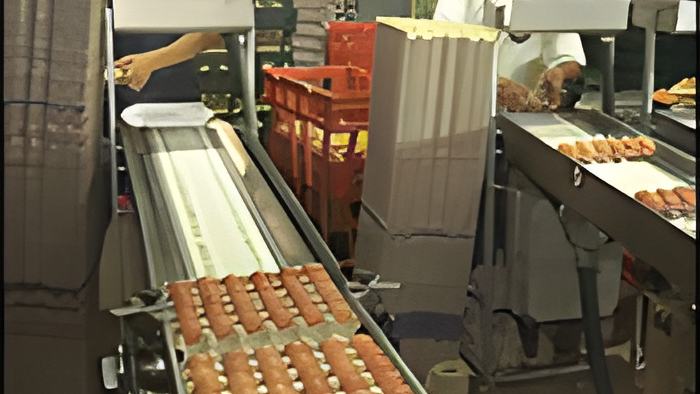
We'll take you back to Spanish lookout and to the country foods processing plant tomorrow night when we show you just how your eggs get packaged.