At the top of the news, you heard the Prime Minister express his faint hope that the sugar crop season will somehow start on time as planned - despite the frozen impasse between Belize Sugar Industries and the Belize Sugar Cane Farmers Association.
While those two principals are locked in their commercial dispute, the cane farmers from the other associations are anxious for the season to start without any disruption like the costly stand-off that played out last December.
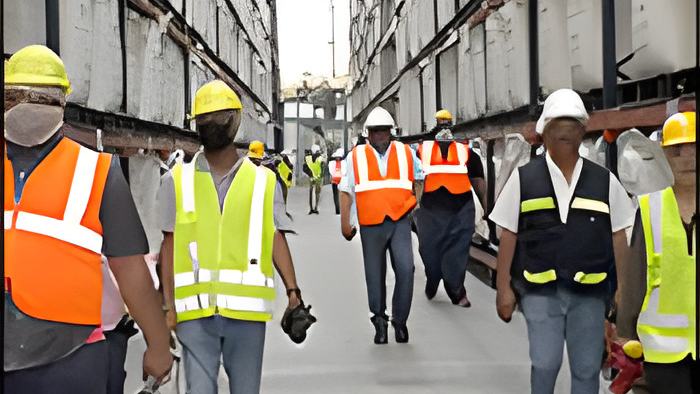
Well, today, the millers invited the press to take a close look at the pricey equipment upgrades they've made to improve Belize's sugar production, specifically direct consumption sugars.
Daniel Ortiz has that story:
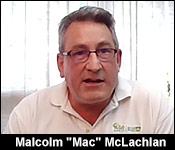
Malcolm "Mac" McLachlan, VP, International Relations, ASR/BSI
"We, of course, have invested heavily in the Port of Big Creek to ensure that those efficiencies are being passed through to the industry as a whole, including the farmers. I can confirm to you that through that investment of BSI's at Big Creek, farmers saved 3.1 million dollars during the cane crop that's just passed. That equates to an increase in cane prices of $2.70 per tonne of cane. And similarly, from our investments in added value direct consumption sugars, we made those investments for and on behalf of the entire industry. We invested, but everybody would share that benefit through the value-share agreement."
So, all these strategic investments have been to grow the pie, to make it better for everybody.
This morning, the millers invited the press to see a few of those investments at their Tower Hill facility that they made to increase their production of direct consumption sugar. As a result, those quality, food-grade products fetch a higher price for the benefit of both the mill and the farmers.
But to afford them, ASR/BSI had to be willing to invest significantly.
Shawn Chavarria, Director Finance, BSI/ASR

"Today was an opportunity to demonstrate not only to the media but to the general public what it takes to take sugar from a raw sugar state to food-grade direct consumption. We're selling in international markets: in the US, Canada, the Caribbean, and Europe, and the standards are very high. One mistake can really tarnish your reputation. And that's why it's very important that what we do here is done to a very high standard that meets international customer requirements. And that is a big part of the investment that occurred. So, the media would have had an opportunity to see some of those investments, the one that included the expansion of the boiling house, so adding new vacuum pans, new centrifugal syrup clarifiers, and DSM screens. I'm sure the public will recall many years ago, you're stirring your sugar, and you'd sometimes get little fibrous materials. All those things had to be addressed. You put in the syrup clarifiers and DSM screens so that the sugar, the juice that you're producing to produce direct consumption sugars, is of high quality and of a high standard. So, all of that had to go into play. Then, you go to the next part, which is conditioning. So, the sugar, by the time it gets to the customer, has to be in a free-flowing state so that when they want to package and use it, it's not hard. It can be consumed in their operations, or if it is for direct consumption to package, they can package it easily. So you would have an opportunity to see the investment in the conditioning building, so all the driers, the silos, which we had to put that investment to make sure that the sugar is of good standard when we pack it. Then, you had the packaging facilities that had to be expanded and upgrade so that not only can we produce more, but also, the equipment that is there is a higher-rated capacity, and also produce at a good quality standard. The value-added investments have been around sixty-four million Belize dollars. We've had Big Creek, which was just over thirty million Belize Dollars as well, and then you had the environmental projects: the water cooler, which we had a media day last year when we were going to start the crop, and also the air emissions. Those two projects combined are around twenty-two million. So, in the last four years alone, we're talking about a hundred and ten million Belize dollars in investments, expanding to produce more value-added sugar, improving the efficiency of sugar and molasses logistics, and ensuring compliance with environmental [regulations]. If you look at the past four years, since 2019, farmers have received close to 15 million dollars more in revenue from these investments in direct consumption of sugar. And so, it's having positive benefits, not only for us but also for farmers. And we're also building a reputation worldwide as a supplier of good quality direct consumption sugars. And we're quite proud of that."