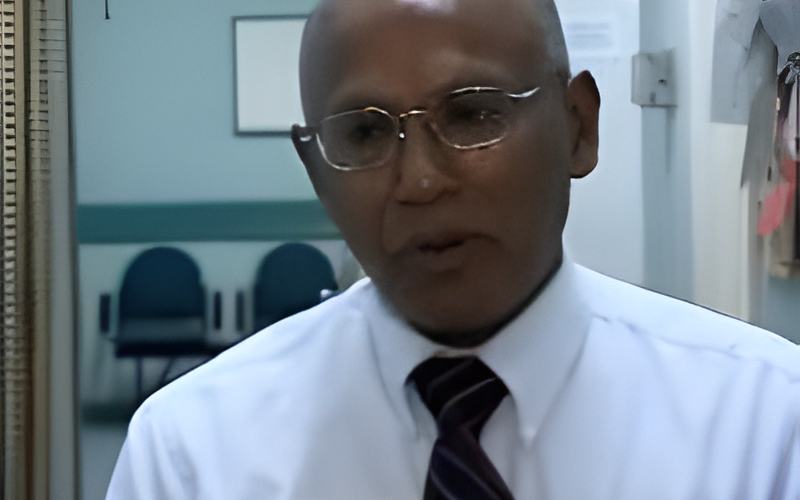
It was a sensation in August of last year when Lionel Castillo, the Ombudsboy was charged for extortion. He allegedly told a prisoner up for parole that if he paid, he could use his Ombuds-powers to get him paroled. But in February, those charges were dropped for insufficient evidence. Still another charge remained for influencing an officer, in this case 2 officers of the parole board. It’s a case that could go to the Supreme Court, so that’s why today his attorney Dickie Bradley was trying to get it thrown out at a preliminary inquiry. He spent the whole morning arguing why the charge should not stand. Jacqueline Godwin was at court today to find out more.
Jacqueline Godwin Reporting,
Lionel Castillo may have appeared to be jovial as he waited outside of the Magistrate’s Court but it was ruled that there is sufficient evidence to take the case to the Supreme Court. Castillo is being charged for agreeing to influence an officer on the prison parole board. It is reported that Castillo allegedly promised Kelvin Requena to get him an early release from Hattieville Prison. Castillo’s defense attorney is Richard Bradley.
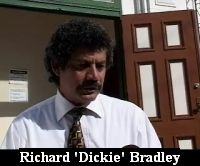
Richard Bradley, Attorney for Lionel Castillo
“One needs to remember that Mr. Castillo was charged with extortion and the after several adjournments and the Magistrate set a date for trail. On the morning of the trial when trial was just about to begin we were informed that the prosecution is abandoning, withdrawing, not pursuing the matter of the extortion and that they would put in its place or bring a new charge of agreeing to influence two persons on the prison parole board. And then we asked in fairness that this matter not be allowed to drag out too long and set a date for the preliminary inquiry in order for us to be able to proceed to a court of law to test the matter. In court this morning, Mr. Castillo is strenuously arguing that the evidence is weak that the evidence that states he tried to influence two persons is very, very weak in all respects. The Magistrate is
saying no, on the face of it, it should go to the court and be tried
The agreement to influence some people is coming at a stage where a prisoner who says in his statement that he was sentenced to 18 years for killing somebody, he is on parole and he calls Mr. Castillo on the phone and he says I got some money you know, come and meet me the Old Belize and I will bust off and the whole thing turns out to what is called a sting operation and so on. So in court today what transpired at the preliminary inquiry is the submission that when you look at the evidence it is really weak. Do you want to waste the Supreme Court’s time with a matter like that? The Magistrate is saying let it go to the Supreme Court.”
Jacqueline Godwin,
What is the evidence?
Richard Bradley,
“The evidence is the sole statement from the ex-prisoner that Mr. Castillo was given money by him, monies which were given to the prisoner by police on the grounds that that is payment for him being paroled although the Chairman of the Parole Board has a statement in here to the court to say that there are 13 members on the Parole Board in this country, a wide cross-section of persons, decisions of the Parole Board are made by consensus. So even if you can influence one somebody you can’t get anywhere. That is in writing, that is a written statement that the police has. So in any event the evidence is that the ex-prisoner is saying this man collected or been behind me to collect money for he is the one that helped me get parole, even though in the statement the prisoner is saying he didn’t anything for him, because the person he claimed could do something for me wasn’t at the meeting. The other evidence clearly would be that the police took money, marked it, and gave it to the prisoner and said go to set him up and give him this money so that we could stop him and find the money on him. That is the next evidence and then there is the suggestion that there is a third amount of quote unquote evidence in which telephones are being listened to in this country. The police can listen to your telephone and know what you are saying. So they say have transcripts of Castillo talking on the phone and they have tape recordings of Castillo and the prisoner at Old Belize. That is the sum total of the evidence that will make up the case against him.”
Jacqueline Godwin,
Do you believe the evidence will hold up in the Supreme Court?
Richard Bradley,
“Well since are going there we will see and I don’t want to be too previous on the matter. We will get a chance to see. The thing with the Supreme Court is that a jury of 9 persons will try, it is a matter for them to try. We can put our case to the jury, in the end it is a matter for nine citizens, fair minded persons with no axe to grind to say that there is evidence or there is no evidence.”
Jacqueline Godwin,
What now happens to your client Mr. Castillo?
Richard Bradley,
“Well the usual matter relating to a person who comes to court for a preliminary inquiry in a matter where he is entitled to bail. Mr. Castillo is on bail. He, where is job is concerned, he will remain on indictment until the April session of the Supreme Court and on the basis of what transpires there will determine what happens, if he returns to his job or he does not.”
Lionel Castillo met bail of three thousand dollars plus one surety of the same amount. For 7NEWS, Jacqueline Godwin.
And while Bradley was confident, the ruling came down against him. At about 3:30, Senior Magistrate Dorothy Flowers informed the court that after listened to both Bradley and Prosecutor Frank Augustine, she ruled that there is a prima facie case made out and that there is enough evidence to proceed the matter to trial at the Supreme Court. So come April first, when the April session of the Supreme Court commence, Castillo’s case is one of many that will be listed for trial.