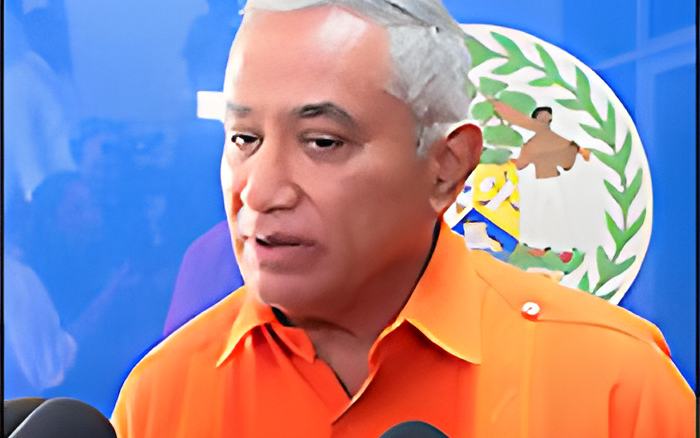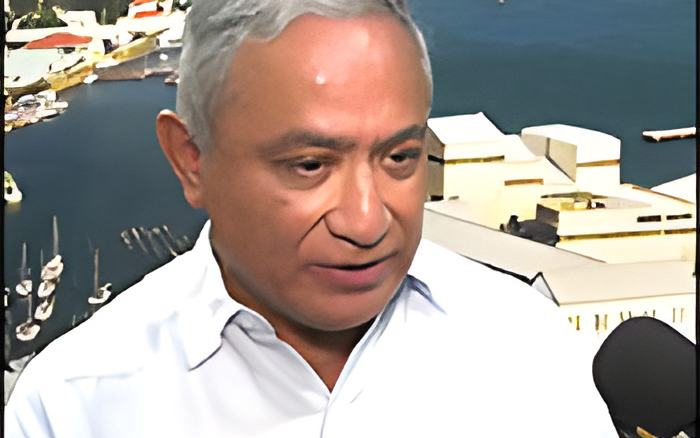

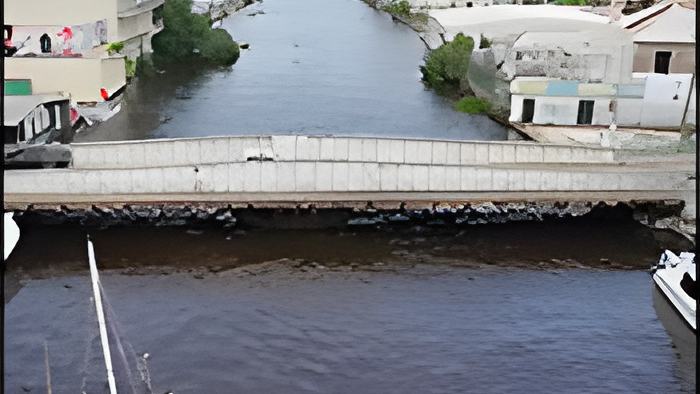
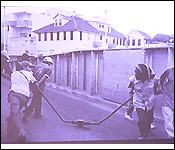

We met the Prime Minister at the launch of the plan The Swing Bridge in downtown Belize City.
Made in Liverpool, England more than a century ago, it is the last manually operated one in the world and, now, it will finally be replaced.
The bridge is in a dire state, so much so that it cannot just be renovated; it has to be replaced. And before any Belizeans are put in danger, the MIDH, along with the Japanese International Cooperation Agency, are combining efforts to install a brand new bridge. Today, they signed the grant agreement for the funding of the bridge. Courtney Menzies has this story.
Belize City's Swing Bridge is the most recognizable cultural and historic landmark in the downtown area. But over the 102 years that it has stood there, it has withstood floods, hurricanes, mega-tonnes of vehicular traffic, and over a century of wear and tear. And, in its current state, it poses a risk to those who use it.
According to the Infrastructure Development Minister, after an evaluation, they saw that the bridge needed urgent replacement.

Julius Espat, Minister of Infrastructure Development
"The two that were outright recommended for replacement as soon as reasonably possible was the Belcan Bridge and the Swing Bridge. The Swing Bridge, which was one of them, MIDH took this seriously and presented the grim situation to Cabinet and asked for support to begin the development of a project for the replacements of this iconic structure."
"The current bridge replacement is designed to be a two span steel concrete positive slab bridge. It will span a length of 42 meters long. Placed on askew to improve the alignment of adjoining streets, the new bridge tapers from a minimum of 14 meters wide to a maximum of 18 meters at its widest point. The cross section accommodates two lanes of traffic, two one meter wide bicycle lanes and pedestrian sidewalks that vary from 2 meters to 4 meters wide. It is anticipated that the bridge will be fabricated in Japan using corrosion resistant technology, shipped to Belize and erected on reinforced concrete foundations."
But apart from just building a more modern and resilient bridge, this project is also about maintaining the culture that the bridge represents.

Francis Fonseca, Minister of Foreign Affairs
"Since its construction in Belize City in 1923, the Swing Bridge has stood as an integral part of Belize City's cultural life. As you have heard, it holds the distinction of being the oldest swing bridge in Central America."
"The uniqueness of Belize's swing bridge lies in the fact, as you saw in the brief video, that it required at least four persons to manually swing it to allow larger boats to pass through, mainly for fishing vessels to deliver their fresh catch to expectant buyers."

John Briceno, Prime Minister
"This project is in part preserving a part of our rich cultural relic while anticipating the harsh realities of construction in a flood prone area of the nation. Today we approach this project full aware that replacing the Swing Bridge is replacing a part of Belize's identity and I find it kind of cute replacing the Swing Bridge and still referring to the new bridge as the Swing Bridge that will not swing so I guess that bridge will always be named the Swing Bridge."
"Belize City is the country's main commercial center. As a critical point in the city's transport network, this replacement bridge puts climate adaptation and accessibility at the forefront, reducing risk, improving reliability and supporting the continued economic activity in Belize City."
It's a huge undertaking and that's why today, the GOB signed an Exchange of Notes and a Grant Agreement for 28 million dollars with the government of Japan. And as the Foreign Minster pointed out, this project is an acknowledgement of the more then 4 decades of friendship between the two countries.
Francis Fonseca, Minister of Foreign Affairs
"This year marks the 43rd anniversary of the establishment of diplomatic relations between Belize and Japan. Our bilateral relationship has steadily deepened. Our cooperation has been strategic, mutually beneficial and transformative."
"It has supported Belize in advancing key national development priorities while aligning with our shared commitment to sustainable development."

Ryosuke Yamakura, Japanese Ambassador
"This grant agreement does not only demonstrate the evolution and deepening of our friendly relationship with Belize, which warmly welcomes Japan but also reflects our shared vision of the decided and sustainable development."
"This project is not just about rebuilding a bridge, it is about the city's lifeline and improving safety and accessibility."
While Minister Fonseca and Ambassador Yamakura signed the Exchange of Notes, the grant agreement was signed by Hiromi Nai, Chief Representative of JICA and PM Briceno.
As the prime minister mentioned, the new bridge will not swing.