
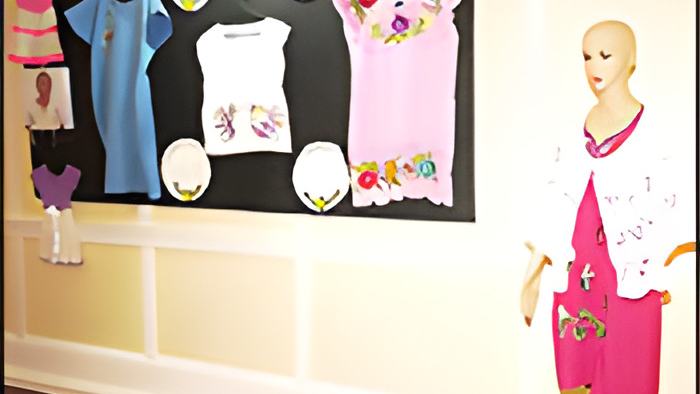
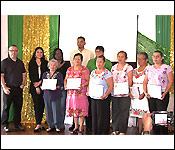
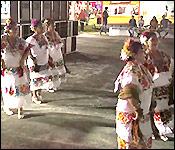
7 senior ladies from San Joaquin Village have spent the last 3 months immersed in the art of embroidery, learning how to stitch, sew and design huipils. Together, with the help of the Institute of Creative Arts and NICH they formed the San Joaquin Santa Ana Cultural Sewing & Embroidery group, and today they displayed some of their work by way of an exhibition. Jomarie Lanza was at the event and here's how it went.
How these colorful Hupils, guayaberas and embroidered garments came into being dates back to centuries of culture and tradition. It's a symbol of the Mestizo heritage, but the time and labor that goes into making the attire has become somewhat of a rare art. The patterns are known to be stitched strictly by hand, and thanks to the use of technology there are now machines that can do the embroidery for you. But still it requires some level of creativity and patience to ensure that the designs are woven correctly and sketched to fit the correct article of clothing. For these women in San Joaquin the birth of their cultural sewing and embroidery group all started with one woman who was looking for a way to sew and embroider cultural clothing for a local dance group.
Maria Angelita Magana, Santa Ana Cultural Sewing & Embroidery Group
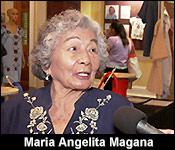
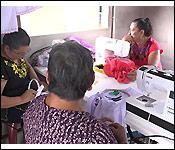
"I have a dance group right a cultural dance group, we dance jaranas, japonecas haliciencias, different types of our Mestizo, Belizean Mestizo culture and we have to pay a lot of money for them when we have to buy costumes, shoes and all the accessories that go along with the terios and huipiles and everything so I thought that if ladies in the village could learn to do that, to embroider, not by hand because it takes long like those things that we did by hand it takes so long to finish a huanengo or a huipil so I started discussing with several people and I met with our area rep Mr Florencio Marin, and he promised he would help me get some machines that are special for this kind of embroidery. So he gave us some money and we bought 3 machines because we didn't have anything to start with so we had to take turns in the morning and a group would use the machine in the afternoon and another group, and that is how started. And they were so in tune in learning how to use that machine that we started doing. Now each one of them have their own machine."
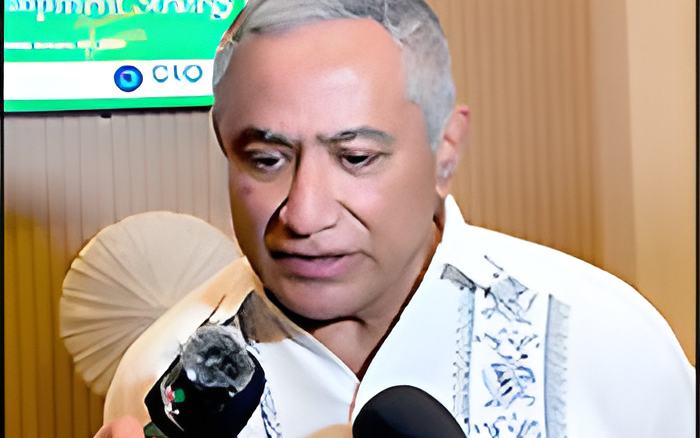
Embroidery can be seen as a traditional form of handmade art even though this particular style has incorporated the use of a machine. The Exhibit curator Gilvano Swasey explained how the process itself still requires some level of creativity and attention to detail.
Gilvano Swasey, Exhibit Curator

"The good thing is that I would say no part of the culture is lost when the machine is involved because they still have to sketch the ideas, they still have to transfer it to the material and they still have to sow and you still have to go in a pattern. Trust me I have tried sowing and it does not work that easy. The other beautiful thing is that this was taking the craft to a next level it was not just the sowing it was about patterns learning to make the actual wear traditionally sometimes you just get a piece of cloth and you embroider around it to make the table cloth or so forth but this time they are learning especially the guayabera, the hupil they have conquered in a sense but the guayabera was so many components. And when I asked them well give me some of these things I had a bag full of just about, we had to figure out what was the neck what was the arm and you had to realize that some sections are double because well the arm is rounded and so forth the chest might just be flat, and then the back shapes different and then for each person you have to have a different size so if you are doing patterns and you doing for lets say its the same family but the Pa, the son and the grandson will all be different measurements. So that is what interest me it was that it was evolving it was not just a bout the design it was not just about the weaving it was about creating a complete product and also finding younger people to train."
And for many of these ladies, this kind of artisanal work has become more than just a hobby. As their skills improve, they have the opportunities to gain income from selling their products.
Maria Luisa Pol, Embroiderer
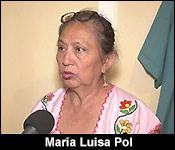
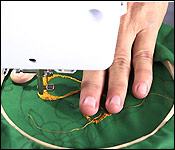
"I have done this from when I was a kid I started to do this and then we have another group at San Joaquin that she taught us how to continue doing this and then Ms Angelita she taught us how, she invited us to do this on machines and that was how we started to learn this but it is very hard. It's good but it is very hard, the needle went through my nail 2 times and well I didn't stop. I continued and I continue until challenged this dress, because Ms Angelita gave us one and she asked who wants to take the challenge and I told her I will do it and I did this one."
Jo-
"How long did it take you to finish?"
Maria Luisa Pol, Embroiderer
"About 3 weeks because we just started to do this so about 3 weeks this one you see in one week I made it, in one week I did this one."
Jo-
"So what makes this kind of embroidery special?"
Maria Luisa Pol, Embroiderer
"The thread, the cotton thread it is shiny the thread. For me it's a hobby it is good because farther on you can do your embroidery and sell it."
And with every stitch, they get closer to perfecting this art and preserving the Mestizo culture.
Maria Angelita Magana, Santa Ana Cultural Sewing & Embroidery Group
"If we don't retrieve our culture it will disappear so we have to retrieve what we can, the music the dancing the food the arts whatever, we have to retrieve it and we have to promote it and we have to get our children and the community aware or the whole country aware that we can do if we put ourselves. It is a lot of hard work, even if we start ripping and ripping and hundreds of yards of thread go down the drain but they learn something and I hope in the next 3 months hopefully the other new group that I hope I can start with if I have some revolving funds I can use they will learn as much as these 7 ladies have learned already."
The exhibit is now opened at the Museum of Belizean Art at the House of Culture.