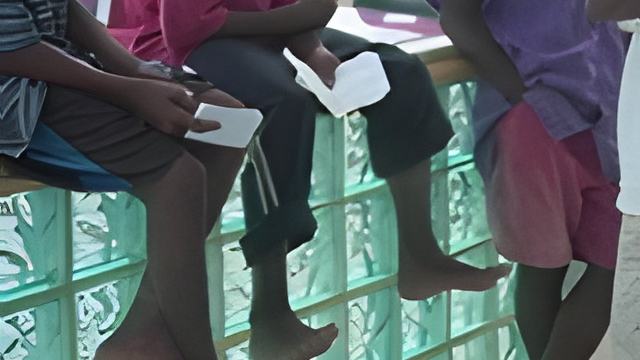
For most primary schools across the country, the new school year opens on Monday. In preparation for the big day, most stores are swarming with parents filling book lists and getting last minute supplies. But while that happens inside, outside there are also students, but they aren't buying, they are begging...for money to buy books. It's a frightening and even saddening new trend and 7NEWS tried to find out what's behind it.
Keith Swift Reporting, [keithkswift@gmail.com]
You can find them, or as it is in most cases - they find you in front of major stores: from Sav-U to A&R. We are talking about young boys, and even some girls, who sit and stand in front of these stores with type written sheets in hand, waiting and confronting customers with this:
Keith Swift,
What are you guys doing out here?
Boy #1,
"We di look fi sponsor sir."
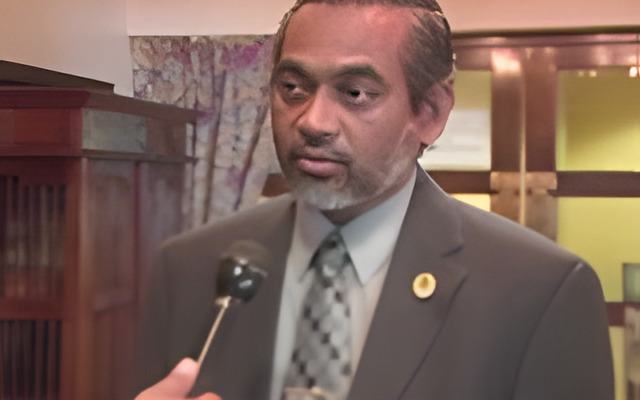
Call it panhandling, begging, or just plain hustling - this is their reality and social worker Fermin Olivera says it is nothing new.
Fermin Olivera, Dir. Community Rehabilitation Bureau
"This soliciting or asking for help is nothing new."
Nothing new but two days of surveillance by our 7NEWS team revealed the frightening depth to which students, some as young as 8 years old, are going to buy schoolbooks.
At A&R, the staging ground is the store's verandah. One of the boys I met there today, who was at Sav-U yesterday, told me he has been making daily trips to area stores for about two weeks now. A&R owner Tomasita Urbina has kept a wary eye on them.
Tomasita Urbina, A&R Store
"They come everyday. I have five or six of them hanging around and

I see that some people help them and some people don't. Some of them give them help and some of them complain to me about the kids bothering them."
Keith Swift,
As a businesswoman do you have a problem with them in front of your store?
Tomasita Urbina,
"Well so long as they don't come into the shop. They come, they get their little money, and they come and sometimes they even spend it here. To me this is not the correct approach, I think we are doing more damage to them than helping them because they are not using this money that they are getting for the purpose that they are saying."
So then why are they doing it? Well Olivera who heads the Community Rehabilitation Bureau says generally if children are out here, it is because they have to be.
Fermin Olivera,
"People do whatever needs to be done to live and I think that is the bottom line. We do what we must and
unfortunately, even if there is some shame associated with it, these people are forced, and if they had other ways of doing it I am certain that they would go to those other alternatives."
The boys told me they take home about $20 on a good day. But since there is really no right or wrong way to beg, sometime they get this: a flat out no. Minutes later you could say they hit the jackpot when this tour guide sprung a crisp U.S. one dollar note each. Tightly grasping the dollar bill, the boys spoke to me. Because they are minors we won't reveal their faces or their names.
Keith Swift,
What is this money for?
Boy #1,
"My books sir."
Keith Swift,
Do people ever bother you or try to hurt you?
Boy #1,
"No sir."
Boy #2,
"They don't do me nothing sir."
Keith Swift,
How about you?
Boy #3,
"Well one time when I was hustling and thing they chanced (beat me up) me when I was going home. They took away my money, like eight dollars."
And that is where Olivera says the story could get scary.
Fermin Olivera,
"It certainly is of concern because they are exposed to the elements really of society: to abuse, to being sexually used, and it is a risk. And apart from the physical there is also the emotional. I don't know if we understand the implications for children who are forced to go and beg, how this psychologically affect them, how they view their family, how they view their children in this society. It is of some concern certainly."
Olivera says that on the surface, both legally and morally, there is actually nothing wrong with what these children are doing. All the boys confirm they are out here with the consent of their parents and Olivera adds they are basically trying to survive. He says what society views as disgraceful is the exact opposite.
Fermin Olivera,
"Children might legitimately be out there hustling for their families and I think it will give them a sense of worth and dignity because they are helping their families."
Keith Swift,
So it doesn't demean them?
Fermin Olivera,
"Not necessarily. How a negative effect is how people treat them, that is the demeaning aspect and some children have picked up that this is demeaning."
And the kids we came across weren't ashamed, in fact they say they prefer this over the alternative.
Keith Swift,
Do you want to be out here?
Boy #1,
"No sir."
Keith Swift,
So why are you out here?
Boy #1,
"Because I have to do it out here because if I don't do it, I might not go back to school and I want to go back to school."
Keith Swift,
School starts on Monday, how many books do you still need?
Boy #1,
"I already got my exercise books but I haven't gotten the text books yet."
Keith Swift,
How about you?
Boy #2,
"No sir but I have to do it sir 'cause I won't go to school once I don't get my books."
And so if the question was to beg or not to, it appears it has been answered by the grim code of survival which now prevails on the city's streets.
Both the Human Development Department and the Police have in the past conducted sweeps. The children aren't arrested, rather they are taken home and the parents are warned. Last year 20 children were picked up over the course of the two-day operation.