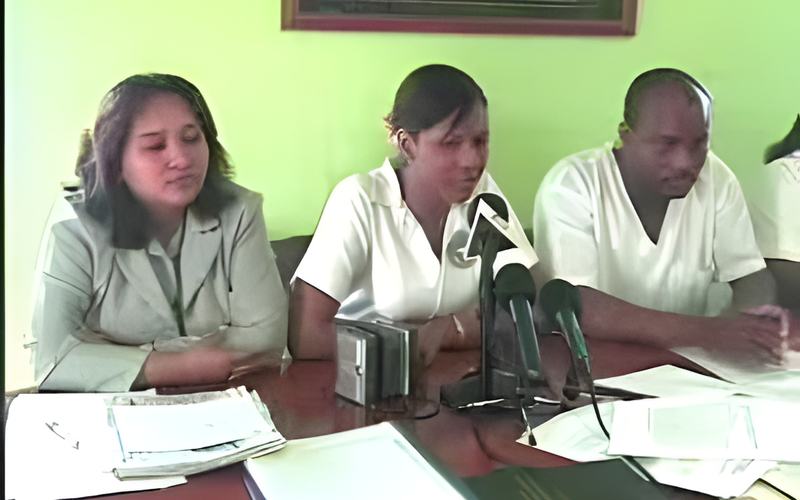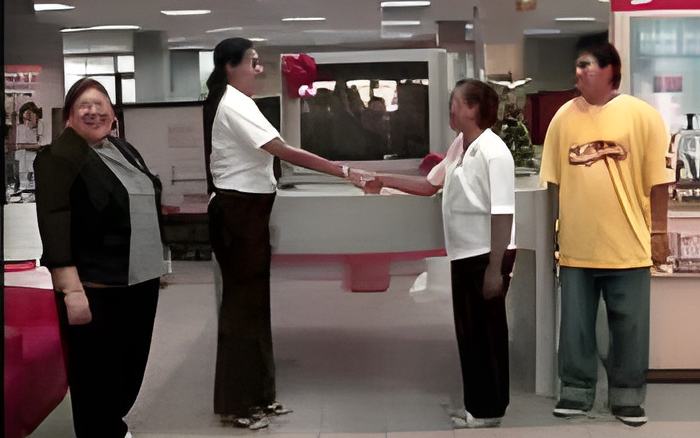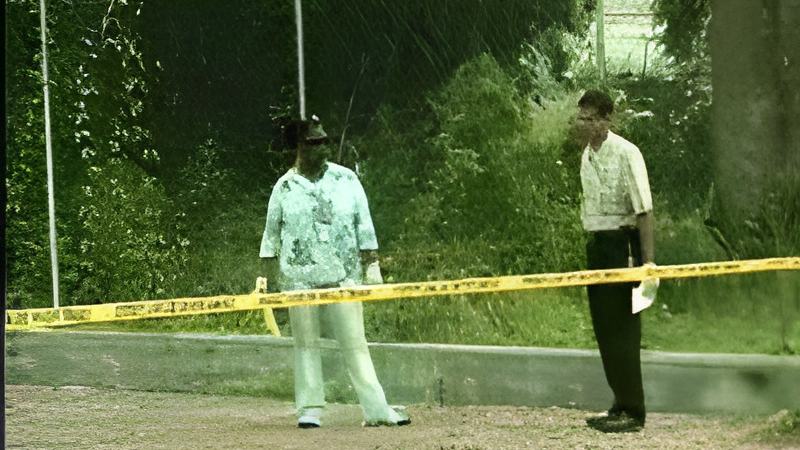
As part of a U.S. State Department initiative to improve the capacity of police personnel, over the past week members of the Police Department including police officers, the scenes of crimes unit and the forensic department have been undergoing training. The focus is to improve the collection and proper processing of evidence from crime scenes to the forensic offices. And while the claim has always been that the department is in need of lots of equipment to better do their jobs, the training is changing that mentality.
Alfonso Noble Reporting,
The National Forensic Lab in Ladyville was the site of three shooting incidents this morning, they were not real but as the culmination of a one week training course that officers and forensic personnel underwent, they had to process the scenes as if they were. Aric Dutelle is the instructor.
Aric Dutelle, Instructor
"It has been a week long training in responding to a crime scene, setting up a perimeter, searching for evidence, documenting it through photography sketches etc, and then locating packaging, preserving the evidence. The chain of custody starts with the first police officer that arrives on the scene for that evidence and we have to make sure that we locate the evidence, otherwise it can never be used, and we have to package and preserve it so that it can later be analyzed by a forensic lab and then also shown in court. If the chain of custody is not intact or the evidence isn't either found or collected, it can't be used."
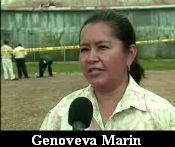
And while the officers are being trained on how crime scene material evidence is to be handled director of the forensic laboratory Genoveva Marin says that what the officers work on here is important on the outcome of investigations and eventually the outcome in court.
Genoveva Marin, Director - Forensics Lab
"It is very very important. The exhibits start at the scene so, us,
we need to identify, we need to collect, we need to package, we also need to identify them at the end of the day for the purpose of investigation for the purpose of all the scientific evidence that we will be collecting at the scene and that is something that does not lie. We have the evidence that will be giving us what was taken from a scene or what was left at a scene by perpetrators."
Aric Dutelle,
"This will help out fighting crime and the crime response and it is actually building a very good relationship between the Police Department, the Scenes of Crime Unit, and the Forensic Science Service because they are all working together and working in policies and procedures and methods so that they are all working together as a team for the successful outcome of an investigation."
But while there is improvement in the success of prosecution there is the criticism that Police Department is unable to process crime scene materials because of lack of equipment, this course is training officers to work from the ground up and to work with what is available.
Genoveva Marin,
"We have our resources. Of course we are working on that, we are developing and we are having different phases for the purpose of implementing and improving. So the training is basically for that, for us to improve on our techniques of collecting, packaging, which would be the initial point of a criminal investigations. Before we do have a DNA lab, we need to handle our exhibits properly for the purpose of that, for the purpose of potential scientific evidence that we would be wanting to find at the scene for us to be able to, for the administration of justice."
Aric Dutelle,
"Training is a first step, manpower is a second step, and then technology is the third. You can adapt and overcome with other types of technologies and other types of equipment and that is what the Belize Police Department and the Scenes of Crime Units are doing right now. Right now it is important to just concentrate on the basics and if we get the basics down and get the basics working correctly, efficiently, the more complex things will come. We have the same issues in the United States with not having money or technology or the abilities and as you work on the basics, then the rest comes and then pretty soon you are dealing with CSIs."
This afternoon the participants of the training sessions were all awarded certificates for their participation.