
Tens of thousands lost their jobs due to COVID 19 - mainly in the tourism sector.
And today, the new unemployment figures were released - figures from September's Labour Force Survey.
It's a bi-annual survey of 3,000 households from across the country, but this time, because of social distancing, they had to conduct the survey through telephone interviews.
The bottom line? The new survey says unemployment is 13.7%. But, you have to put a big asterisk next to that relatively low figure. That's because to abide by international standards, the SIB has refined its definition of what it means to be employed, unemployed, and underemployed, and so, their results can't be directly compared to previous labour force surveys.
If they were using the old methodology, the unemployment rate would be 30%!
Here's what one of the SIB's statisticians had to say about the labour force survey's new definitions of what it means to be employed and unemployed:
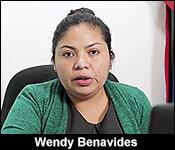
Wendy Benavides - Statistician II, SIB
"Employed persons are identified as those who worked for pay or profit for at least 1 hour in the reference week, or had a job, but were not at work for the reference week. One of the major changes in classifying the employed persons is the revision of persons working for goods produced for household use. For example, subsistence farmers who sold a portion of what they produced were previously classified as employed. However, using the refined definition, these farmers would only be classified as employed if they sold the majority of what they produced. The Toledo district is commonly known for subsistence farmers, and this is the district most affected by this refinement in the definition."
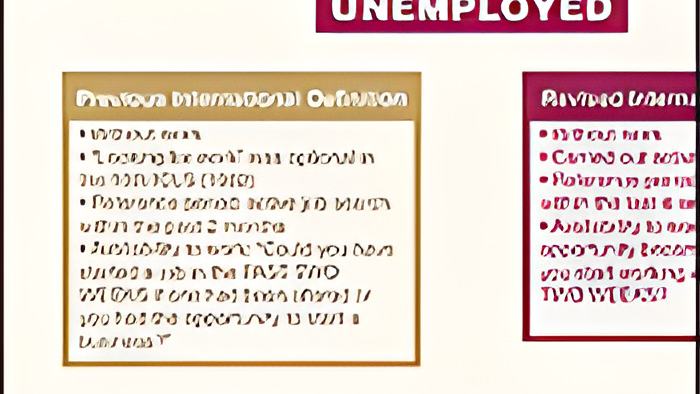
"Another revised key concept is unemployed. Unemployed persons are those without work, carried out activities to look for work within the last 4 weeks, and were available to start working within the next 2 weeks. In previous labour force surveys, persons were classified as unemployed if they were not working, but available to work. The key difference is the refined definition is that all 3 criteria are required to be classified as unemployed. Next, persons must now be actively looking for work within the last 4 weeks."
"Underemployed persons are a sub-group of the employed population who were previously defined as those working less than 35 hours in the reference week. Under the revised definition, 2 criteria were added. To be considered underemployed, persons must also be wanting to work additional hours, and available to work in the next 2 weeks. The concept of informal employment was first introduced in this round of the labour force survey."
"The unemployment counts, using the previous methodology is almost 3 times larger, compared to figures using the new definition. Under the previous, more relaxed definition, unemployment levels using the previous definition stand at 29.6%, compared to 13.7%, using the refined definition in September 2020."
From there, Wendy Benavides went on to discuss some of the trends they picked up on by looking at the group of Belizeans who are eligible to work, and those who are actually active in the labour force. They refer to the Belizeans who are legally allowed to work as the Working Age Population, and here's what their September survey revealed about the different groups of employed Belizeans:
Wendy Benavides - Statistician II, SIB
"In September 2020, the employed persons were approximated at 145, 455 persons. This represents 86.3% of the labour. Unemployed persons makeup 13.7% of the labour force, or approximately, 23,175. Within the employed persons, you find the sub-group of persons called the under-employed. These people usually work less than 35 hours per week, and were wanting and available to work additional hours. This group represented 23.6% of all employed persons. Labour force figures by sex show that males accounted for 60% or 101,786 persons."
"Male participation levels in the labour force continue to be more than their female counterparts. Among age groups, participation among young females was lower compared to other subgroups. The highest levels of participation were seen among males 25 years and older at 74.2%. Preliminary results show that the national unemployment rate stood at 13.7% in September 2020. Belize district recorded the highest level of unemployment at 15.1%. Within this district, previous job holders lost their job in administrative and support service activities, accommodation and food service activities, wholesale and retail trade, and motor vehicle repairs. In contrast, the lowest levels of unemployment were seen in Orange Walk District, at 11.1%."
"The level of joblessness by sex indicates a share of about 11.6% of males, and 17% of females in the labour force were without work, looking and available to work. Women continue to be more prone to be unemployed."
And finishing up on the topic of the survey, the SIB also discussed a few other trends that they noticed when looking at employment by gender and by district:
Wendy Benavides - Statistician II, SIB
"I will start with persons not working, who lost their job due to COVID-19, which was estimated at 38,909. 33% of these persons previously worked in the tourism industry, followed by 15% in wholesale and retail trade and repairs, and 12% in the community, social and personal services. About 77% were either sustained by a family member or depended on their own savings. 57.6% of persons who lost their job due to COVID were females. Overall, 28.2 % were persons aged 25 to 34 years. It is important to note that not all persons who lost their job due to COVID were classified as unemployed since about two-thirds lacked the criterion of looking for work. These persons were instead captured as persons out of the labour force. Though the reason these persons did not look for work was asked in the survey, as a probing technique, interviewers gathered that they were not active job seekers in the reference period, in hope of returning to their former job. Moving on to unemployed persons who lost their previous job due to COVID-19, 1 out of 3 jobs were lost in the tourism industry. 51.1% of unemployed persons in the Stann Creek District who lost their job due to COVID-19 worked in the tourism industry. Among age groups, 31% of unemployed persons who lost their jobs due to COVID-19 were 25 to 34 years. In terms of employed persons, 1 out ever 4 persons received reduced or partial payment from employment. In comparing average hours usually worked, usual hours worked pre-COVID-19 were 43.8 hours per week vs the 37.1 hours worked post-COVID-19. Most employed persons who previously worked in tourism, but lost their job due to COVID-19 reasons are now working in manufacturing. Examples of the industry are making of bread, tortillas or pastries for sale and making of clothing."