And while many other restaurants had to renovate to create outdoor dining areas, the Princess Royal Youth Hostel is also seeing renovations of its own. The hostel has long been branded as a place where out of control children were locked up. And while their main goal was to rehabilitate those kids, many of them have claimed that they were mistreated, and some have gone as far as to run away from the facility. And of course, no one has forgotten the three girls that were killed when the building they were in went up in smoke.
But the Ministry of Human Development is hoping to revamp the hostel's image and has begun by giving the facility an upgrade – simple changes to make life more comfortable for the children. Today, they took the media on a tour and Courtney Menzies was there. She has this story.
Almost six years ago, three girls perished in a fire while living at the Princess Royal Youth Hostel. The news shocked the country, and several claims were made that the hostel was at fault. Later, it was discovered that the girls were locked in a room with a lighter and tried to set the fire to force administrators to let them out, but that plan backfired.
Fast forward today, and the hostel has been branded as a sort of correctional facility that troubled youths go to when their families can't handle them or when they've committed a crime. But now, the Ministry of Human Development is trying to change that narrative.
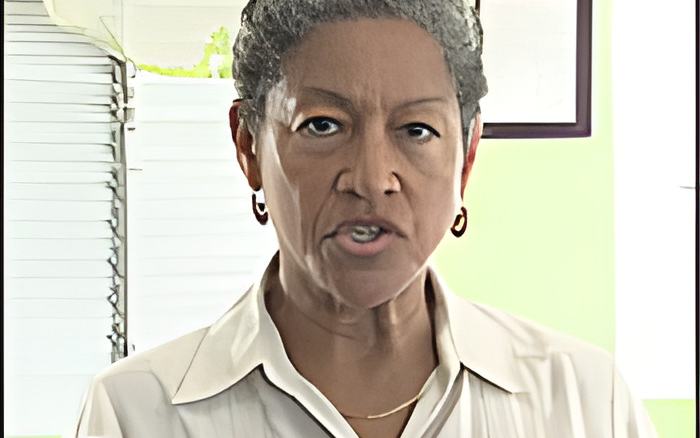
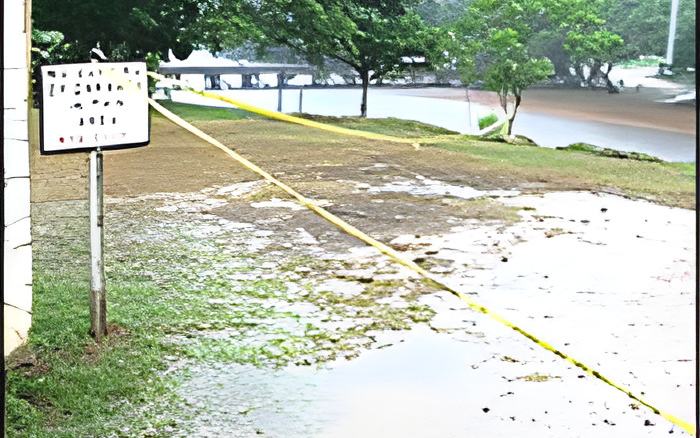
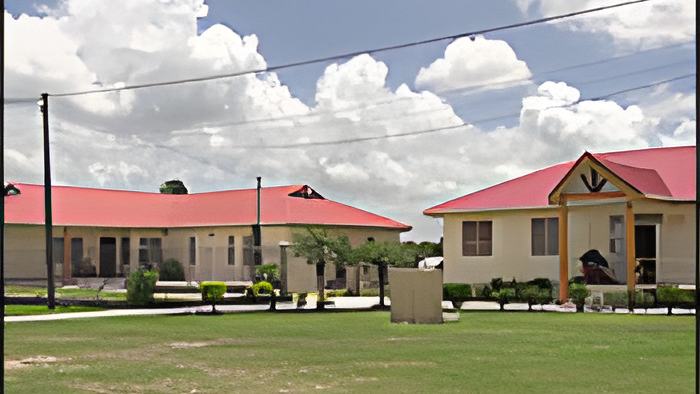
Today the minister, Dolores Balderamos Garcia, along with members from her ministry, including minister of state, Elvia Vega Samos, went on a tour of what they call the new and improved youth hostel. In the past 7 months, it has been repainted, and new furniture has been acquired.
The minister says it is a huge change from when she first got into office.

Hon. Dolores Balderamos Garcia - Minister of Human Development
"I was almost in tears of seeing the condition especially of the boys' and girls' bathrooms. As a matter of fact, the shower stalls were completely rusted out. In the boy's area, they had to be backing water, the toilets were not flushed, it was really a horrible sight. But also, I felt the need to address not only the physical infrastructure but also the systemic difficulties that we saw."
But apart from the physical changes, there's also new programs to keep the children busy and teach them new skills.
Hon. Dolores Balderamos Garcia
"We have activities, we're going to try to get into the sewing, as you can see, we got jerseys for the boys out on the basketball court, try to get the children involved in different activities and so I want to say that a facility such as this, not a place to lock up children, but a place to assist with the true rehabilitation. I believe that this place, as nice as it is looking now, it should be a last resort for children in conflict with the law and also in difficult circumstances. It should be a last resort but also for the shortest period of time."
But there's another major change coming to the hostel – which will soon be referred to as another name.
Hon. Dolores Balderamos Garcia
"We're looking very carefully now at the systemic aspect of what is going on here and as a matter of fact we have instructed our subcommittee of the National Commission for Families and Children as well as the community rehabilitation department to put up a draft paper so that we can take it to Cabinet for the changing of the legislation. We want not so much to have this facility be seen as what you call a certified institution. That carries a big baggage with it from the old colonial days when you would brand a child uncontrollable behaviour and then lock them up. What we are moving towards with the drafting of the paper for Cabinet approval and then the AG's ministry for legal drafting is we want to change this hostel, and we're going to change the name as well, but we will change the hostel to be a residential care facility as opposed to a certified institution."
And even after they leave at 18, the ministry plans to keep assisting them.
Hon. Dolores Balderamos Garcia
"We are looking at what we would call transitional homes because we just spoke to a young lad and she says she's 17 now, so what happens when she becomes 18 and wouldn't be able to stay here anymore? We may need small homes, again not institutions, but little homes that would be transition homes for those children to get into adulthood in a positive environment because many times, I mean we know it with prisoners, we know it with the young people at the Wagner's facility, we know that if you go back to where you came from, you may get into the same activities that is negative and then continue with the problems and we really don't want that."
But can they accomplish this rebranding, or will the youth hostel forever be known as a kind of jail for juveniles? We asked the minister this.
Courtney Menzies
"How do you plan to rebrand this place so that people look at it the way you want them to look at it?"
Hon. Dolores Balderamos Garcia
"Well with a new name to start but precisely the reason why we asked you to come today. Bright colours, friendly spaces, comfort for the children, hot and cold water when they bathe. So those are the physical things but also we believe strongly in the program aspect of our work and in changing the law so that the children can feel that they are protected as opposed to being locked away because they're problem."
And for those who are spending time at the hostel because of crimes committed, the new legislation will seek to allow their cases to be reviewed every 3 to 6 months.
There are approximately 30 children at the hostel currently. The facility can hold up to 40 comfortably.